A down-to-earth account of the lives of both illustrious and ordinary Romans set in the last days of the Roman Republic.
Acclaimed blackly comic historical drama series. Set amidst a web of power, corruption and lies, it chronicles the reigns of the Roman emperors - Augustus, Tiberius, Caligula and finally Claudius.
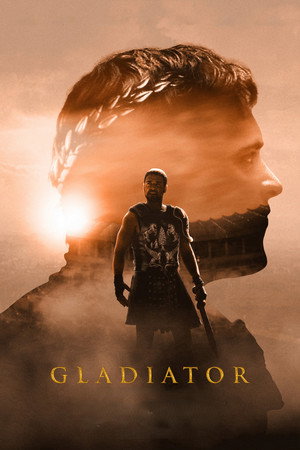
This stylish mix of documentary and historical epic chronicles the reign of Commodus, the emperor whose rule marked the beginning of Rome's fall.
Within the spectacular, complex and corrupt world of gladiatorial sports in Ancient Rome, follow an ensemble of diverse characters across the many layers of Roman society where sports, politics and business intersect and collide.
As Egypt's last pharaoh, Cleopatra fights to protect her throne, family and legacy in this docuseries featuring reenactments and expert interviews.
Forbidden love blossoms in the city of Pompeii, which until the eruption of volcano Vesuvius in 79 AD, is one of the empire's most powerful cities.
Cestvs enters his first match at the slave gladiator training school. Though he's bewildered to discover that his opponent is his best friend, he wins the match, and his opponent is killed on the spot. According to his instructor Zafar, losers have no future. "Every time you win, your opponent will die. You're practically a murderer!" With all his sorrow and rage clenched in his fists, Cestvs survives, as one after another powerful opponents stand in his way, as well as the shadow of Nero, fifth emperor of the Roman Empire. With no other way to secure his freedom, can Cestvs seize his future?!
Torn from his homeland and the woman he loves, Spartacus is condemned to the brutal world of the arena where blood and death are primetime entertainment.
Each episode explores a decisive clash that forged pharaonic power and sparked cultural exchanges that helped build one of the greatest empires in history.
The Caesars is a British television series produced by Granada Television for the ITV network in 1968. Made in black-and-white and written and produced by Philip Mackie, it covered similar dramatic territory to the later BBC adaptation of I, Claudius, dealing with the lives of the early emperors of Ancient Rome, but differed in its less sensationalist depictions of historical characters and their motives.
The Cleopatras is a 1983 BBC Television historical drama serial created and written by Philip Mackie. Set in Ancient Egypt during the latter part of the Ptolemaic Dynasty, the eight-part series follows the lives of a series of queens belonging to the Ptolemaic Dynasty of ancient Egypt, culminating in its final active ruler Cleopatra VII. Intended to be the I, Claudius of the 1980s, The Cleopatras met with a decidedly negative critical reaction, and was regarded and portrayed as a gaudy farce. It also produced a number of complaints due to scenes of nudity.
As Conqueror Julius Caesar is drawing his last breath, he swears Tyrannus—Rome's finest warrior—to an oath to protect his successor, Octavius, his 18-year-old nephew. Tyrannus and Octavius are forced into exile to protect the young man from those who want to sever Caesar's bloodline once and for all.
The struggle between the Roman Empire and its rebellious conquest Judaea, and two best friends caught in a terrible moment in history.
The extraordinary rise of Livia Drusilla, who overcame adversity to become the most powerful woman in the world. Follow Livia’s journey from a naïve young girl whose world crumbles in the wake of Julius Caesar’s assassination, to Rome’s most powerful and influential Empress.
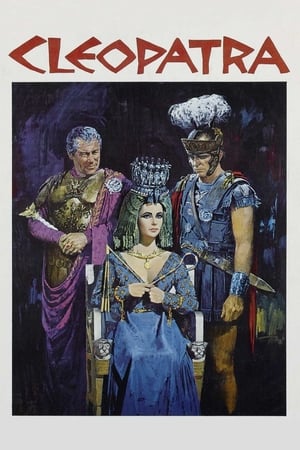
Cleopatra, the famed Egyptian Queen born in 69 B.C., is shown to have been brought by Roman ruler Julius Caesar at age 18. Caesar becomes sexually obsessed by the 18 year old queen, beds her, and eventually has a son by her. However, his Roman followers and his wife are not pleased by the union. In fact, as Caesar has only a daughter by his wife, he had picked Octavian as his successor.
The different aspects of life in Pompeii, a coastal luxury resort near Naples catering for the very rich of imperial Rome, mainly before but culminating in the eruption of the Vesuvian volcano, which wipes it from the face of the Earth. The residents of Pompeii include Diomed, a common upstart merchant whose self-made riches from trade allow him to consider running for political office against sitting city magistrate Quintus and an impoverished aristocratic marriage for his daughter Julia; the cultivated Greek Glaucus; the gladiator Lydon; the noble-born Antonius and his sister Ione, the evil Isis-priest Arbaces who is after (their) money and power; the persecution-fearing Christian slaves Petrus, his true love Chloe, and their secret leader Olinthus.
As a young boy, future emperor Nero witnesses the mad Emperor Caligula kill his father and exile his mother. While in exile in the pontine islands, Agrippina, his mother, sees a vision telling her that her son can become emperor, but she will have to die first. She accepts the proposal. Back in Rome, Nero, now being raised by emperor Claudius after Caligula's death, Agrippina returns. She poisons Claudius' food and Nero becomes emperor. At first, Nero cuts taxes and introduces successful programs and invades Brittania. Soon he meets a beautiful slave named Claudia Acte, and marries her, throwing off his engagement with Claudius' daughter, Claudia Octavia, telling her she can marry someone she will be happy with. Heartbroken, she arrives at an island and kills herself. Nero enjoys being married to Claudia Acte, but soon he gradually goes mad with power and sets fire to Rome.
A story of eternal romance and inevitable disaster recounting the tale of this once majestic city.
Twenty year-old Julius Caesar flees Rome for his life during the reign of Sulla but through skill and ambition rises four decades later to become Rome's supreme dictator.
Three people's fates are interwoven in the Battle of the Teutoburg Forest in 9 A.D., during which Germanic warriors halt the spread of the Roman Empire.