Avelino Chillarón was 12 or 13 years old when he realized that his surnames and those of his cousins didn't match, so he decided to ask his uncle. This is how he learned that, although his father and aunt were siblings, they didn't have the same father, so he and his cousins didn't share the same grandfather. In this way, Avelino realized that there was a part of his family he didn't know. The protagonist of this story feels partially mutilated from a part of his family history, a part that was taken away from him by a regime that established, over the years, a long period of widespread social amnesia about a series of corpses and missing persons throughout the spanish geography.
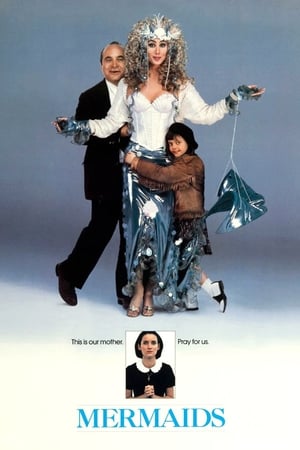
Fifteen-year-old Charlotte Flax is tired of her wacky mom moving their family to a different town any time she feels it is necessary. When they move to a small Massachusetts town and Mrs. Flax begins dating a shopkeeper, Charlotte and her 9-year-old sister, Kate, hope that they can finally settle down. But when Charlotte's attraction to an older man gets in the way, the family must learn to accept each other for who they truly are.
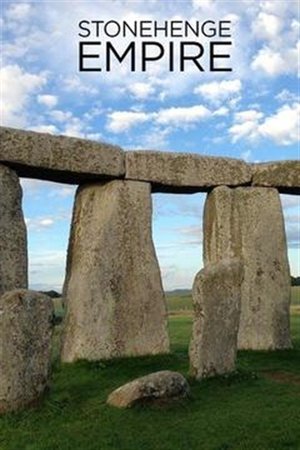
For centuries, Stonehenge has been cloaked in mystery. Who built it? How did they do it? Why did they do it and what is its significance? Now, a team of archaeologists takes a high-tech approach to find out, and their discoveries will exceed all expectations. Learn the full story of the world's most investigated prehistoric site, featuring a forgotten people who were meticulous planners, profound believers and true warriors. It's a 10,000-year-old tale, pieced together by state-of-the-art survey equipment and compelling archaeological evidence.
Inagaki Goro plays a freelance writer married to his editor wife (Nakamura Yuri), who he discovers is having an affair with the popular novelist she is responsible for at work. Although troubled, he can’t bring himself to confront his wife. He later meets a high school novelist at a literary award ceremony, and–drawn to the award-winning book–he inquires about the model it’s based on, thinking he’d like to meet that person…
Despite their differences, an aspiring architect falls for her deaf neighbor, who teaches her basic sign language.
Denton, an anthropologist of note, meets by accident a new neighbor, an attractive girl, whose father insists upon her marriage to a man whom he favors because of his wealth. Denton and the girl are mutually attracted and to Denton comes a vague but haunting belief that they have met before. Worn out by overstudy, he becomes seriously ill with rain fever and the mind pictures he has of his fair neighbor fade into a vision of a prehistoric existence, where he wanders as a stone age savage, meets and loves the girl of his heart, who also lives in that strange world. There also is the conflict between wealth and poverty, the father's choice opposed to the daughter's. The prehistoric Denton finally wins out after struggling with a savage rival and wild beasts as well. Just so the modern Denton finally conquers over his modem rival.
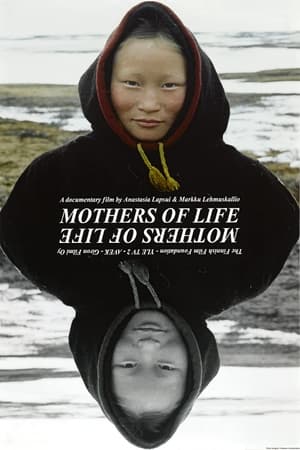
A film that explores the space of intimacy shared by three people who live under the same roof. Ariana, an eight-year-old foster girl from the city of Sao Luis, Iban, an anthropologist of European origin who intends to make a documentary film, and Doña Eloisa, a native woman from Itamatatiua who works in ceramics. The members of this kind of family in transit find in common a feeling that binds them intimately: the feeling of loss. Ariana, Doña Eloisa and Iban have lived the experience of separation from their mothers. Human fragility will become the truth of their relationship, even more so after Sheyla's death.
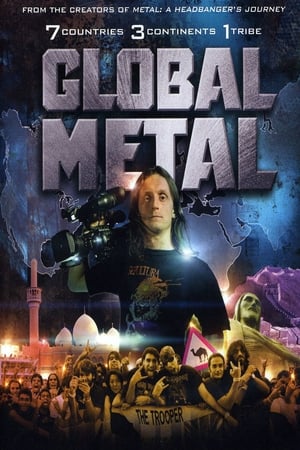
In GLOBAL METAL, directors Scot McFadyen and Sam Dunn set out to discover how the West's most maligned musical genre - heavy metal - has impacted the world's cultures beyond Europe and North America. The film follows metal fan and anthropologist Sam Dunn on a whirlwind journey through Asia, South America and the Middle East as he explores the underbelly of the world's emerging extreme music scenes; from Indonesian death metal to Chinese black metal to Iranian thrash metal. GLOBAL METAL reveals a worldwide community of metalheads who aren't just absorbing metal from the West - they're transforming it - creating a new form of cultural expression in societies dominated by conflict, corruption and mass-consumerism.
John Bishop and Naomi Bishop present a portrait a peculiar life style of the Himalayan indigenous Sherpa people in their documentary , the Himalayan Herders. The 76 minutes long film is about the diverse culture and life style of herders community near Mt. Everest region of Nepal.The film was made in 1997 as a part of Case Studies in Cultural Anthropology Series.
Inspired by Steven Blush's book "American Hardcore: A tribal history" Paul Rachman's feature documentary debut is a chronicle of the underground hardcore punk years from 1979 to 1986. Interviews and rare live footage from artists such as Black Flag, Bad Brains, Minor Threat, SS Decontrol and the Dead Kennedys.
A young man narrates two conflicting accounts of his life, changing the details and incidents in both, as he slowly approaches madness.
Microlove is a sci-fi romance movie about an outgoing wealthy young Thai man, Pat, who works at a Korean software company. He privately develops a software and catches the interest of the president’s daughter, Min Ji and they create a beautiful love story.
The film discusses the traits and originators of some of metal's many subgenres, including the New Wave of British Heavy Metal, power metal, Nu metal, glam metal, thrash metal, black metal, and death metal. Dunn uses a family-tree-type flowchart to document some of the most popular metal subgenres. The film also explores various aspects of heavy metal culture.
An ethnographic documentary about the Mangbetu tribe of the Belgian Congo (now the Democratic Republic of the Congo). The film features a discussion of various rites including the Mangbetu practice of head binding, as well as various examples of traditional music and dance.
The plot revolves around Neeli, a Dalit peasant girl, who falls in love with Sreedharan Nair, a high caste teacher.
"Heart of the Country" is the story of Shinichi Yasutomo, the extraordinary principal of a rural elementary school in Kanayama, central Hokkaido, Northern Japan. Yasutomo is a man driven by his vision for learning and his passion for educating the heart as well as the mind. The film follows Yasutomo, his teachers and staff, students and their families over the course of one entire school year. The film is also the story of the families of Kanayama. Parents and elders of this once impoverished town embrace Yasutomo's vision, but not without wary glances back to the past. This small community, bound together by love for its children, is also defined by its journey through the cultural upheavals of postwar Japan.
An analysis of the controversy over the participation of women in the Irun and Hondarribia festivity known as Alarde. It is divided into three parts: in the first part, the history, structure, and characteristics of the Alarde are explained; in the second part, the beginning of the conflict and its development in the 1990s; and in the third part, the present situation, reflecting on the present and future of the festival.
An experimental ethnographic documentary that criticizes the colonizer view of anthropology.
This ethnographic short portrays a ritual using masks among the Dogon people of Mali.
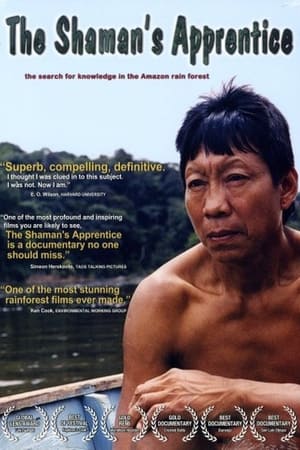
Scientist Mark Plotkin races against time to save the ancient healing knowledge of Indian tribes from extinction.