The rebellious Thracian Spartacus, born and raised a slave, is sold to Gladiator trainer Batiatus. After weeks of being trained to kill for the arena, Spartacus turns on his owners and leads the other slaves in rebellion. As the rebels move from town to town, their numbers swell as escaped slaves join their ranks. Under the leadership of Spartacus, they make their way to southern Italy, where they will cross the sea and return to their homes.
In 26 AD, Judah Ben-Hur, a Jew in ancient Judea, opposes the occupying Roman empire. Falsely accused by a Roman childhood friend-turned-overlord of trying to kill the Roman governor, he is put into slavery and his mother and sister are taken away as prisoners.
Young Cabiria is kidnapped by pirates and sold as a slave in Carthage. Just as she's to be sacrificed to Moloch, Cabiria is rescued by Fulvius Axilla, a good-hearted Roman spy, and his powerful slave, Maciste. The trio are broken up as Cabiria is entrusted to a woman of noble birth. With Cabiria's fate unknown, Maciste punished for his heroism, and Fulvius sent away to fight for Rome, is there any hope of our heroes reuniting?
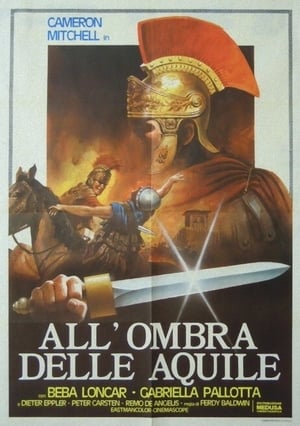
After the death of Octavian, the rebel populations of Illyria and Pannonia pose a grave threat to the Roman Empire. Tribune Marcus Ventidius is sent to subdue the uprising and, after a bitter battle, captures Pannonian chief Magdus together with a number of women hostages. These include Magdus's own daughter Helen, betrothed to cruel Illyrian warrior Batone who has killed many Romans. Julia, daughter of the Roman governor Messala, is in love with Tribune Marcus and, jealous of his sympathy for the barbarian girl, plots an escape by Helen and her father. Pursuing the fugitives, Marcus crosses a mountain pass where Batone has laid a trap.
Treacherous Roman senator Lucius Quintilius plans a secret journey into Thrace to recover a legendary treasure. He is accompanied by his daughter Livia posing as a Christian slave girl, his cruel henchman Commodio, and Terenzius, an ex-gladiator and Nero look-alike who fools the local Thracians into believing he is the real Emperor. But Lucius's plans are thwarted by Spartacus and his band of rebels who succeed in capturing the treasure for Thrace. When news arrives from Rome that the real Nero has died, local Roman governor Consul Metellus joins forces with Spartacus to defeat the traitors.
A series of bawdy and satirical episodes written during the reign of the emperor Nero and set in imperial Rome. Like the more famous version made by Federico Fellini, an adaptation of Petronius' Satyricon.
Epic account of the thief Barabbas, who was pardoned for his crimes and spared crucifixion when Pilate offered the Israelites a choice to pardon Barabbas or Jesus. Struggling with his spirituality, Barabbas goes through many ordeals leading him to the gladiatorial arena, where he tries to win his freedom and confront his inner demons, ultimately becoming a follower of the man who was crucified in his place.
A historical drama set in Roman Egypt, concerning philosopher Hypatia of Alexandria and her relationship with her slave Davus, who is torn between his love for her and the possibility of gaining his freedom by joining the rising tide of Christianity.
A story of forbidden love. An LGBTQ drama set in Ancient Rome. Arena tells the incredible true story of adopted son of one of Rome's cruelest emperors who must choose between his life as the future ruler of the Ancient world or a love and friendship once forcefully forgotten.
Terry Jones' Barbarians is a 4-part TV documentary series first broadcast on BBC 2 in 2006. It was written and presented by Terry Jones, and it challenges the received Roman and Roman Catholic notion of the barbarian. Professor Barry Cunliffe of the University of Oxford acted as consultant for the series.
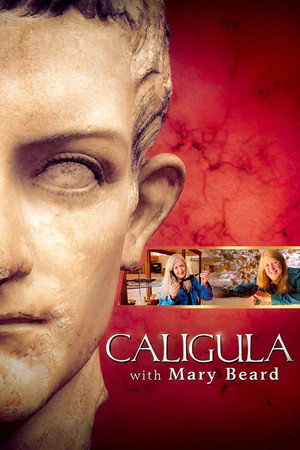
What is true and what is false in the hideous stories spread about the controversial figure of the Roman emperor Gaius Julius Caesar Augustus Germanicus (12-41), nicknamed Caligula? Professor Mary Beard explains what is accurate and what is mythical in the historical accounts that portray him as an unbalanced despot. Was he a sadistic tyrant, as Roman historians have told, or perhaps the truth about him was manipulated because of political interests?
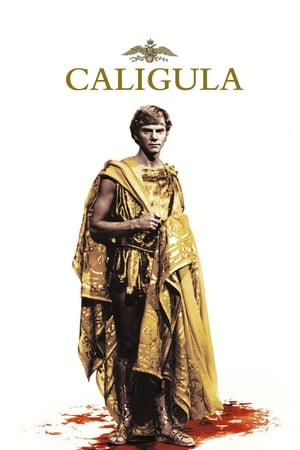
After the death of the paranoid emperor Tiberius, Caligula, his heir, seizes power and plunges the empire into a bloody spiral of madness and depravity.
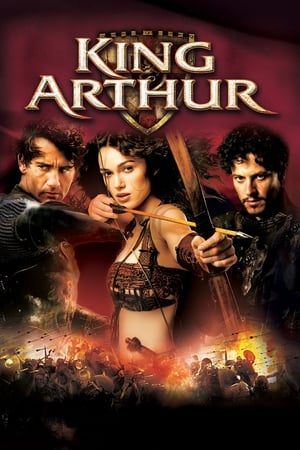
The story of the Arthurian legend, based on the 'Sarmatian hypothesis' which contends that the legend has a historical nucleus in the Sarmatian heavy cavalry troops stationed in Britain, and that the Roman-British military commander, Lucius Artorius Castus is the historical person behind the legend.
Why did the Roman Empire, which dominated Europe and the Mediterranean for five centuries, inexorably weaken until it disappeared? Archaeologists, specialists in ancient pathologies and climate historians are now accumulating clues converging on the same factors: a powerful cooling and pandemics. A disease, whose symptoms described by the Greek physician Galen are reminiscent of those of smallpox, struck Rome in 167, soon devastating its army. At the same time, a sudden climatic disorder that was underway as far as Eurasia caused agricultural yields to plummet and led to the westward migration of the Huns. Plagued by economic and military difficulties, attacked from all sides by barbarian tribes, the Roman edifice gradually cracked.
Drunk and disillusioned Roman, Marcellus Gallio, wins Jesus' robe in a dice game after the crucifixion. Marcellus has never been a man of faith like his slave, Demetrius, but when Demetrius escapes with the robe, Marcellus experiences disturbing visions and feels guilty for his actions. Convinced that destroying the robe will cure him, Marcellus sets out to find Demetrius — and discovers his Christian faith along the way.
Mary Beard is on a mission to uncover the real Julius Caesar, and to challenge public perception, exploring Caesar's surprising legacy.
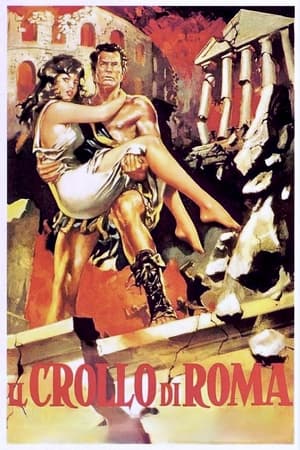
Following the fall of the Roman Empire, a Roman woman plots to make her son the new Emperor and to fulfill the former glory of the city.
In the year 180 A.D. Germanic tribes are about to invade the Roman empire from the north. In the midst of this crisis ailing emperor Marcus Aurelius has to make a decision about his successor between his son Commodus, who is obsessed by power, and the loyal general Gaius Livius.
The aging Julius Caesar finds himself intrigued by the young Egyptian queen Cleopatra.
After the death of Emperor Constantine in Rome, the persecutions of the Christians threaten the centurion Marco forced to become a gladiator.