This film follows the lives over one year, shot during three intervals, of two Basque shepherding families who live in Santazi, a village in the foothills of the French Pyrenees. The film is the only Disappearing World film made in western Europe and it focuses on the continuity and change in the community. This film shows the rationality behind the choice the villagers are making.
A compilation of interviews, rehearsals and backstage footage of Michael Jackson as he prepared for his series of sold-out shows in London.
Free Fish is a short documentary filmed over the course of a year in Gaza, following two brothers — Abu Nagham and Ahmad — separated by war yet connected by the sea. Displaced from their home, Abu Nagham now lives in a tent in the south, fishing with his young nephew Rami, who lost his twin brother. Ahmad remains in the north, fishing amid ruins and occupation. Once a source of livelihood and freedom, the sea has become a battleground — heavily restricted, constantly watched, and always dangerous.
Tuna are among the top predators in the oceans. But the hunter is also the hunted: many species are overfished. Can we use the riches of the oceans without destroying them?
The New Boats is an investigative documentary that presents an eye-opening look at the impact of international industrialized fishing in West African waters and its disastrous effect on local communities at a critical point in Sierra Leone's history.
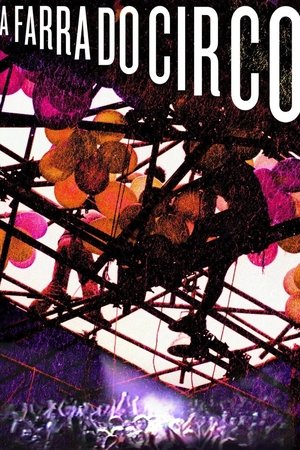
This documentary highlights the evolution of Brazil's Circo Voador venue from homespun artists' performance space to national cultural institution.
Adventures on a fishing boat as told by two young boys who experience what it takes to be a fisherman at sea.
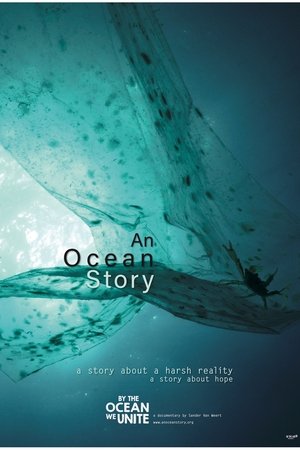
This is the planet we still know so little. We call it Earth but less than 1/3 is land, over 2/3 is water and we use that water as a dumping site for our waste and as if it's an inexhaustible "horn of plenty" for humans. Our most important ecosystem is on the verge of collapse unless we act now. At this very moment the main problem with the oceans is that they're getting emptier and emptier. If we don't do anything then we face one of the biggest disasters in history of mankind.
This pioneering documentary film depicts the lives of the indigenous Inuit people of Canada's northern Quebec region. Although the production contains some fictional elements, it vividly shows how its resourceful subjects survive in such a harsh climate, revealing how they construct their igloo homes and find food by hunting and fishing. The film also captures the beautiful, if unforgiving, frozen landscape of the Great White North, far removed from conventional civilization.
Increasing pollution, over fishing and climate change are major threats our oceans are currently facing worldwide. This documentary follows us on our journey as we film devastating consequences of these harsh realities.
Kristallklar tells the tale of a hidden river holding wild brown trout near the border of Luxembourg and Germany. Find out about this magical river from the perspective of Kirill, who recently acquired the lease to the fishing rights of the river and a small tributary thereof. It captures the essence of a fly fishing adventure on the river embarked on by the incredibly passionate Kirill and two companions: Nic, a fly fishing scientist and Simon, the filmmaker. The film tries to capture the feeling of the magnificent surroundings and being at peace on the river. It also delves into topics of conservation of nature and the plans to re-stock the river with native crayfish which vanished from the river. A lot of love went into this film the hope is that it inspires those around the world to find a love for the outdoors and to preserve it for many years to come and just to get out there and fly fish.
An insight into the fishing business in the North Sea.
Pop sensations the Lovin' Spoonful perform their biggest hits in this collection of television appearances from the 1960s and '70s. Lead singer and songwriter John Sebastian discusses the band, their music and their legacy. Songs include "Summer in the City," "She's Still a Mystery," "Nashville Cats," the hit theme to the sitcom "Welcome Back, Kotter," "Did You Ever Have to Make Up Your Mind?" and "Do You Believe in Magic?"
In 1965, on the Eastern Shore of the Chesapeake Bay, there was the last operating fleet of sailing work boats in the United States. Forty-odd "Skipjacks" were still used by Maryland watermen to dredge up oysters from the Bay. At that time, the fleet had survived because of a Maryland conservation law which prohibits the use of motor power for oyster dredging. The watermen traditionally marked the opening of each oystering season with a skipjack race which the Maryland State Tourist Board incorporated into its annual "Chesapeake Bay Appreciation Day."
Arctic Tale is a 2007 documentary film from the National Geographic Society about the life cycle of a walrus and her calf, and a polar bear and her cubs, in a similar vein to the 2005 hit production March of the Penguins, also from National Geographic.
Report on a trout and pike fishing excursion on Lake Waconichi.
In Paul Brandt’s filming debut, he joins friend Paul Norris and legendary fly-fishing guide, Naoto Aoki, on a journey that is both a look into his consuming passion for fly fishing and an ode to his hometown of Calgary, which he dubs as the World’s Largest Fly Fishing Lodge.
This documentary shows the fishing grounds of the far north. It provides an insight into the hard and dangerous work on a fishing trawler ; laying out and hauling in the fishing nets, processing the fish on board and storing it in the cold store.
The history of Bruguera, the most important comic publisher in Spain between the 1940s and the 1980s. How the characters created by great writers and pencilers became Spanish archetypes and how their strips persist nowadays as a portrait of Spain and its people. The daily life of the creators and the founding family, the Brugueras. The world in which hundreds of vivid colorful paper beings lived and still live, in the memory of millions, in the smile of everyone.
I have returned to the island were I grew up. My dad has spent thirty years alone at sea fishing lobster. He was taught the trade by his dad, who learnt from his dad. A heritage pasted down from father to son. My father never got a son, only daughters and since I was a girl no one assumed I was interested. After I turned eighteen I left Sweden and moved to Australia. After a decade abroad I started to long for home. I return to the island to see if I have it in me, can I learn the things I was never taught as a child? Will the legacy fade with me or can I become the family's next lobster fisherman? /Karolin Axelsson