During the Nuremberg Trials, the victors of the Second World War judge those responsible for the Third Reich.
In 1945, two young American soldiers, brothers Budd and Stuart Schulberg, are commissioned to collect filmed and recorded evidence of the horrors committed by the infamous Third Reich in order to prove Nazi war crimes during the Nuremberg trials (1945-46). The story of the making of Nuremberg: Its Lesson for Today, a paramount historic documentary, released in 1948.
For the first time, a film recounts the story of the long pursuit of Nazis in hiding from 1945 to the present day. Sixty years of investigations, set-backs trials and dramas, brought about principally by three extraordinary individuals—the Austrian Simon Wiesenthal, and the German-French couple, Beate and Serge Klarsfeld.
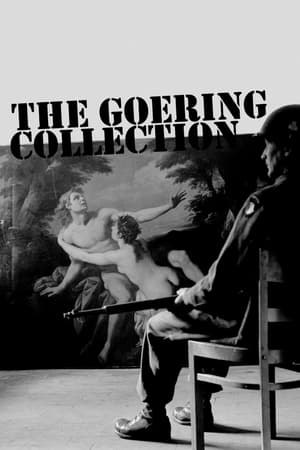
For more than a decade, Reichsmarschall Hermann Goering, Adolf Hitler's right-hand man during the infamous Third Reich, assembled a collection of thousands of works of art that were meticulously catalogued.
Auschwitz, la machine de mort nazie
Around 80 years ago, the gynecologist Carl Clauberg conducted medical experimentation on Jewish girls and women in Auschwitz. The results of those sadistic experiments were used in medicine across the globe. It is possible that German companies played a part in those experiments. Most of the survivors became infertile, and very few of them were later capable to give birth. The Untold Story of Block 10 introduces the audience to those who have survived.
Frank mezi námi
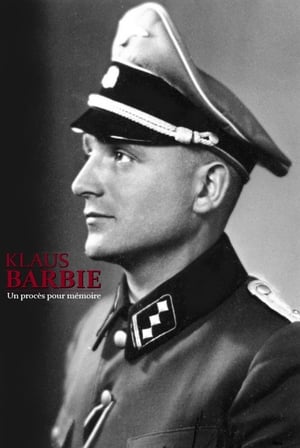
Klaus Barbie, un procès pour mémoire
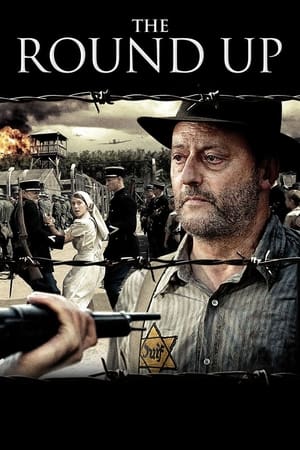
80 years ago, Marseille's Old Port was the scene of a tragic event that is still largely unknown today: the roundup and total destruction of the Saint-Jean district, on Hitler's own orders. "The Forgotten Round-up" draws on the memories of some of the last direct witnesses to the tragedy, and follows the investigation of Marseille lawyer Pascal Luongo, grandson of one of the victims.
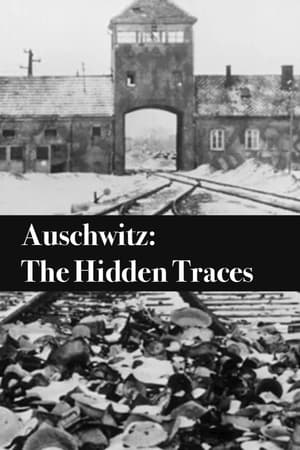
Examines documents and traces of the atrocities that took place at the Auschwitz concentration camp. Years after the end of the war, expert analysis of the remnants of these documents has helped shed light on the stories of prisoners.
Le trésor de guerre de Napoléon
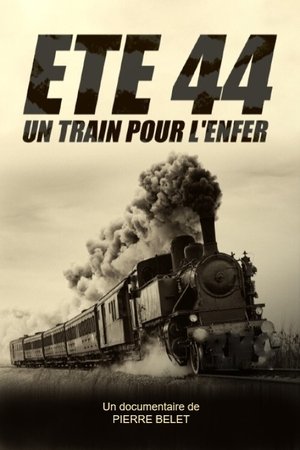
Été 44, un train pour l'enfer
Hans Münch was an infectious disease physician at KZ Auschwitz. His task was to prevent epidemics in the overcrowded camps. When he was forced to actively participate in the mass murder, he began to protest. At the trials in Krakow in 1947 against SS men who committed war crimes, Münch was acquitted. He had refused to participate in the selection, that is, the sorting out of those to be killed and some KZ prisoners testified in his favor. Hans Wilhelm Münch (1911 - 2001) was a German Nazi Party member who worked as an SS physician during World War II at the Auschwitz concentration camp from 1943 to 1945 in German occupied Poland.
A faithful retelling of the 1942 "Vel' d'Hiv Roundup" and the events surrounding it.
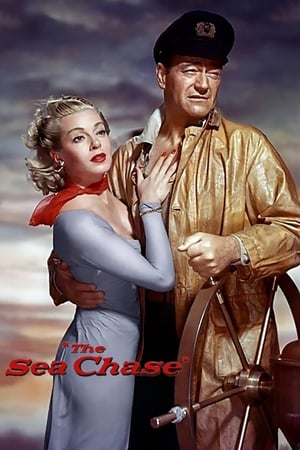
As the Second World War breaks out, German freighter captain Karl Ehrlich is about to leave Sydney, Australia with his vessel, the Ergenstrasse. Ehrlich, an anti-Nazi but proud German, hopes to outrun or out-maneuver the British warship pursuing him. Aboard his vessel is Elsa Keller, a woman Ehrlich has been ordered to return to Germany safely along with whatever secrets she carries. When Ehrlich's fiercely Nazi chief officer Kirchner commits an atrocity, the British pursuit becomes deadly.
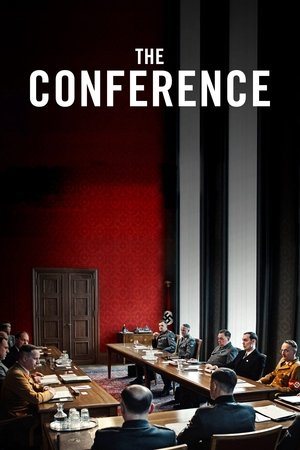
On January 20, 1942, the Wannsee Conference takes place in Berlin, a meeting that had only one item on the agenda: The Final Solution, the organization of the systematic mass murder of eleven million European Jews.
Yamel, a Mexican cinema student in Cuba, is randomly filming a stormy afternoon in Havana when Jans, an 18-year-old fisherman, walks across her frame and captures her attention.
In this nostalgic documentary, restaurant critic Giles Coren challenges Heston Blumenthal to take his restaurant The Fat Duck back to 2001 for a magical feast.
Two journalists born in the mid '80s decide to take a look back at how their country changed in the last 30 years since the fall of communism. The end product is a documentary containing footage of political events and historical milestones significant to Romania accompanied by a narrator's voice walking the viewer through the events, and also interviews with Romanian politicians and other influential public figures sharing their thoughts and their different views on those events.
A reflection about the urgent necessity of a Universal Jurisdiction enabled to act where other initiatives fail. We are resolved to give voice to the forgotten victims of the Spanish Franco regime and determined to become an agent of change for the dissemination of some events which have left a mark on the Spanish society and which are still unknown nowadays by most of the population, who thinks to know them, but actually got a manipulated version in the best-case scenario.