Documentary about the renowned Estonian pedagogue and educational reformer Johannes Käis. Made on commission for Estonian Ministry of Education.
Joseph Wilson meets the dance teacher fighting transphobic violence through voguing in Rio’s favelas.
Rwanda, à la poursuite des génocidaires
72 Horas
The political upheaval in North Africa is responsibility of the Western powers —especially of the United States and France— due to the exercise of a foreign policy based on practical and economic interests instead of ethical and theoretical principles, essential for their international politic strategies, which have generated a great instability that causes chaos and violence, as occurs in Western Sahara, the last African colony according to the UN, a region on the brink of war.
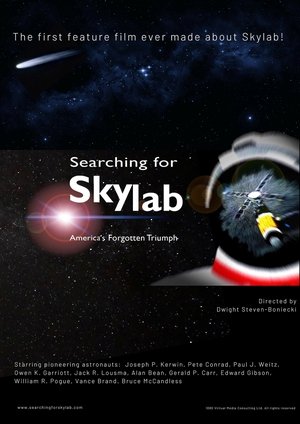
Jeff Towne revisited four years after the release of the original film.
Mohamed lives in Nouadhibou, in Mauritania. But he can always see the ghost of his former town in front of his eyes. Aalien, the postman, fled to refugee camps in Tindouf, Algeria. But he's still thinking about the houses and the streets where he used to deliver letters. Zeinabu, in Tenerife, looks at the Ocean from her terrace. She looks in the direction of La Güera, her town that no longer exists. The stories of the inhabitants of a "ghost town", located on the border between Mauritania and the Sahrawi Arab Democratic Republic (Sadr). The destiny of a forgotten land hidden under the sand. "La Güera, my forgotten land" is a 29 minutes documentary, which tells the story of this city and, through it, the story of a whole people.
Mektub portrays a day in the life in the Sahrawi refugee camps, along with the declarations of some of its protagonists. But behind this seemingly calm life hides a common fight, which is to continue fighting and protesting to accomplish the single common goal that all Sahrawis have as a nation: to take back the occupied land, rebuild their country, and reunite with their families.
In the refugee camps of Tindouf, for more than 30 years the Sahrawi people is waiting to get the goal that forced them to exile: to return to their land free from any foreign domination. Sukut collects the testimonies of life of elderly Sahrawi with three objectives: to preserve the historical memory of this people, that have basically an oral tradition, show the human aspects of some experiences and data too much objectified, and especially, give the word to those who have been silenced too long ago.
On the night of February 24-25, 1942, amid terror and neurosis caused by the terrible Pearl Harbor attack only two months earlier, a huge flying object of unknown origin appears in the sky over Los Angeles. The military reacts by imposing a total blackout in the area and firing more than 1440 artillery rounds. However, despite the firepower, no object was shot down. We will try to understand what actually happened and who or what flew over the skies of Los Angeles that night of February 24, 1942.
Le Puy du Fou raconté par Philippe de Villiers
Antonico: Por Onde Andam os Migrantes Nordestinos?
A historical analysis of the on-going war in the Western Sahara. Liza Bear interviews Abdullah Majdid, the Polisario Front's United Nations representative. The tape addresses Morocco's U.S.-backed military effort to subjugate the indigenous Sahrawi population and annex one of the world's largest phosphate deposits, as well as the Sahrawis' conditions for a referendum.
Personalidades Barreirenses: Jango Biriva, Leonora Kolling e João da Macena - Historiando em Novo Barreiro
Offers audiences a unique window into a bygone era when a thrilling new invention, the motion picture camera, first captures a nation on film.
Ishq e Qalandar - The Beautiful Sindh is a travel film that takes viewers through one of the most ancient civilizations on Earth called Sindh. Shezan Saleem Jo-G takes a journey of self-realization, the discovery of his roots, and building a connection with people and spirituality in Sindh.
Your Cinema Needs You traces the origins of the Monarch Theatre, the rise and fall of its direct competitors, and its evolution in becoming Canada's oldest, surviving cinema since it first opened its doors on December 21, 1911.
A documentary that traces the life and times of Bhagat Singh, a committed Marxist who most ably exemplified the spirit of revolutionary resistance against British imperialism in undivided India.
Decolonising the Curatorial Process is a forty-minute documentary which explores decolonial strategies in an academic and curatorial context. The film features academics, activists and practitioners, and contains case studies of institutions that are deploying critical, self-reflective forms of curatorial practice. The Museum of London Docklands exhibition on slavery and the sugar industry is examined as an example of how an institution can decolonise the curatorial process, utilise the work of artists in a museum context, and critically examine East London's imperial history. The Pitt Rivers museum in Oxford, who are working with Maasai activists from Kenya and Tanzania on a project centred on repatriating the museum's collection of sacred Maasai artefacts, also features in the film.
Vestindo Histórias