The story of the Cuban Missile Crisis in 1962—the nuclear standoff with the USSR sparked by the discovery by the Americans of missile bases established on the Soviet-allied island of Cuba.
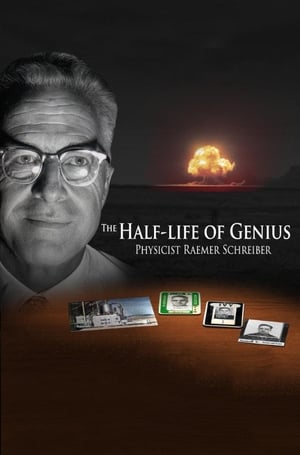
Stories of the people who built the first atomic weapons are well known. But what about those who provided the uranium? We look at a mysterious man who derived huge profits from the business of war.
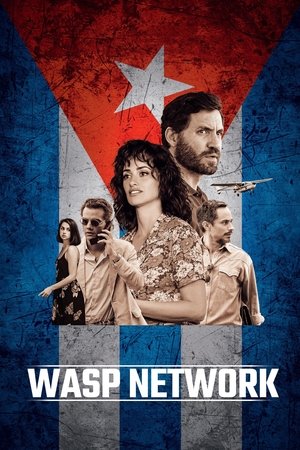
Havana, Cuba, 1990. René González, an airplane pilot, unexpectedly flees the country, leaving behind his wife Olga and his daughter Irma, and begins a new life in Miami, where he becomes a member of an anti-Castro organization.
The Conference on Security and Cooperation in Europe (CSCE) was the starting point for the slow but sure collapse of communist authoritarian rule in Eastern Europe. The Helsinki Effect offers new perspectives on the events of the Cold War. The film tells the story of the CSCE process, which had a major impact on the end of the Cold War, and sheds light on secret top-level discussions behind closed doors, through voice simulations using artificial intelligence.
Warsaw's Central Railway Station. 'Someone has fallen asleep, someone's waiting for somebody else. Maybe they'll come, maybe they won't. The film is about people looking for something.
How were the giant stone heads of Rapa Nui – also known as Easter Island – carved and raised, and why? Since Europeans arrived on this remote Pacific island over 300 years ago, controversy has swirled around the iconic ancient statues and the history of the people who created them. Now, a new generation of researchers is overturning old theories, revealing the rich history, innovation, and resilience of the Rapanui people, and uncovering intriguing new evidence about where they – and their practice of monumental stone building – came from.
Marijuana is the most controversial drug of the 20th Century. Smoked by generations to little discernible ill effect, it continues to be reviled by many governments on Earth. In this Genie Award-winning documentary veteran Canadian director Ron Mann and narrator Woody Harrelson mix humour and historical footage together to recount how the United States has demonized a relatively harmless drug.
"Trinity and Beyond" is an unsettling yet visually fascinating documentary presenting the history of nuclear weapons development and testing between 1945-1963. Narrated by William Shatner and featuring an original score performed by the Moscow Symphony Orchestra, this award-winning documentary reveals previously unreleased and classified government footage from several countries.
Edgar Morin, chronique d'un regard
In 1894, French officer Alfred Dreyfus is wrongly convicted for the treasonous acts of another man, Major Esterhazy. When investigations begin into the dubious evidence used in the trial, an institutional coverup begins, aided by fears of army disgrace and anti-Semitic paranoia against Dreyfus. But a determined group, headed by prominent author Émile Zola, leads a mounting public call to reopen the Dreyfus case.
This was the only documentary made in the aftermath of the atomic bombings of 1945. Japanese filmmakers entered the two cities intent on making an appeal to the International Red Cross, but were promptly arrested by newly arriving American troops. The Americans and Japanese eventually worked together to produce this film, a science film unemotionally displaying the effects of atomic particles, blast and fire on everything from concrete to human flesh. No other filmmakers were allowed into the cities, and when the film was done the Americans crated everything up and shipped it to an unknown location. That footage is now lost. However, an American and a Japanese filmmaker each stole and hid a copy of the film, fearful that the reality of Hiroshima and Nagasaki would be hidden from history. Eventually, these prints surfaced and became our only precious archive of the aftermath of nuclear warfare -- a film that everyone knows in part, yet has rarely seen in its entirety.
Cao Bang, les soldats sacrifiés d'Indochine
The story of two soldier-cameramen, Sgt Mike Lewis and Sgt Bill Lawrie, who witnessed the liberation of Belsen during the closing days of World War II.
A disturbing collection of 1940s and 1950s United States government-issued propaganda films designed to reassure Americans that the atomic bomb was not a threat to their safety.
NUMEC: How Israel Stole the Atomic Bomb and Killed JFK. Terrorists took advantage of the massive weapons surplus following the end of WWII and created lucrative black-markets for illegal arms trafficking many of which went to ethno-fascist fanatics who created the state of Israel. The weapons theft would escalate to Highly Enriched Uranium for nuclear bombs and the assassination of a US president.
Debunking the mythology surrounding the 16th century French prophet, Nostradamus.
Thirty years after the release of his film JFK (1991), filmmaker Oliver Stone reviews recently declassified evidence related to the assassination of President John F. Kennedy, which took place in Dallas on November 22, 1963.
More than 2.000 years ago, Narbonne in today's Département Aude was the capital of a huge Roman province in Southern Gaul - Gallia Narbonensis. It was the second most important Roman port in the western Mediterranean and the town was one of the most important commercial hubs between the colonies and the Roman Empire, thus the town could boast a size rivaling that of the city that had established it: Rome itself. Paradoxically, the town that distinguished itself for its impressive architecture, today shows no more signs of it: neither temples, arenas, nor theaters. Far less significant Roman towns like Nîmes or Arles are full of ancient sites. Narbonne today is a tranquil town in Occitania
De Gaulle, l'homme à abattre
The story of the Trojan war is one of history's most enduring legends. A beautiful queen elopes with a foreign prince, which results in a decade-long battle that ends in the complete annihilation of an entire city. However, what grain of truth is there to this mythologicale tale of love and destruction?