This film begins with the invocation of 'almighty god' at a river where several people are gathered. The child god Krishna rises out of the water astride the demon snake Kaliya. Then we see Yashoda as she rocks the sleeping Krishna's crib and imagines the god as Gopala. The next scene shows Kamsa fantasizing about Krishna threateningly duplicated many times around him. Kamsa then imagines himself dead as his severed head rises up and descends again. People of all castes pay obeisance to the deity with the title-card: 'may this humble offering be accepted by the Lord'.
Ashley sees strange things and receives a mysterious message that leads her to enter another world of both wonder and horror. She must find her way through a series of quadrants, battle her inner demons, and transform into who she is destined to become.
God and Satan wager on the soul of a learned and prayerful alchemist as part of their eternal war over Earth.
An upper class melodrama.
This mostly lost film is often confused with director Paul Wegener third and readily available interpretation of the legend; Der Golem, wie er in die Welt kam (1920). In this version of the golem legend, the golem, a clay statue brought to life by Rabbi Loew in 16th century Prague to save the Jews from the ongoing brutal persecution by the city's rulers, is found in the rubble of an old synagogue in the 20th century. Brought to life by an antique dealer, the golem is used as a menial servant. Eventually falling in love with the dealer's wife, it goes on a murderous rampage when its love for her goes unanswered.
One of the earliest cinematic adaptation of Chinese classic novel Journey to the West. When seeking for food alone, Tang Xuanzang was kept prisoner by seven spider monsters who took the form of seven beautiful women. The Monkey King and the other two of Xuanzang's disciples managed to rescue him with the help of Avalokitesvara Bodhisattva/Guanyin. They renounced the desire for lust and continued the quest for Buddhist Scriptures.
The Curse of Quon Gwon is the oldest known Chinese-American film and one of the earliest American silent features made by a woman. Only two reels of the film survive, and no intertitles are known to exist, making it difficult to parse out the exact plot. An article in the July 17, 1917 issue of The Moving Picture World states that the film "deals with the curse of a Chinese god that follows his people because of the influence of western civilization." The film also touches on themes of Chinese assimilation into American society. Formally premiering in 1917, no distributor was willing to purchase a Chinese-American film without racial stereotypes. Considered a devastating financial failure, the film was only screened two more times until its rediscovery in 2004. Preserved by the Academy Film Archive in 2005.
A crazy, rude musician gets some supernatural comeuppance.
It's love at first sight for the Boy, but obstacles— namely shyness, and the temerity of other suitors— place themselves in the way of his love. Unknowingly, the Boy and the young woman of his fancy both stay at the home of mutual friends— But all is not well, as robbers lurk outside the house.
A public service animation from O'Galop that warns against the dangers of alcohol. Oh, the woes of drinking. Even a small glass of alcohol will turn someone inevitably into an epileptic criminal.
Helen and Tom are desperate to get married. After a foiled elopement attempt, the couple hatches a “fake wedding” scheme to trick Helen’s protective parents into allowing their marriage.
The ghost of a selfish, inconsiderate woman must make up for her past transgressions by making sure that her descendant marries the man who is right for her.
A dramatized account of a great Russian naval mutiny and a resultant public demonstration, showing support, which brought on a police massacre.
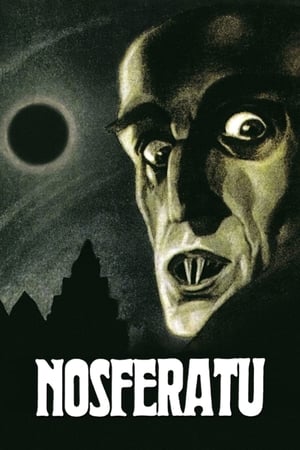
The mysterious Count Orlok summons a happily married real estate agent to his castle, located up in the Transylvanian mountains, to finalise a terrifying deal.
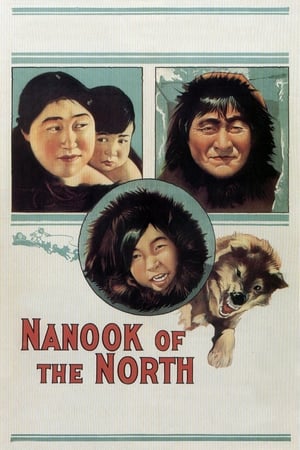
This pioneering documentary film depicts the lives of the indigenous Inuit people of Canada's northern Quebec region. Although the production contains some fictional elements, it vividly shows how its resourceful subjects survive in such a harsh climate, revealing how they construct their igloo homes and find food by hunting and fishing. The film also captures the beautiful, if unforgiving, frozen landscape of the Great White North, far removed from conventional civilization.
Sergei M. Eisenstein's docu-drama about the 1917 October Revolution in Russia. Made ten years after the events and edited in Eisenstein's 'Soviet Montage' style, it re-enacts in celebratory terms several key scenes from the revolution.
A classic of the silent age, this film tells the story of the doomed but ultimately canonized 15th-century teenage warrior. On trial for claiming she'd spoken to God, Jeanne d'Arc is subjected to inhumane treatment and scare tactics at the hands of church court officials. Initially bullied into changing her story, Jeanne eventually opts for what she sees as the truth. Her punishment, a famously brutal execution, earns her perpetual martyrdom.
The Man With The White Mask
Abraham Cadabra, an unconfident young man buys a magic book and top hat in the hope of using magic to impress the girl of his dreams, Penelope Predicament. However, when he meets her for a date, he discovers that his rival, Jock Strong has beaten him to it. Abraham tries to use magic to win Penelope over, but magic may not be the solution.
Erika Kohut, a sexually repressed piano teacher living with her domineering mother, meets a young man who starts romantically pursuing her.