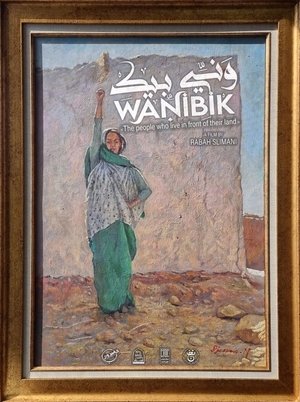
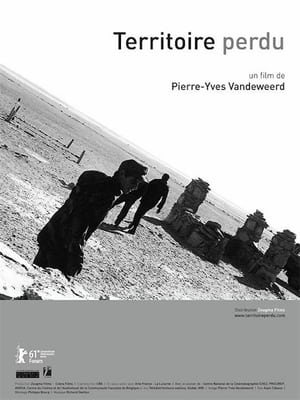
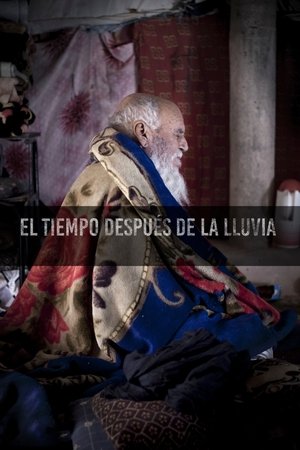
Spanish actor Pepe Viyuela embarks on a personal journey on the trail of his grandfather Gervasio, a soldier in the Republican Army during the Spanish Civil War.
In the middle of Western Sahara desert, where no water, no trees, no animals live but a bunch of refugees, struggling in poverty to survive the harsh habitat, the least of the problem one might face is the environmental crisis.
Waiting for the UN is a poetic documentary about life in the desert, literally and figuratively. We follow the everyday life of a Saharawi family from occupied Western Sahara, who have lived ”temporary” in a refugee camp in Algeria for over 40 years. Waiting for God and the UN, as the father puts it.
Atil, a documentary on the life of the Saharawis in the Tindouf refugee camps in Algeria. In the camps there are no limits, since creativity and innovation give rise to ideas that succeed in changing the world. As a result, this documentary presents five young Saharawis who show day by day that anything is possible, despite the difficulties. They are all examples of perseverance. Discover a place where hope is never lost.
Atu is a 12-year-old Saharawi girl who comes to Valencia every summer to escape the suffocating desert summer in exile. Two opposing worlds between a conflict that has driven hundreds of thousands of people away from Western Sahara forcing them to live in southwestern Algeria. At her young age, with little resources and no homeland, she courageously faces the future.
From the Sahrawi refugee camps of Tindouf (Algeria) to Tifariti (freed territories of the Sahrawi Arab Democratic Republic), we embark hand in hand on an adventure with a group of artists from all around the World. Each one has their own story, experience, worldview and artistry. An extraordinary and heartwarming journey through a dreamlike world that gives us hope in humanity.
Testimonies of a people enlisted on the path of independence. Records taken at refugee camps in Tindouf (Sahara Desert in southern Algeria) and Bir Lehlu (region liberated by the Polisario Front)
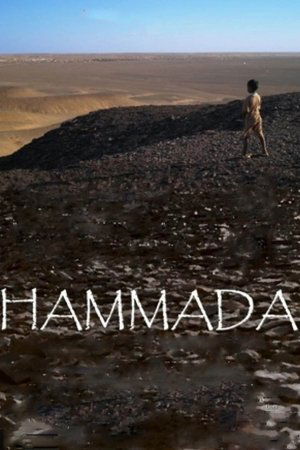
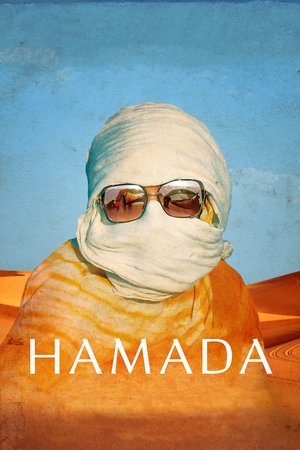
The Saharawi women face the thirst of the hamada, the curse of the desert, every day. They’ve built their refuge in a land where no one could survive before. For more than forty years they’ve been holding out and taking care of their people there. They ensure every drop of water is distributed according to the needs of each family … and they wait. But there’s an even more terrible thirst in their throats, for which they find no relief.
28-year-old Azman, a student in the film school Abidin Kaid Saleh, explains how he discovered film in the Sahrawi refugee camps, the difficulties he had explaining his choice of study to his family, and how his society views this career.
In 1976 Spain abandoned its last colony, the Western Sahara, in the hands of Morocco. Since then, the Saharawi people have been divided between those who stayed on their land and those who fled the Moroccan persecution. Those who escaped survive in the desert, in extreme conditions and in the face of the helplessness of the international community. This film, directed by the journalist Helena Villar, was recorded on the occasion of the 40th anniversary of the Sahrawi resistance and is dedicated to the struggle of the tens of thousands of inhabitants of the Western Sahara
Sahrawi artist and visual poet Mohamed Sleiman Labat follows the story of the emerging phenomenon of small scale family gardens in his local community in the Hamada Desert. The film features the story of four families in Samara Camp with small scale gardens, their practices and the knowledge they develop as part of their practices in the garden. The camps are located in a very harsh environment with extreme climate conditions, and the Sahrawi are still dependent on international food aid.
Documentary that denounces the damages caused by the use of land mines in Western Sahara and shows the lives of those affected.
Médicos del Mundo Sahara presents the "Hunna Raquizat Alhayat" campaign that tells the stories of 17 Saharawi refugee women with different specialties and responsibilities within the field of health. This campaign arises from the need to value their work and raise awareness around all the challenges they face in their day to day, with the aim of contributing to the construction of a fairer society for all people. Saharawi women have been and continue to be the ones who sustain the population or, in other words, they are the pillar of life.
Silence always surrounds the mine, first when it explodes and then when it eternally haunts its victims. The history of the silence of this fire hidden by Morocco in the sand of Western Sahara has left more than 4,000 victims in what is considered the largest minefield in the world. Daha and Fatimetu suffered the effect of the silence of the mines, their lives changed forever, like that of the Saharawi people who, after 14 years cleaning the desert of artifacts, the rupture of the ceasefire have left the future of the contamination of their territory.
A boy has a dream of traveling to the world, especially to Paris where his uncle lives, but a wall built on his land divides his country and does not allow him to travel or cross to the other side of his land.
Taleb, who came to a refugee camp at the age of five in 1975 and returned there after his studies abroad, tells of his life as a displaced person, his gratitude for the reception and support in Algeria, and his hope that the Sahrawis may one day return to their homeland. For Taleb, this hope drives him to actively prepare for better times: as a graduate in agricultural sciences, he conceived a successful small-scale closed-loop economy in a desert under the most difficult conditions, producing enough food for self-sufficiency.
The Nomad Garden is an ode to the impossible. A young Sahrawi refugee shows how he grows organic vegetables and herbs in one of the most inhospitable places on Earth, overcoming challenges like the lack of water, extreme temperatures and a barren soil.
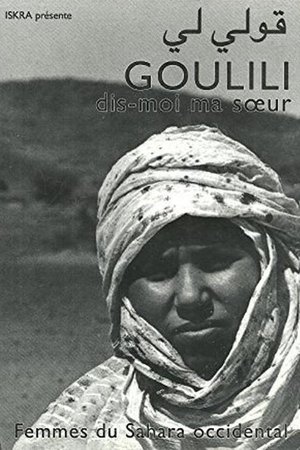
The Sahrawi women relate their exil, the tortures, their memories and the difficulties of life as refugees. They are beautiful, touching... Educated by the Polisario Front and attached to the values of islam, they are widows, divorcede or married to fighting men. Owing to the force of circumstances, they have built a society of independant muslim women...
OASIS, a documentary that tells us about water's historical role in Western Sahara via the true stories of people who turned this wild desert into a place full of life.
Ali Salem Hamudi Mohamed - Yahdih, was born in 1955 in El Aaiún (Western Sahara). He completed his secondary schooling in the "Spanish" Sahara. A scholarship allowed him to enrol at the Universidad de la Peninsula in 1975, but Morocco's invasion of the Sahara led him to return to the city of his birth and go into exile with his people, participating in the resistance and helping to organise the Tindouf Refugee Camps (Algeria). In 1980, the Polisario Front and the Government of Cuba offered him the opportunity to study Architecture at the University of Havana. On his return to the Camps in 1985 he worked for the SADR's Department of Construction. He designed more than twenty public buildings, including town halls, schools and nursery schools, and also collaborated with international aid organisations to build hospitals and training colleges. All of these buildings were built collectively by the Saharan people. ;In 1999 he emigrated to Spain. His family joined him five years later.