Pre-WWII Czech democratic politician Milada Horáková was one of the first victims of the communist regime in Czechoslovakia. Opposing the 1948 coup but not leaving the country, she was arrested and tried for treason on fabricated charges in a show trial broadcast on the radio.
A sociopolitical historical documentary-thriller about the international decline of communism and the 1956 Hungarian Revolution.
A biopic about star Elza Soares, considered one of the greatest samba singers ever and a symbol of the struggle against racism and women discrimination in Brazil.
Four women meet at Dar Joued on the eve of Independence. With different ages and social conditions, they are condemned to live together under the authority and injustice of their jailer: "El Jaida". They will share memories of the outside world, joy, emotions and distress of their daily lives.
Korean War, April 1953. Lieutenant Clemons, leader of the King company of the United States Infantry, is ordered to recapture Pork Chop Hill, occupied by a powerful Chinese Army force, while, just seventy miles away, at nearby the village of Panmunjom, a tense cease-fire conference is celebrated.
In 1956, actress and Hollywood star Grace Kelly (1929-82), then at the height of her film career, unexpectedly dropped everything to marry Prince Rainier III of Monaco. Jinx, an American journalist and friend of the future princess, accompanied her on her journey to the wedding and covered the sensational event.
A drama following a French platoon during Algeria's war of independence.
In 1952, TV Tupi, Brazil's first television channel, invited psychiatrist Júlio Gouveia and his wife, Russian writer Tatiana Belinky, to develop the network’s children's programming. The couple then asked the sons and daughters of their friends to join the cast of the newly created shows, the most prominent of which was Sítio do Picapau Amarelo. And so, Antonio Silvio, Lia, Lídia, Sérgio, and David José embarked on an unexpected journey that would come to shape the future of Brazilian television. Memories of the Sítio is a trip through the personal recollections of these actors and the story of the first television adaptation of Monteiro Lobato’s work.
During the ill-fated Hungarian revolution of 1956, Karcsi Szabo, star player on the water polo team, is torn between his love for a revolutionary student and his training for the Melbourne Olympics.
A look at the Mau Mau Rebellion of the 1950s as experienced by filmmaker Donald McWilliams.
On October 4, 2018, France celebrated the 60th anniversary of the Fifth Republic. It is a republic born in the throes of the Algerian War and one which—from the day it was founded by General de Gaulle until the presidency of a very Jupiterian Emmanuel Macron—has been assailed as a “Republican monarchy” by partisans of a more assertive parliamentarian state. By revisiting the struggle of those who dared oppose the new regime — only to suffer a crushing defeat on September 28, 1958, when they were barely able to garner 20% of the vote against the constitutional text — this film shines a powerful new light on the origins of the Fifth Republic and its consequences for the next 60 years. It is a constitutional debate that planted the seeds for a complete upheaval of the French political landscape, on the left in particular, and set the country in motion toward what would be called the Union of the Left.
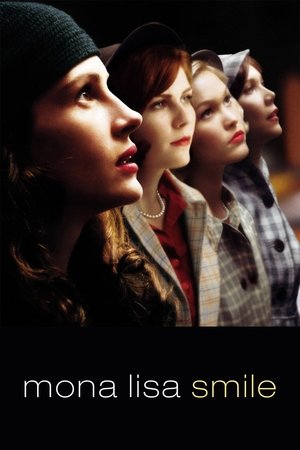
Katherine Watson is a recent UCLA graduate hired to teach art history at the prestigious all-female Wellesley College, in 1953. Determined to confront the outdated mores of society and the institution that embraces them, Katherine inspires her traditional students, including Betty and Joan, to challenge the lives they are expected to lead.
A box found in an abandoned storage unit unearths a time capsule of correspondences from a forgotten era: the underground drag scene in 1950s New York City. Firsthand accounts and newly discovered footage help cast a long overdue spotlight on the unsung pioneers of drag.
The story of a man whose love for football, for England and for the love of his life, Margaret, saw him rise from Nazi 'villain' to British hero. Bert Trautmann, the German goalkeeper won over even his harshest opponents by winning the FA Cup Final for Manchester City in 1956 - playing on with a broken neck to secure victory.
Charles de Gaulle, the first president (1958-1969) of the Vth Republic, France’s current system of government, left his mark on the country . He was statesman of action and has been compared to a monarch. This film depicts the general’s personality through the great events of his presidential term, at a time when the world was undergoing considerable changes.
Consumed with the monotony of her domestic life, a lonely housewife is forced onto tranquilizers to survive her mundane routines and isolation.
The film takes place among the prisoners in the camp, who are secretly praying and being bullied by the guards. At the same time, the screen shows the lives of believers who, while remaining in the Vinnytsia region, continue their quiet struggle for faith. Based on real events.
Stop-motion animation on the arranging of marriages in 1950/60s set in the Eastern-Polish borderland. The script is based on a part of Mikołaj Smyk's diary, the director's grandfather. The biographical objects used in the animation, such as an authentic headscarf, Polish and Russian books, the copy of Mikołaj Smyk's diary and photographs help situate the story in its original environment.
On February 28, 1958, the community of Floyd County, Kentucky experienced one of the greatest tragedies imaginable when a school bus carrying 48 students careened over an embankment and plunged into the Big Sandy River. Miraculously, 22 children survived by swimming to shore; the rest of the students, and their driver, weren't so fortunate. Over 50 years later, filmmaker Michael Crisp reflects on the accident that broke America's heart by speaking with crash survivor Martha Burchett Marsh and numerous other locals whose lives were forever affected by this heartbreaking catastrophe.
Spain, 2003. An accidental discovery leads Clarence to travel from the snowy mountains of Huesca to Equatorial Guinea, to visit the land where her father Jacobo and her uncle Kilian spent most of their youth, the island of Fernando Poo.