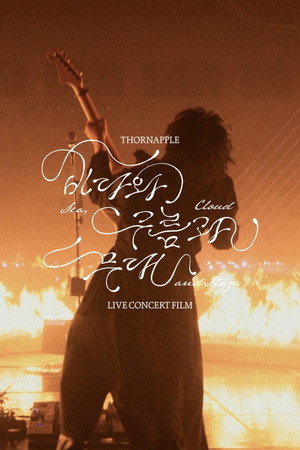
THORNAPPLE 'Sea, Cloud and Stage' Live Concert Film
4000m above sea level, lies a small spiritual village called Nurkum. This is a mind blowing story of the last Sherpa family holding the traditional Sherpa profession of the Mountain cow husbandry in the most extreme weather conditions. It shoes redemption and pain while holding the old ways of tradition in the backdrop of the modernist way of life.
In 1990, one sixth of the population of Bhutan was exiled because they demanded greater democratic rights from the ruler. The film follows the story of Sarita, a 13-year-old girl born in Khudunabari, a refugee camp in Nepal where over 100,000 Bhutanese exiles live. Now they will be "relocated": thousands of families will be forced to emigrate and their Lotshampa identity will disappear forever. Sarita and her friends will not tell us their odyssey: they will dance and sing it.
Fogo de Conselho
Sampaloc Lake - the most prominent of the seven lakes of San Pablo City has provided shelter, employment and inspiration to its immediate community for countless decades. In return, the natural resource suffered from indiscriminate use of the residents themselves and the consequences of rapid urbanization. Recently, the local government have implemented a clearing of all residential structures within the legal easement of the dying lake to pave the way for a tourism master plan that endeavors to balance revenue and environmental protection. In the eve of the clearing operations, film maker Dennis Empalmado documented the final musings of the residents, advocates, and artists whose lives revolved around the 99 hectare crater lake.
A look that explores the role of the muses in the History of Western Art, highlighting their close connection with the work of the so-called great geniuses as co-creators.
Frans Masereel is one of the most fascinating Belgian artists of the 20th century. His work, essentially composed of black and white engravings, is a cry of rebellion against the tragedies of his time. Forced into exile for his pacifist convictions, he embodied, alongside writers like Stefan Zweig and Romain Rolland, the dream of a cultural and brotherly Europe. Through an imaginary correspondence the director addresses to the artist, the film sketches the portrait of a free, touching man who, throughout his life, attempted to break free of art dealers and put his creations in the hands of all.
Few places symbolise the dawn of modernity with its expectations and upheavals better than the Jelmoli department store. The director documents the 125-year history from its foundation to its closure at the end of 2024.
A propaganda film covering Revisionist Zionist talking points regarding the history of Israel and sectarian views on the Arabs and Muslims of the world.
"El campo para el hombre" was a politically militant documentary about the small holdings of land in the north of Spain and the large estates in the south of the country. This film portrays the exploitation and misery of the Spanish peasants, but also their class-consciousness and their will to fight for their rights and freedom. The film was shot in the late years of Franco's dictatorship, so it was made in secrecy (the directors were connected to the Spanish Communist Party).
Cinéastes de notre temps : Norman McLaren
Developments in the Canadian forestry industry during the 1970s are shown being carried out both as lab experiments and in the field to protect and conserve the country's vast forests. These include turning a Newfoundland bog into woodland, fostering British Columbia seedlings that withstand mechanical planting, inoculating Ontario elms against the bark beetle, devising ways of controlling fire, and more.
What if the Doomsday Preppers were right all along? Hacking into urban infrastructures isn't science fiction anymore - it's in the news every day. A 90-minute docu-drama, "American Blackout" reveals in gritty detail the impact of what happens when a cyber attack on the United States takes down the power grid. The question is: when the lights go out, what do we do next.
During the rise of the Third Reich two German car manufacturers were ordered to build the most high performance vehicles the world had ever seen. What followed was a rivalry that would reap Grand Prix victories, international domination that was a propaganda coup, and provide world fame to its drivers who risked their lives smashing speed records that would stand for 79 years. All under the direct orders of the Fuhrer himself. This special one-off documentary charts the rise of Nazi Germany’s dominate ‘Silver Arrow’ Grand Prix and Speed Record cars of the 1930’s. Leading motor racing and World War 2 experts James Holland, Richard Williams, Eberhard Reuss and Chris Routledge tell the story of the Nazi funded Auto Union and Mercedes Benz ‘National Racing Cars’. Hitler’s Supercars interweaves the rise of the Third Reich with the racing exploits it funded and what propaganda messages these racing cars where sending.
Reporter Clay Pigeon interviews New Yorkers in October, 2008.
Eric Sandström interviews and the artist, Olle Olsson-Hagalund, himself narrates — it will be a walk both in a nice old Stockholm suburb and in a naïve painting with beautiful colors.
Polish expatriate Janusz Piekalkiewicz put together this documentary about his homeland's struggle in World War II from 1939 to 1945. He draws from his personal experience as a participant in the Warsaw ghetto uprising and his incarceration in a Nazi concentration camp. Piekalkiewicz, who fled Poland in 1957, also focuses on the terror of the Stalin regime that followed the war, and newsreel footage is used to set the stage for the 1939 agreement between Hitler and Stalin. Piekalkiewicz maintains the film is not anti-Russian but admits it is definitely anti-Stalin in its presentation. He also points out that there were more casualties in Poland than the combined total of casualties suffered by the Western allies.
A documentary film created using authentic footage that shows the terrifying effects of nuclear weapons, using Hiroshima as an example.
Mirades: Retrats Sense Sostre
Live from the 2018 Bunbury Music Festival