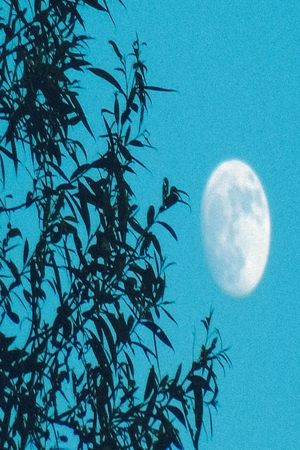
João Pedro Rodrigues answers the question from the title with an autobiographical short-film.
An animated film about the history and use of hot water.
Elem Klimov's tribute to his late wife, director Larisa Shepitko, killed in a car accident a year earlier. Features excerpts from all of her films, and archival audio of her discussing life and art.
In 1975, a seven-months pregnant Vietnamese refugee, Giap, escapes Saigon in a boat and, within weeks, finds herself working on an assembly line in Seymour, Indiana. 35 years later, her aspiring filmmaker son, Tony, decides to document her final day of work at the last ironing board factory in America.
Upon realising her generation won’t have a future unless the world’s politicians act now on climate change, 15-year-old Greta Thunberg skipped school in August 2018 to protest outside the Swedish parliament. What started as a one person strike soon gained global momentum. We follow Greta and the organisers of the school strikes for climate as they are cementing a worldwide movement ahead of their first global protest that took place on March 15th, 2019. It was the biggest climate strike in history with up to 1.6 million students in more than 125 countries.
Paper Dolls follows the lives of transgender migrant workers from the Philippines who work as health care providers for elderly Orthodox Jewish men and perform as drag queens during their spare time. It also delves into the lives of societal outcasts who search for freedom and acceptance.
An isolated village in the Lithuanian countryside. Seated in her house, an elderly woman recites an old folk story. Then she climbs up the tall ladder that takes her to the rooftop of the church.
On the 11th of August at 11 minutes past 11am, almost total darkness fell across Southern England and an eerie silence descended as the population gazed skyward at what was the last total solar eclipse of this millennium. A total solar eclipse is a breathtaking event and this documentary programme conveys that awesome feeling by exploring how and why eclipses happen. A mixture of computer-generated views from outer space, footage of eclipses throughout the 20th century (some taken as early as 1927) and original footage taken of this year's total solar eclipse (shot in Cornwall) make this programme a celebration of eclipse mania.
Alcoholism and its Ill-Effects was considered to be one of the most popular science propaganda (or educational) films produced in Russia before the revolution of 1917. Alexander Khanzhonkov, the most prominent Russian film producer of that era, financed a special department dedicated to non-fictional cinema, despite the fact that such films were not commercially successful. Unfortunately, not a single copy of the film has survived to the present day. All that remains are 12 frames, which were used by Izvolov to create this reconstruction. He also used extracts from critical reviews, published at the time of the film’s release, to produce a soundtrack.
This short film focuses on the job of the Hollywood screenwriter.
Academy Award®-winning filmmaker Errol Morris confronts one of the darkest chapters in recent American history: family separations. Based on NBC News Political and National Correspondent Jacob Soboroff’s book, Separated: Inside an American Tragedy, Morris merges bombshell interviews with government officials and artful narrative vignettes tracing one migrant family’s plight. Together they show that the cruelty at the heart of this policy was its very purpose. Against this backdrop, audiences can begin to absorb the U.S. government’s role in developing and implementing policies that have kept over 1300 children without confirmed reunifications years later, according to the Department of Homeland Security.
A group of African American students at the University of Arizona reveals the importance of political spaces within Universities in times of intolerance.
Lake Patzcuaro, located 230 miles west of Mexico City, is one of the highest and most picturesque bodies of water in Mexico. The heritage of the indigenous peoples of the area, the Tarascans, still prevails, such as the production of lacquer-ware handicrafts, and the means of hunting and fishing, the latter which uses nets shaped like large butterfly wings. Although most current day Tarascans are Roman Catholic, they have not totally abandoned their indigenous pagan gods. On Janitzio, one of the many islands in the lake, stands a large statue commemorating José María Morelos, a prominent figure in Mexican liberation and a great benefactor to the Tarascans. Janitzio is also the inspiration for many famous paintings. The town of Tzintzuntzan just inland from the lake's shore acts as the regional center for the market and for festivals.
This Traveltalk series short showcases the Mexico City police department's various units as they participate in a yearly festival. Included are a marching band, a parade of patrol cars, the motorcycle unit, equestrian unit, and the department's pistol team.
In 1967, de Andrade was invited by the Italian company Olivetti to produce a documentary on the new Brazilian capital city of Brasília. Constructed during the latter half of the 1950s and founded in 1960, the city was part of an effort to populate Brazil’s vast interior region and was to be the embodiment of democratic urban planning, free from the class divisions and inequalities that characterize so many metropolises. Unsurprisingly, Brasília, Contradições de uma Cidade Nova (Brasília, Contradictions of a New City, 1968) revealed Brasília to be utopic only for the wealthy, replicating the same social problems present in every Brazilian city. (Senses of Cinema)
Unlike our dream of becoming a great filmmaker, the movie boards that adults talk about are tough. We are looking for our idol, Bong Joon-ho...
This Traveltalk short visits southern Mexico.
This Traveltalk series short chronicles the sights and sounds on a train ride from Veracruz to Mexico City.
A Chinese Canadian son sets out to make a film on his mother, who was once known as the first ever Chinese Opera Singer to have performed Pingju Opera in English in late 1980's China.
A film documenting the landscapes of northern Iceland.