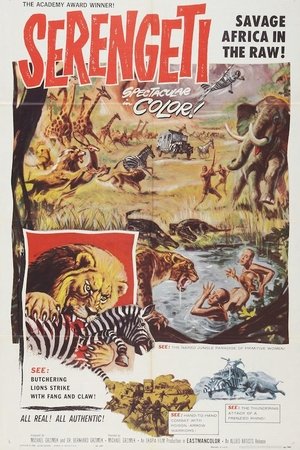
The film tells of the beginnings of the Serengeti National Park in Tanzania. At the end of the 1950s, the Tanzanian National Park Administration wanted to fence in the protected area around the Ngorongoro Crater. Bernhard and Michael Grzimek were invited by the national park administration in 1957 to get a precise picture of the animal migrations and to provide the national park administration with the values they needed for their project. Using a new counting method with two airplanes, the Grzimeks found out that the migration of the herds was different than assumed.
How African artists have spread African culture all over the world, especially music, since the harsh years of decolonization, trying to offer a nicer portrait of this amazing continent, historically known for tragic subjects, such as slavery, famine, war and political chaos.
The history of warfare as it relates to global Black society, broken down into 7 chapters that examines the ways the system of racism wages warfare from a historical, psychological, sexual, biological, health, educational, and military perspective.
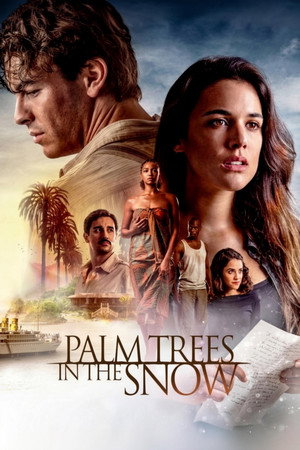
Spain, 2003. An accidental discovery leads Clarence to travel from the snowy mountains of Huesca to Equatorial Guinea, to visit the land where her father Jacobo and her uncle Kilian spent most of their youth, the island of Fernando Poo.
Sudan, Southern Kordofan, the Nuba Mountains in Africa. Scenes from the forgotten war that the fighters of the Nuba people have held since 2011 against the government of President Omar al-Bashir and the Sudanese army, which crudely show the hard daily life of Hannan, a brave woman fighting for the survival of her family; Jordania, a promising student; Mosquito, a reckless journalist; and Al-Bagir, a rebel leader.
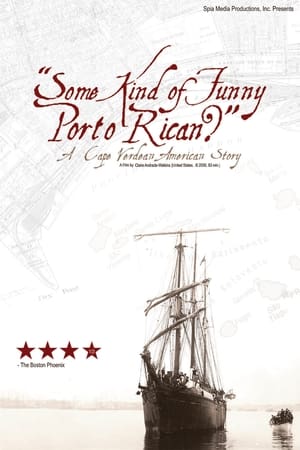
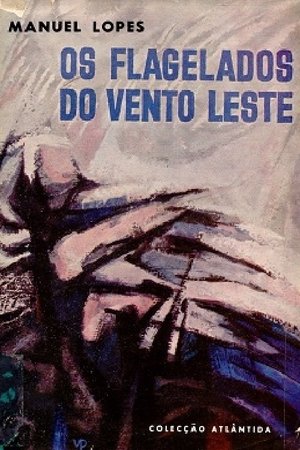
Cape Verde, 1964. At the feet of a mighty volcano, the traditional Cape Verdean society is undergoing a steady change. The old land-owning aristocracy is disintegrating. A class of "mulattos" begins to emerge, with a trade-based financial power that threatens the landlords. A new identity arises, a mix of old and new, of African and Portuguese culture, sensual and dynamic. The songs of Cesária Évora follow this inevitable transformation. From the novel by Henrique Teixeira de Sousa.
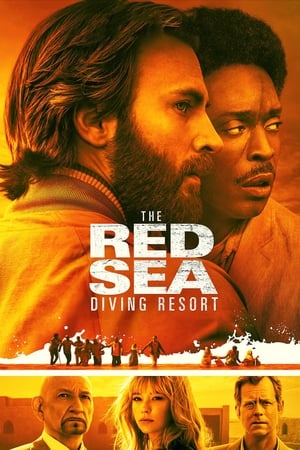
Sudan, East Africa, 1980. A team of Israeli Mossad agents plans to rescue and transfer thousands of Ethiopian Jews to Israel. To do so, and to avoid raising suspicions from the inquisitive and ruthless authorities, they establish as a cover a fake diving resort by the Red Sea.
An examination of how Africa's mythological stories have served as the basis for the world religions that came after, especially in Western civilization.
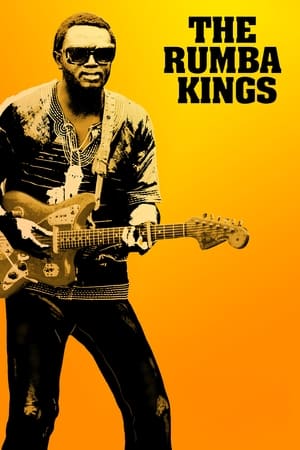
In the fifties, when the future Democratic Republic of Congo was still a Belgian colony, an entire generation of musicians fused traditional African tunes with Afro-Cuban music to create the electrifying Congolese rumba, a style that conquered the entire continent thanks to an infectious rhythm, captivating guitar sounds and smooth vocals.
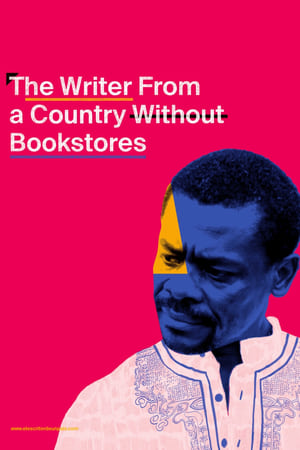
The ruthless dictator Teodoro Obiang has ruled Equatorial Guinea with an iron hand since 1979. Juan Tomás Ávila Laurel is the most translated Equatoguinean writer, but he had to flee the country in 2011, after starting a hunger strike denouncing the crimes of the dictatorship. Since then, he has lived in Spain, feeling that, despite the risks, he must return and fight the monster with words.
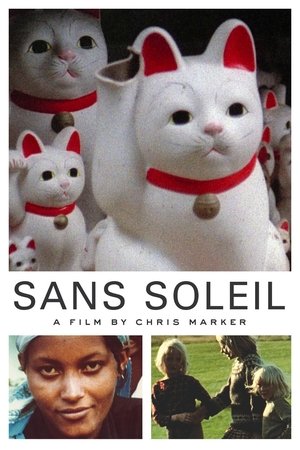
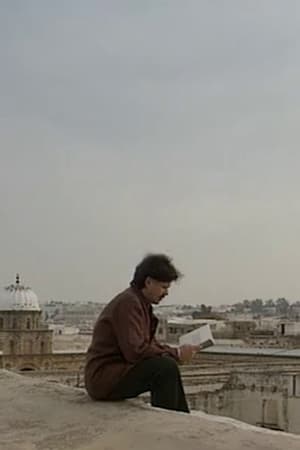
Tunisia itself is the subject; we wanted to render the genius of the site. Tunisia is almost the central character of this little film: we see the relation of the city to the sea, the traces that bear witness to its foundation, the remains of Carthage, the symbolism of the recently discovered Medina coin … The splendours of the house interiors and courtyards are associated with a scene of origin, what psychoanalysis calls a primal scene. Entering these houses opens up a world peopled by women: the child’s ‘homecoming’ in the hands of women is staged as an abduction, playing doubly on fascination and terror. These places were mine, from my childhood, they can be found almost intact – it’s the return of the exile visiting the kingdom. I let Ruiz discover all this, and immediately that led him to echoes and resonances ranging from Spain to Chile.
In 1885, Africa is a succulent cake destined to be wildly divided and everyone wants a piece. A disturbed European king, a Pygmy working in a luxury hotel, a successful but lonely businessman, an enslaved porter, a young army deserter, a ghostly clarinetist. Some benefit from colonialism and greed. Others suffer racism and violence.
Thousands of royal artifacts of Dahomey, a West African kingdom, were taken by French colonists in the 19th century for collection and display in Paris. Centuries later, a fraction returned to their home in modern-day Benin. This dramatized documentary follows the journey of 26 of the treasures as told by cultural art historians, embattled university students, and one of the repatriated statues himself.
The film tells a story of Mariana, a nurse who leaves Lisbon to accompany an immigrant worker in a comatose sleep on his trip home to Cape Verde. The devoted Portuguese nurse took a journey only to find herself lost in abstract drama.
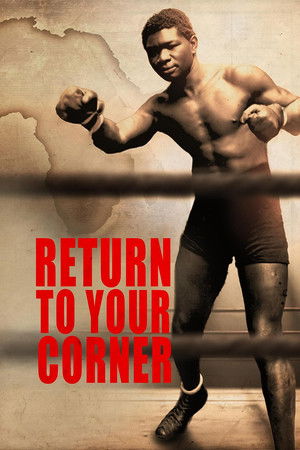
This is the story of Africa's first Boxing World Champion, Battling Siki. Who was this boxer born in Senegal, decorated for Bravery in World War I? Why do so few know that he fought and won the World Light Heavyweight Title aged 25, only to lose it controversially six months later? And why was his life cut short on a New York Street aged 28?
In Brussels, Belgium, the Royal Museum of Central Africa is undertaking a radical renovation, both physical and ethical, to show with sincerity, crudeness and open-mindedness the reality of the atrocities perpetrated against the inhabitants of the Belgian colonies in Africa, still haunted and traumatized by the ghost of King Leopold II of Belgium, a racist and genocidal tyrant.
South Africa, July 11th, 1963. Several members of the African National Congress, an organization declared illegal, are arrested in Rivonia, a country house near Johannesburg. The detainees, along with Nelson Mandela, imprisoned since 1962, are charged with serious crimes for their radical activism against the apartheid regime.
Ndola, Northern Rhodesia (currently Zambia), September 18, 1961. Swedish economist and diplomat Dag Hammarskjöld, Secretary General of the UN, dies mysteriously in a plane crash. Decades later, Danish journalist and filmmaker Mads Brügger and Swedish researcher Göran Björkdahl investigate the case in search of definitive closure.
Germans colonized the land of Namibia, in southern Africa, during a brief period of time, from 1840 to the end of the World War I. The story of the so-called German South West Africa (1884-1915) is hideous; a hidden and silenced account of looting and genocide.
The largest country in the Arab world and a producer of hydrocarbons, Algeria has everything it needs to weigh on the international scene. But Africa's second military power seems undermined by its internal problems. While the Bouteflika regime has fallen and the popular “hirak” movement has shown that the people are ready to enter a more democratic era, the country appears as a colossus with feet of clay, which has failed enhance their independence. How did this isolation come about? From the “dark decade” of terrorism to the fall of Bouteflika, via 9/11 or the Arab revolutions, this documentary sheds light on Algerian foreign policy in recent decades, while deciphering the strategy of Western powers towards it.