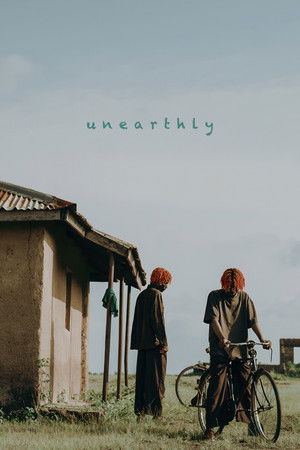
Two brothers move silently through the mundane world, carrying an unseen offering of light. As they journey from place to place, dancing and observing, subtle traces of change begin to appear, revealing how quiet presence can shift everything.
Set at an artificial reservoir in North Carolina, RESERVOIR (SEVEN FRAGMENTS) is a meditation on the unnatural histories of the American environment. The film approaches both the cinematic image and the landscape it captures as damaged, estranged things—things adrift in a world of irreparable discord.
Le crash
The journey of a boy accepting that his lover is gone
This ironic and satirical video poem focuses on the mind of a young artist struggling with the desensitisation, exhaustion and stress of information overload at a time when 328.77 million terabytes of data are generated every day.
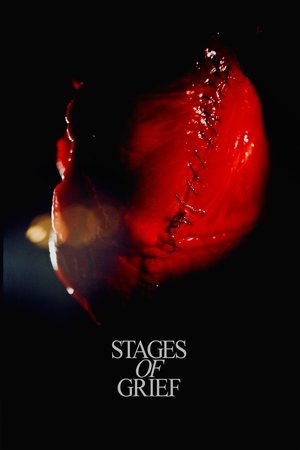
A father travels through five stages of grief after discovering that his wife is having an affair. The father is portrayed by five different actors and actresses.
With Voice Windows (1986), Steina renews her efforts to generate a complex sound-image interface
Meta Ekologi was made in 1979 and is based on a performance by Sardono W. Kusumo and his group. They are shown in a pool of mud in a Jakarta slum, with the local population watching as the artists cover themselves entirely in mud. It's a response to an attempt at dialogue with the ecology of land and water. Humanity expresses its feelings through the body, trying to become one with the universe. It refers to the peasants who work the land and are covered in mud. It's a process of poetisation. Gotot Prakosa, ‘Interview with Gotot Prakosa’, Cantrills Filmnotes, 1990
During Childbirth, a mother is told the child is stillborn, and she struggles to finish the birth in order to survive.
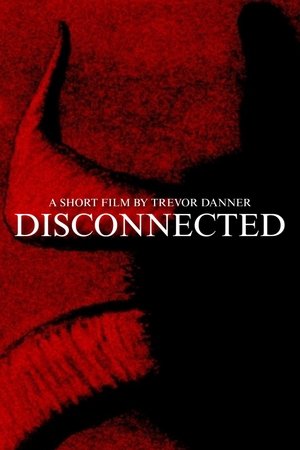
Phoenix answers the wrong call, and reality fractures. Voices distort, shadows follow, and every connection pulls him deeper into a nightmare he can’t escape.
Two kids' friendship is tested in a game of cards as a mysterious figure watches them from outside.
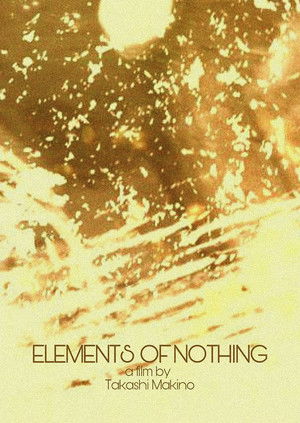
For this film, Takashi Makino allowed himself to be inspired by the earth. In a never-ending stream of images, we recognize elements from the forest that he then reduces to an abstraction. The film came about as a classical composition in which the picture and the musical contribution of Jim O’Rourke link up seamlessly and lead the mood in turn. A sense of freedom is what predominates.
Two children are directed by a cinemaker.
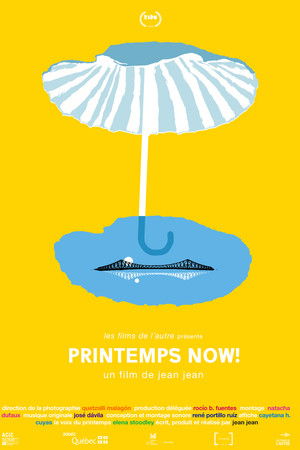
How Montreal is transformed from winter to spring. Inspired by Berlin: Symphony of a great city, Printemps Now! is a cinematographic poem, an audiovisual symphony of the city of Montreal transitioning from winter to spring.
A reframing of the classic tale of Narcissus, the director draws on snippets of conversation with a trusted friend to muse on gender and identity. Just as shimmers are difficult to grasp as knowable entities, so does the concept of a gendered self feel unknowable except through reflection. Is it Narcissus that Echo truly longs for, or simply the Knowing he possesses when gazing upon himself?
The word kewaaj (কেওয়াজ) is colloquially used to explain chaos, noisiness or annoyance. "Kewaaj" is an audiovisual attempt to give you a glimpse into how the people of Dhaka function in one of the most unliveable cities, according to the Global Liveability Index.
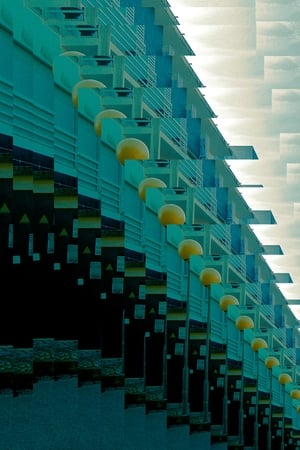
The corner of a street is matched and mixed with the chant of a bird recorded on that same street. A symbiotic relationship is triggered: the rapid and successively repetitive montage cuts between the image of the street and the corners of the video frame itself produce new textures and shapes in our brain, whilst the sound follows the same rhythmic movements by emphasizing different “corners” (frequencies) from the bird’s singing. The energetic potency stemming from the junction of these elements creates a new image that is almost tactitle, maleable and rippling. The result is a somewhat humorous operation of the portuguese word "corner" throughout the different stages of making the piece, finally unveiling a piercing physical and kinetic experience for all the corners of our eyes and ears.
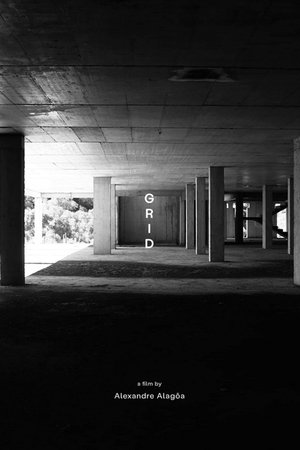
A ritual of grids, reflections and chasms; a complete state of entropy; a space that devours itself; a vertigo that destroys the gravity of the Earth; a trap that captures us inside the voids of the screen of light: «That blank arena wherein converge at once the hundred spaces» (Hollis Frampton).
The ocean speaks about how humans treat it. On a deserted beach, a woman becomes drawn to the shoreline, where she witnesses something strange.
Cria