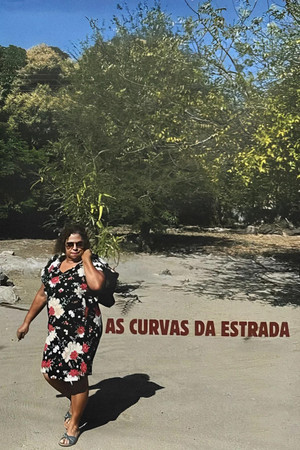
This hybrid documentary, crafted for the Psychosocial Processes II course at UNIRIOS, intricately weaves together contemporary perceptions of female aging in the Alto Sertão of Alagoas. Through the eyes and lived experiences of its central character, the film delves into the nuanced expressions of womanhood as it intertwines with the passage of time, offering an intimate exploration of identity and resilience in a richly textured cultural landscape.
Fondamenta delle Convertite
This is the story of an ordinary man transformed by history. A simple baker from Besançon who became a political symbol of resistance. That of a France that knows how much it needs others to grow. Of working classes rejecting the siren calls of populism. He says: "I was nothing and I became a monster" to express the vertigo of his transformation. And so the baker entered politics, visited the United States in the footsteps of Martin Luther King, brought aid to the Ukrainians, and ran for legislative elections. Fearless. Fighting with all his heart. It is this inspiring, touching, and funny human epic that Pedro da Fonseca's camera followed closely, capturing his doubts, his hesitations, and his emotions.
Rafaela, an 80-year-old woman, has a long conversation with her grandson, going over his path from childhood to old age. Now that she has been diagnosed with chronic breast cancer, faith is more present in her life than ever, which coexists with Rafaela's fear of death, and her grandson's fear of dying.
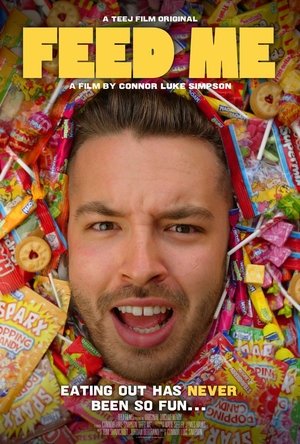
Filmmaker Connor Luke Simpson explores the underground-and often misunderstood-subculture known as feederism. A community where the fatter you are, the sexier you are.
Follow filmmaker Elle-Máijá Tailfeathers as she creates an intimate portrait of her community and the impacts of the substance use and overdose epidemic. Witness the change brought by community members with substance-use disorder, first responders and medical professionals as they strive for harm reduction in the Kainai First Nation.
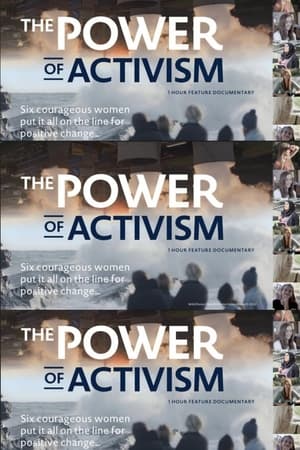
This film takes us on an emotional journey from sacred ground above Byron Bay to Antarctica, Indonesia to Pakistan, and is sure to light a fire under the strongest climate change denier. THE POWER OF ACTIVISM focuses on six highly spirited female activists as they are put under the microscope to ascertain the financial impact of their environmental solutions… and the results are astonishing. From shark conservation to indigenous practices, intensive farming to plastic pollution; all their ‘causes' fall under the umbrella of "climate change", but they should also fall under the umbrella of "saving tax payers hundreds of millions of dollars!”
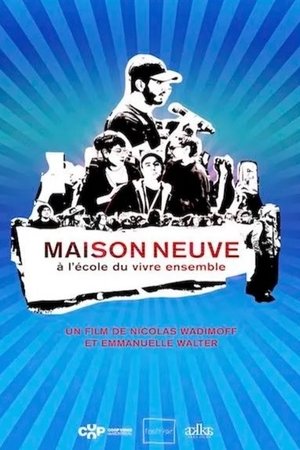
Over a dozen students at this school in Quebec were radicalised. To tackle the issue, a pilot project was launched to heal divides within the student body. It's a hybrid cultural model, made up of the many cultures of its students.
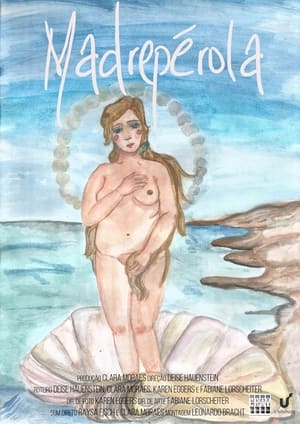
In a tide oblivious to diversity, pearl oysters live under attack for not fitting into the standards and sizes. This is the story of how their pearls are born.
In a television first, Fat Family Tree sets out to prove that unlocking the secrets of a fat family’s genes can help provide the answer to their lifelong weight problems. Presented by Dr Dawn Harper (Embarrassing Bodies), Fat Family Tree uses cutting edge genetics to decode the genes of an overweight family for whom all other attempts to shed the pounds have not worked. Discovering how the family’s genes have put them at risk of excessive weight gain is the first step to devising a diet to help them beat their genes. Based on the latest science, the programme’s “gene-busting” diet also promises fail safe diet tips that could help all of us lose weight.
In a Parisian public hospital, Claire Simon questions what it means to live in women’s bodies, filming their diversity, singularity and their beauty in all stages throughout life. Unique stories of desires, fears and struggles unfold, including the one of the filmmaker herself.
The mother of animation director Rebecca Blöcher didn’t want to live an ordinary life. She wanted “something more,” she explains in this stop-motion film. The people around her didn’t understand—in a letter written in 1968, a girlfriend criticizes her for going out on her own and making men jealous, while advising her to dress in a more “feminine” way and to join a cooking course. Blöcher’s mother brushed aside the advice. Years later still, she divorced her husband and stepped into the big wide world.
Morgan Spurlock subjects himself to a diet based only on McDonald's fast food three times a day for thirty days without exercising to try to prove why so many Americans are fat or obese. He submits himself to a complete check-up by three doctors, comparing his weight along the way, resulting in a scary conclusion.
Kathryn Calder, one of the vocalists behind the Influential and successful indie band The New Pornographers, puts her life on hold when her mother is diagnosed with ALS. After moving back to her childhood home to care for her mother, she is inspired to record her first solo album, 'Are You My Mother?' there as a gift to her as she fights the disease. Old bandmates, friends, and a new extended family only recently discovered all join Kathryn in her and her mother's journey.
Overlooking the sea, two young men contemplate what is beyond the horizon as their friends and family leave for the allure of a new life.
The film interweaves the personal accounts of polio survivors with the story of an ardent crusader who tirelessly fought on their behalf while scientists raced to eradicate this dreaded disease. Based in part on the Pulitzer Prize-winning book Polio: An American Story by David Oshinsky, Features interviews with historians, scientists, polio survivors, and the only surviving scientist from the core research team that developed the Salk vaccine, Julius Youngner.
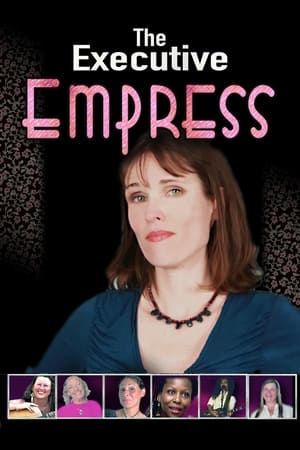
The Executive Empress explores the entrepreneurial lives of several Florida women, who have turned their unique passions into successful businesses.
On June 12, 2019, the Committee to Investigate Violence in Youth Care presented its final report. The conclusions were startling. Kim Feenstra set out to find out what progress has been made within the Youth Care system since then and ended up in a circle of grief and pain dominated by money, power and powerlessness. In her search, Kim Feenstra spoke to many people involved. The stories can be described as downright shocking. In many cases Youth Care appears to act as a revenue model that is exploiting parents and children. The complex system has only one entrance, but the exit is obstructed by all stakeholders who want to maintain their revenue model. The people who really matter, the parents and children, encounter a power block of inhuman proportions. A system dominated by money, power and powerlessness.
For those who electrical sensitivity, there aren’t many places to seek refuge. In a remote part of West Virginia, the so-called National Radio Quiet Zone offers one such escape.
Boire