This film follows the lives over one year, shot during three intervals, of two Basque shepherding families who live in Santazi, a village in the foothills of the French Pyrenees. The film is the only Disappearing World film made in western Europe and it focuses on the continuity and change in the community. This film shows the rationality behind the choice the villagers are making.
In 2020 the Hungarian government announced the change of ownership at nine state universities in order to make them maintained by foundations. The so-called “restructuring” comprised the imposition of a board of trustees over the universities, the members of which being loyal supporters of the government holding stable positions in its economic halo. Only one of the nine institutions protested against the forced political takeover of the University of Theatre and Film Arts (SZFE). Our film presents one of the stories of the university blockade.
In the late 1960s, with the triumph of bilingualism and biculturalism, New Brunswick's Université de Moncton became the setting for the awakening of Acadian nationalism after centuries of defeatism and resignation. Although 40% of the province's population spoke French, they had been unable to make their voices heard. The movement started with students-sit-ins, demonstrations against Parliament, run-ins with the police - and soon spread to a majority of Acadians. The film captures the behind-the-scenes action and the students' determination to bring about change. An invaluable document of the rebirth of a people.
Ricardo, Natalia's father, suffers from Parkinson's disease; in that condition he stopped producing Dopamine. Surviving a very strong family crisis, Natalia told them her sexual orientation. She does not understand why after being left-wing militants and fighting for equality and freedom, they could not accept her choice.
Konnie Huq celebrates the very best of British children’s television, with a dazzling array of clips from some of the most treasured programmes ever made and revealing chats with some of TV’s most beloved stars. But Konnie also tells a perhaps more surprising story: of how kids’ TV has frequently been at the forefront of social change, in terms of the stories it tells and the people who get to tell them.
From a personal vlog to a 3-year life documentary... with an ending yet to be written.
Fledgling comedian Eric Rushton has never been on a date - until this documentary.
The rock-wild youth of the 1960s during the apparitions of their idols.
A group of authentic voicemail messages to Alex over the past 5 years from various friends and family members. It is a poetic lattice weaved with mesmeric audiovisuals, presenting the isolating effects of an ever growing digital world.
Pioneering the harsh landscape of Nebraska was difficult enough in 1869. Pioneering a new university was almost beyond reason. What was a university? Who should go? What should be taught? There were no guidebooks. No road maps. They were building a university out of little more than hopes and dreams.
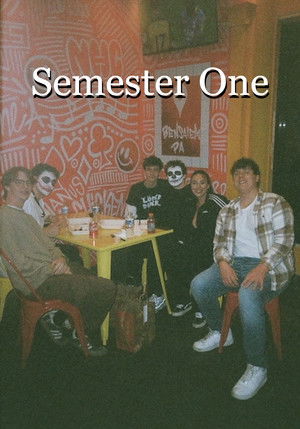
a short documentary-style film, following the first semester of a kooky group of university students in their third year
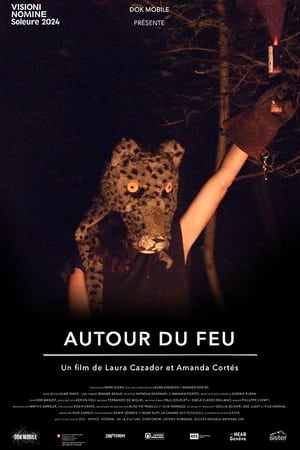
Around a fire in the middle of the forest, two former members of the armed anti-capitalist group La Bande à Fasel meet three young activists from the Mormont ZAD, XR Rébellion and anti-racist groups active in Switzerland. During a night as blank as a page, the five characters reflect on revolt, its forms and its limits, past and present.
A remarkable event the great American civil rights leader, Martin Luther King makes a powerful speech on a unique visit to Newcastle University.
A Cor do Cinema
It’s the second semester of junior year for Pierce “Sparni” Sparnroft, a gifted jazz vibraphonist studying at Montclair State University in New Jersey. Sparni’s prospects on the vibes were rejuvenated by their new professor, the world-renowned Steve Nelson, and are to be showcased during a student-driven recital in May 2023. But all the while, Sparni must face a crisis within.
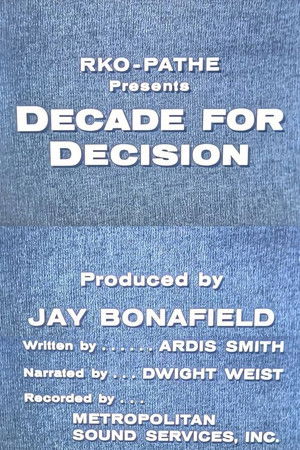
Short news featurette produced by Pathe-RKO after the Russians launched the first orbiting satellite, Sputnik. It is a patriotic 'call to arms' from the threat posed by this and the need for Americans to spend more on education in general and a college education in particular. A visit to the University of Buffalo highlights its science programs and the need for more graduates from all technical disciplines if America is to rise to the challenge. It bemoans the fact the PhDs earn less than a mechanic and the need to re-order priorities.
At Tsinghua University's campus, four people are standing at the intersection of their lives. Among them, there are those who just passed the college entrance examination, the first-generation of post-00 college students who entered their favorite universities with twists and turns , some are leaving their ivory towers, PhD graduates facing difficult choices and some have returned from the United States to enter Tsinghua University. Young teachers are full of "viewing the sky" ideal but face challenges, there are old academicians who still stand behind lectern after their retirement. The film tells the life ideals of the four Tsinghua people and the eternal youth that belongs to this university behind them.
Demonstrations, confrontations, parties and divisions marked one of the most important university campaigns of the decade: the 1968 student elections.
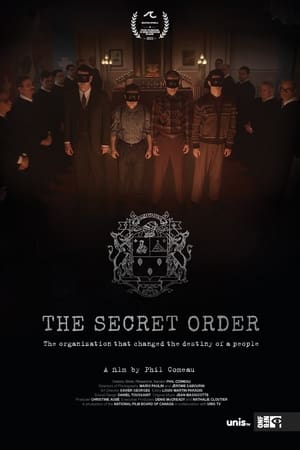
Phil Comeau shines a spotlight on the Ordre de Jacques-Cartier, a powerful secret society that operated from 1926 to 1965, infiltrating every sector of Canadian society and forging the fate of French-language communities. Through never-before-heard testimony from former members of the Order, along with historically accurate dramatic reconstructions, this film paints a gripping portrait of the social and political struggles of Canadian francophone-minority communities.
Deep Throat, a pornographic film directed by Gerard Damiano, a film-loving hairdresser, and starring Linda Lovelace, a shy girl manipulated by a controlling husband, was released in 1972 and divided audiences, who began to talk openly about sex, desire and female pleasure; but also about violence and abuse; and about pornography, until then an almost clandestine industry, as a revolutionary cultural phenomenon.