Colosseum: A Gladiator's Story
The Hugo's Brain is a French documentary-drama about autism. The documentary crosses authentic autistic stories with a fiction story about the life of an autistic (Hugo), from childhood to adulthood, portraying his difficulties and his handicap.
Rosine
Más cinco
A film based on one of the world's greatest pioneers Dr. Babasaheb Ambedkar.
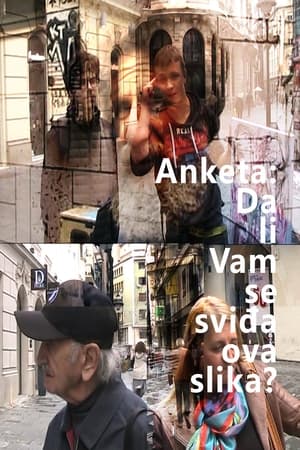
A cameraman wanders around with a camera slung over his shoulder, documenting urban life with dazzling inventiveness.
During the summer semester at a New York City arts school, boundaries begin to blur between an adjunct professor and the students in her Personal Documentary filmmaking class.
Óscar Peyrou is a veteran Spanish film critic who writes his reviews according to a very peculiar method: in his opinion, it is not really necessary to watch the films since it is possible to judge them simply by looking at their promotional poster.
In the town of Xoco, the spirit of an old villager awakens in search of its lost home. Along its journey, the ghost discovers that the town still celebrates its most important festivities, but also learns that the construction of a new commercial complex called Mítikah will threaten the existence of both the traditions and the town itself.
Étienne Dinet (إتيان دينيه), born March 28, 1861 in Paris, where he died on December 24, 1929, was a French painter and lithographer. He was one of the leading representatives of Orientalist painting at the turn of the 19th and 20th centuries. Obtaining a scholarship in 1884, Dinet undertook his first trip to southern Algeria in the region of Bou-Saâda, the Naili culture having a profound impact on him, as he would return there many times until he settled in his first Algerian studio in Biskra in 1900. In 1905, he bought a house in Bou-Saâda to spend three-quarters of the year there. In 1907, on his advice, the Villa Abd-el-Tif was created in Algiers, modeled on the Villa Medici in Rome. Having lived much of his life in Algeria, he called himself Nasreddine Dinet (نصر الدين ديني) after converting to Islam. On January 12, 1930, he was buried in the Bou-Saâda cemetery, where a museum that houses many of his works bears his name.
A village meeting in communist Russia to pay homage to Stalin leads to a gossip marathon, which develops into an endurance test for the participants.
Departing from peripheral details of some paintings of the Bilbao Fine Arts Museum, a female narrator unravels several stories related to the economic, social and psychological conditions of past and current artists.
While struggling to understand his place as a second generation Jordanian–born Palestinian, Abood's uncle returns from Canada with stories of his youth as a refugee following the Naksa. Soon after, and with his uncle's stories fresh in his mind, Abood finds himself lost in the streets of Amman, where he meets a young stranger who offers to guide him home as she shares her thoughts on the country, the people, and her identity as a Palestinian living in Jordan.
'Atlal (Remnants)' is a fictional documentary that follows Bassam, a Palestinian man in his fifties, on a journey between the past and present. An abandoned school, the remains of a beach club, and a dusty cinema hold Bassam's cherished memories from his life in Qatar. Through personal archives and interviews with Bassam and his wife, Laila, we get a deeper look into their stories—slowly revealing the dismaying thoughts behind Bassam's nostalgia.
Filmmaker Richard Dindo's unique documentary uses historical reenactments and speculative "interviews" of historical figures to paint a fascinating portrait of one of the most influential writers of modern literature, renowned author Franz Kafka. Best known for his novel The Metamorphosis, Kafka was famously secretive and eccentric, and the details of his private life have become just as captivating to his fans as his work.
“In a meeting between history and the present, this docufiction takes us on a unique journey through the Ria de Aveiro, through the curious eyes of a child who discovers, for the first time, the Vouga Class boats. Guided by an adult, a symbol of the generations that preserve this centuries-old tradition, the child enters a world of memories, knowledge and traditions that resist the test of time. Between workshops and shipyards, conversations with master builders and walks along the waters of the estuary, the story unfolds like a bridge between generations. This docufiction interweaves reality and fiction, testimonies and dramatization, showing how cultural heritage is transmitted, not only through words, but through lived experiences. More than telling the story of the Vougas, this film celebrates those who keep them alive, and those who will one day carry them forward.”
Robert J. Flaherty’s follow-up to Nanook of the North shifts from the Arctic to the South Seas, portraying Samoan village life with a painterly eye. Blending ethnographic detail with a romanticized “Gauguin idyll,” the film celebrates daily rituals, communal traditions, and the passage into adulthood, suffused with what Flaherty called “pride of beauty, pride of strength.”
Somber tides a cry from the species, startled into survival against the elements. One last breath before being trampled by the Earth or maybe conversely a battle to wage against winds and tides clutching on before extinction.
A revealing and devastating portrait of a trio of aspiring real-life Viennese models. Vivian will stop at nothing to be a magazine cover girl. Lisa fills her time with routine plastic surgery and cocaine binges, while innocent Tanja focuses on the mystical through tarot cards, yoga, and raw animal energy.
This documentary is a reconstruction, based on archive footage, testimonies, and filmed reconstructions, of the Vincendon / Henry tragedy. December 1956: Jean Vincendon and François Henry, two young mountaineers, aspire to join the High Mountain Group. Lacking experience, they set out to climb Mont Blanc via the Brenva spur in the middle of winter. The weather conditions deteriorated, and they decided to give up before meeting Walter Bonatti and Sylvano Gheser. They then decided to continue the climb and set off in two different roped parties. Bonatti decided to take refuge at the Vallot refuge higher up, rather than descend. The two young mountaineers, overcome by the poor weather conditions and fatigue, remained stuck for several days at 4,000 meters. What followed was a completely disorganized rescue operation that became, for more than ten days, a spectacle for all of France and a national tragedy.