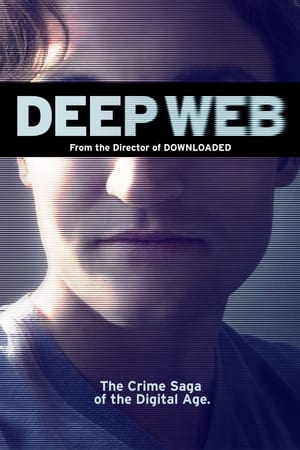
Deep Web gives the inside story of one of the most important and riveting digital crime sagas of the century -- the arrest of Ross William Ulbricht, the 30-year-old entrepreneur convicted of being 'Dread Pirate Roberts,' creator and operator of online black market Silk Road. As the only film with exclusive access to the Ulbricht family, Deep Web explores how the brightest minds and thought leaders behind the Deep Web and Bitcoin are now caught in the crosshairs of the battle for control of a future inextricably linked to technology, with our digital rights hanging in the balance.
Hacktivist and blockchain expert Lauri Love fights extradition in TRUST MACHINE—his computer skills a threat to the US government. Tech innovators strike a raw nerve as banks and network pundits rush to condemn volatile cryptocurrencies and their underlying blockchain technology. Why are banks terrified while UNICEF embraces it to help refugee children? Award–winning filmmaker Alex Winter reveals that proponents of blockchain—a verified digital ledger—are already using the technology to change the world; fighting income inequality, the refugee crisis and world hunger.
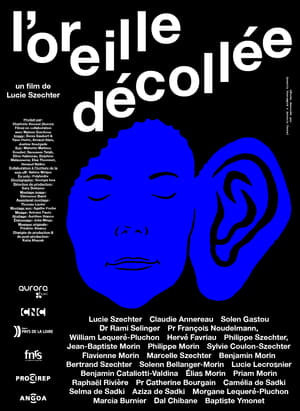
Lucie was born with a protruding ear that she got from her mother. In this documentary she tries to find answers in her fathers' features.
Tells the story of climate refugees across six continents, celebrating the voices and experiences of people living at the forefront of the climate crisis, displaced from their homes by climate disasters.
This 1978 documentary classic is an inside look at the old-style Chicago Machine politics of the Richard J. Daley era, where Alderman Vito Marzullo ran his West Side 25th Ward virtually unchallenged from 1953-1985.
The political upheaval in North Africa is responsibility of the Western powers —especially of the United States and France— due to the exercise of a foreign policy based on practical and economic interests instead of ethical and theoretical principles, essential for their international politic strategies, which have generated a great instability that causes chaos and violence, as occurs in Western Sahara, the last African colony according to the UN, a region on the brink of war.
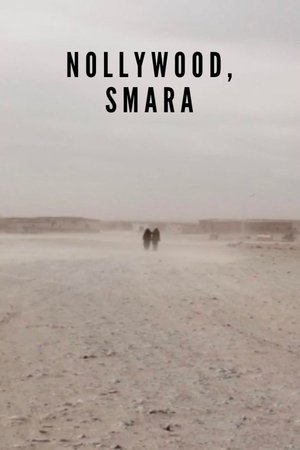
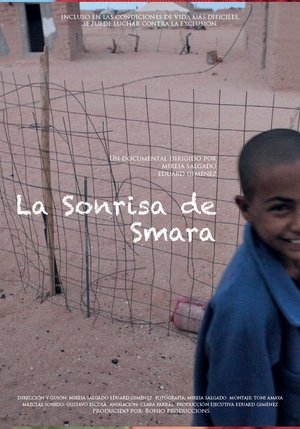
Smara is the city of dust, kingdom of sirocco, a surviving ruin of a suffocating region… Thousands of Sahrawis who fled Western Sahara after the war against Morocco (36 years ago) live in this refugee camp, located in the Sahara’s inhospitable north, in the middle of the Algerian hamada. They live here, under poor human conditions, thanks to international help. A small film cooperative fights, with barely any means, to elevate the voices of young Saharawis. It is one of the many Nollywoods (Hollywood of emptiness) found in Africa.
The film offers an insight into a nearly forgotten world. The times when the Sahrawi war of independence was on the international agenda seem to be long forgotten. The fate of hundreds of thousands Sahrawis living in refugee camps since the 1970s seems not to be spectacular enough for further attention. Inthe film the women get a chance to speak. It is a film about their experiences and hopes. It is mainly a film about life in surroundings where seemingly normal things are real challenges. The film is a simple and impressive portrait of women, who have been fighting against their fate to help their people. They have never lost their drive, no matter how unfavourable the circumstances have been. It reminds us of the fate of the Sahrawi people. The film is realistic, without any kitsch elements. It shows impressive pictures of the real lives of strong women, who have never stopped fighting for independence.
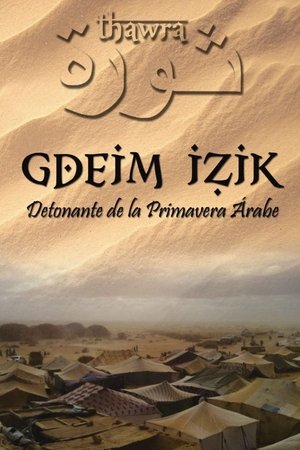
The documentary tells how 35 years of struggle of Sahrawi people became the starting of the Arab spring. From both side of the wall, Sahrawi tell us the Story of their country, the story of the last colony of Africa.
This documentary illustrates the story of Gdeim Izik through the voices of the Sahrawis themselves, giving personal accounts of how the camp was dismantled, what happened in the following weeks, and what it meant for them, as a people and as a nation. Our aim is to shed light on what really happened in Gdeim Izik during the autumn of 2010. The documentary is homage to the courage and strength of the Sahrawi people in their historic and unprecedented action, and it seeks recognition of their role in setting off the revolutions in the Arab world. Its aim is also to report and denounce the hypocritical role of foreign governments, the Moroccan government’s concealment of facts, and the way the Spanish government has been complicit in the situation through its policy of non-intervention in a conflict in which it is unavoidably involved.
Short film filmed in February 2010 at the Sahrawi refugee camps in Tindouf (Algeria). A poetic look into the situation that refugees go through and into the conflict itself. Soundtrack by Palestinian musicians and Spanish rock band Amaral. “We want words that fly freely, like comets, we want to be the irrepressible wind that comes and goes… And can’t ever be trapped in any sand prison… We want words that fly freely. Invincible. Like comets…”
Mektub portrays a day in the life in the Sahrawi refugee camps, along with the declarations of some of its protagonists. But behind this seemingly calm life hides a common fight, which is to continue fighting and protesting to accomplish the single common goal that all Sahrawis have as a nation: to take back the occupied land, rebuild their country, and reunite with their families.
This is the story of Buyema Abdelfatan, also known as Castro, an ex Saharan soldier that now a days runs a centre for disabled children in the refugee camp of Smara (Tindouf, Algeria). A personal project that has earned him both praise and criticism, but could not continue without his dedication, perseverance and humanitarian aid that he receives.
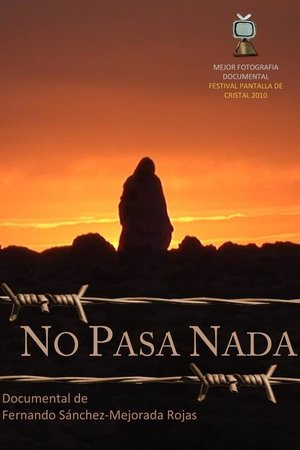
In the Sahrahwi refugee camp of Dajla, south of Algeria lives Mohamed Brahim Selma, also known as Belgha; Shepherd and poet of the Tiris region who has devoted his life to preserve Sahrahwis culture and identity. In "Nothing Happens" talks about the ancient culture as a precedent; of women as mainstay of life as well of elders as transmitters of knowledge, all, as part of the Saharawi culture.
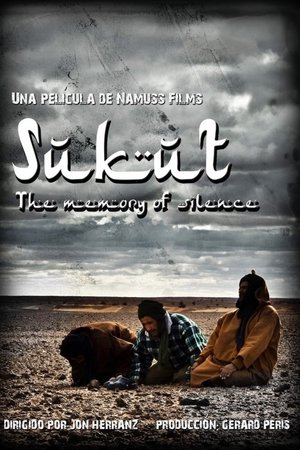
In the refugee camps of Tindouf, for more than 30 years the Sahrawi people is waiting to get the goal that forced them to exile: to return to their land free from any foreign domination. Sukut collects the testimonies of life of elderly Sahrawi with three objectives: to preserve the historical memory of this people, that have basically an oral tradition, show the human aspects of some experiences and data too much objectified, and especially, give the word to those who have been silenced too long ago.
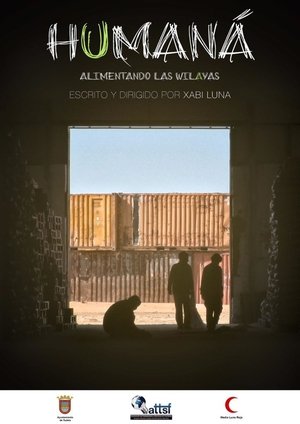
Humaná tells two stories, the daily life of a Sahrawi refugee and food they receive to live and hard process of distributing hundreds of tons of food daily. From the voice of Najla and Jesus primarily, we´ll see the difficulties and as the project AECID and Attsf proposed in 2005, was a turning point for all food arrived on time for every Sahrawi.
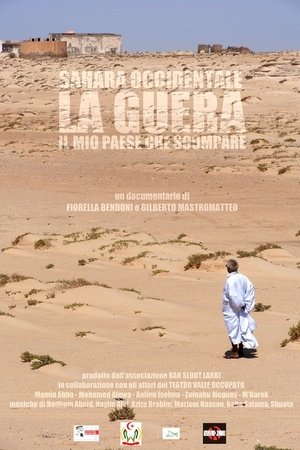
Mohamed lives in Nouadhibou, in Mauritania. But he can always see the ghost of his former town in front of his eyes. Aalien, the postman, fled to refugee camps in Tindouf, Algeria. But he's still thinking about the houses and the streets where he used to deliver letters. Zeinabu, in Tenerife, looks at the Ocean from her terrace. She looks in the direction of La Güera, her town that no longer exists. The stories of the inhabitants of a "ghost town", located on the border between Mauritania and the Sahrawi Arab Democratic Republic (Sadr). The destiny of a forgotten land hidden under the sand. "La Güera, my forgotten land" is a 29 minutes documentary, which tells the story of this city and, through it, the story of a whole people.
Outrage kiss-in at Bow Street police station in London, with a demonstration against homophobic government bills clause 25/28.
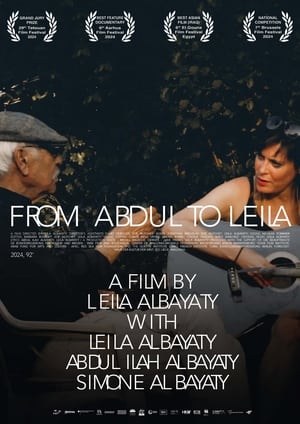
After losing part of her memory in an accident, Leila, a young French woman of Iraqi origin, reconstructs her story by reconnecting with her family and exploring her roots. Through music and cinema, she brings her exiled father's poems to lite, dis-covers the reality of the Middle East, and embarks on a personal quest to understand her identity and find her voice.
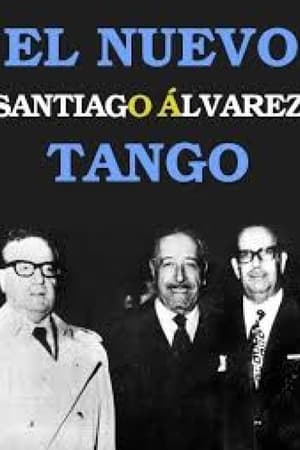
The New Tango (El Nuevo Tango) was not shown in Argentina for a long time as it deals with the ascent of Argentinean president Hector Campora in May 1973, and features Cuban and Chilean presidents, Osvaldo Dorticos and Salvador Allende. A million people gathered on the Plaza de Mayo to acclaim the new President. One of Cámpora's first presidential actions was a granting of amnesty to political prisoners who where jailed during the dictatorship. On 28 May Argentina restored diplomatic relations with Cuba, which then received Argentine aid - such as food and industrial products - to break the United States embargo against Cuba.