The Beauty of Beyoglu
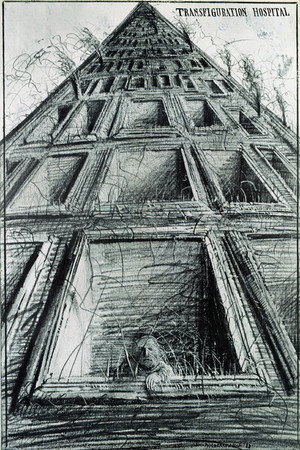
The beginning of the occupation. A closed mental world for the sick. Dr. Kauters values only methods of resolution, Dr. Rygier is a believer in strong authority, Dr. Marglewski considers psychic property a form of haunting, Dr. Nosilewska left Austria after the Nazi occupation. The writer Sekułowski seeks shelter. The young, newly arrived doctor, Stefan, refuses to remain passive in the face of the situation and events...
A woman doctor is divided between the dedication to her profession and the much needed attention to her husband and daughter. This will cause a serious crises when the husband is left for an emergency on their wedding anniversary, as he had planned something special for a celebration.
When a teenage girl is desperately admitted to hospital after contracting an intense new respiratory virus, her doctor grapples with the decision to permit an emergency lung transplant at the risk of causing an outbreak.
A doctor returns home for Christmas to find that her father has decided to retire from his own practice. After reuniting with her high school sweetheart, she wonders if she should stay and take over her father's practice.
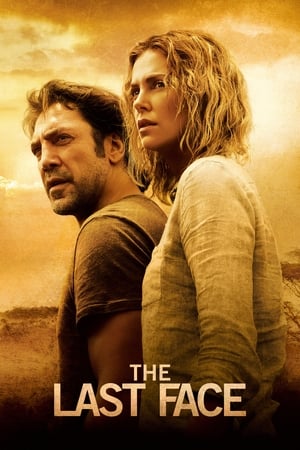
Miguel, a heroic Spanish doctor, puts himself in harm's way to deliver medical treatment to the victims of military uprisings in Africa.
Walter is HIV positive and is leading a promiscuis life in Rome. He does this so that he won’t infect his wife. Walter’s wife is also cheating on him. In a decidedly dull subplot, Walter’s father is a senator who wants to use his son’s illness to promote his own political career by calling for more AIDS research.
Stranded on a mountain after a tragic plane crash, two strangers must work together to endure the extreme elements of the remote, snow-covered terrain. When they realize help is not coming, they embark on a perilous journey across hundreds of miles of wilderness, pushing each other to survive and discovering their inner strength.
Set against the vibrant backdrop of contemporary North Africa, this drama follows three women as they navigate the complex interplay between tradition and modernity. Each woman, driven by her own desires for success and meaningful relationships, faces societal pressures and cultural constraints that test their resolve. As their lives unexpectedly intersect, they reveal the shared struggles and resilience needed to overcome the obstacles placed in their path.
The good doctor is on trial before the British Medical Association Council, if he is found guilty, he will no longer be allowed to practice medicine. The story unfolds through flashbacks which depict his career and his subsequent downfall.
Aïssa is a Congolese immigrant in France. She says that she is under eighteen but the authorities consider her an adult. To determine if she can be deported, a doctor must give her a physical examination.
A doctor explains to his children the dangers of tuberculosis, what it is and how to prevent against contracting it.
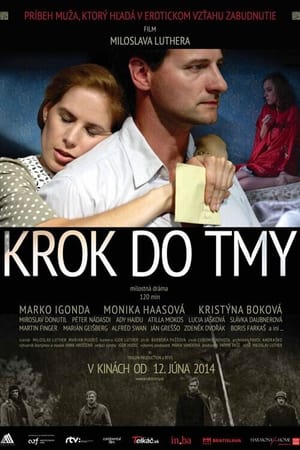
A young doctor, former partisan leader - is he a hero, or a murderer? His wife - a victim, or a minion of a totalitarian regime? And his lover - a political careerist, or a naive single mother betrayed by fate? The dramatic fates of these antiheroes from the era of rise of communism are stories of violence and resistance, weakness and courage, much like the ones that take place today.
The film tells the story of a famous artist's love for a woman. Famous singer Ekrem gives a concert for the benefit of Darülaceze. After the concert, he falls in love with nurse Fatoş, whom he meets. After a while, they decide to get married. Ekrem cancels his six-month contract because he is getting married. His manager blames Fatoş for this situation. He talks to Fatoş and asks her to leave Ekrem. Fatoş leaves Ekrem on their wedding day so as not to hinder his fame. She sets off for Izmir. However, she misses her flight. When the plane she missed crashes, everyone assumes Fatoş is dead. Ekrem, believing he has lost Fatoş, will struggle to come to terms with it.
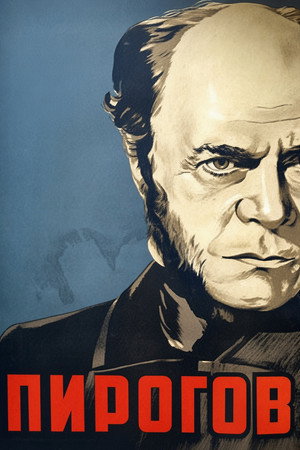
A biopic based on the life of Russian scientist and doctor Nikolai Ivanovich Pirogov (1810-1881), famous for being the founder of field surgery.
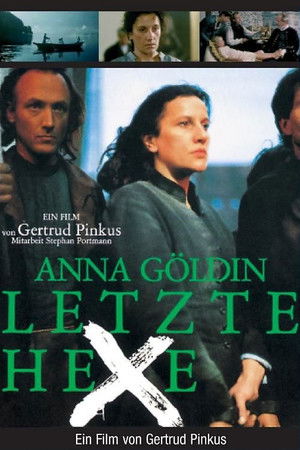
A native of Sennwald, Anna Göldi arrived in Glarus in 1765. For seventeen years, she worked as a maidservant for Johann Jakob Tschudi, a physician. Tschudi reported her for having put needles in the bread and milk of one of his daughters, apparently through supernatural means. Göldi at first escaped arrest, but the authorities of the Canton of Glarus advertised a reward for her capture in the Zürcher Zeitung on February 9, 1782. Göldi was arrested and under torture, admitted to entering in a pact with the Devil, who had appeared to her as a black dog. She withdrew her confession after the torture ended, but was sentenced on June 18, 1782 to execution by decapitation. The charges were officially of "poisoning" rather than witchcraft, even though the law at the time did not impose the death penalty for non-lethal poisoning.
A school physician whose son is being bullied at school finds that he must conduct a routine medical examination of one of his son's chief tormentors.
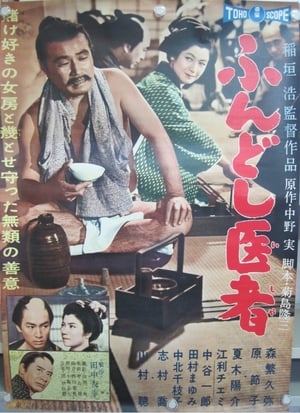
A skilled country doctor's talents are such that he can even perform operations as difficult and novel as removing a patient's kidney for the first time in Japan. Unfortunately for him, however, his wife's addiction to gambling is of such a magnitude that he is down to selling his underwear to make money. The image sticks and he becomes known as the 'underwear doctor.' On the other hand, his successful surgery's patient is so grateful he himself wants to become a physician.
A doctor has a rough time obtaining the money for his services in a lumber town until he delivers quintuplets.
A study of the mental breakdown of a doctor in a remote rural village. He believes himself intellectually superior to everyone except for a political prisoner in a mental ward. This is a metaphor on life under repressive governments, conformity versus individual expression.