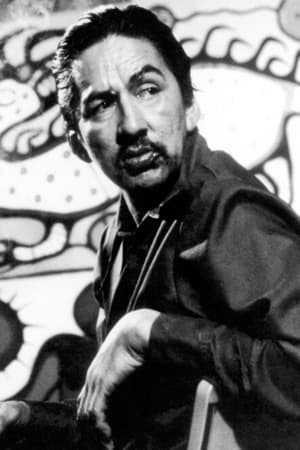
Takeda is a film about the universality of the human being seen thru the eyes of a Japanese painter that has adopted the Mexican culture.
Follows the behind-the-scenes work of Studio Ghibli, focusing on the notable figures Hayao Miyazaki, Isao Takahata, and Toshio Suzuki.
Adlon recounts the making of the sculpture, "Kugelkaryatide" the sphere that stood in the center of Tobin Plaza between the two towers of the World Trade Center. The film follows the sculpture from its creation as the largest bronze sculpture of recent times to the aftermath, where it now stands, heavily scarred, in Battery Park.
A video letter to Nancy Holt, made in homage to a shared interest in terminal lakes, framed views, monuments and time. Filmed on and around the Great Salt Lake, Mono Lake and Meteor Crater.
Me, Myself & Martin Laursen
Florida, 1994. Artist Mike Diana is convicted on an obscenity charge in the wake of an undercover police officer purchasing his limited edition zine Boiled Angel. Here is the very unusual story of what led to this First Amendment debacle happening for the first time in the United States.
Immigrant residents of a “shift-bed” apartment in the heart of New York City’s Chinatown share their stories of personal and political upheaval. As the bed transforms into a stage, the film reveals the collective history of the Chinese in the United States through conversations, autobiographical monologues, and theatrical movement pieces. Shot in the kitchens, bedrooms, wedding halls, cafés, and mahjong parlors of Chinatown, this provocative hybrid documentary addresses issues of privacy, intimacy, and urban life.
Marion is an artist with FSH, an incurable muscular myopathy. She guides us on the path she has taken to no longer identify with her illness.
Drawing on the collections of major Russian institutions, contributions from contemporary artists, curators and performers and personal testimony from the descendants of those involved, the film brings the artists of the Russian Avant-Garde to life. It tells the stories of artists like Chagall, Kandinsky and Malevich - pioneers who flourished in response to the challenge of building a new art for a new world, only to be broken by implacable authority after 15 short years and silenced by Stalin's Socialist Realism.
Explores the life of local Martha's Vineyard legend, Craig Kingsbury, and his impact on the production of Steven Spielberg’s classic movie
A journey into the hearts, minds and eyes of Georgia O’Keeffe, Emily Carr and Frida Kahlo - three of the 20th century’s most remarkable artists.
A documentary-style capturing of the life of Ab, a young struggling artist trying to find her way, all while dealing with unwanted company.
Moving Together is a celebratory love letter to music and dance that brims with kinetic life and energy. This documentary explores the intricate collaboration between dancers and musicians, moving seamlessly between Flamenco, Modern, and New Orleans Second Line.
200 years after its opening and a century after acquiring its first Van Gogh works, the National Gallery is hosting the UK’s biggest ever Van Gogh exhibition. Van Gogh is not only one of the most beloved artists of all time, but perhaps the most misunderstood. This film is a chance to reexamine and better understand this iconic artist. Focusing on his unique creative process, Van Gogh: Poets & Lovers explores the artist’s years in the south of France, where he revolutionised his style. Van Gogh became consumed with a passion for storytelling in his art, turning the world around him into vibrant, idealised spaces and symbolic characters.
An experimental documentary looking at the transgender experience around the world over two hemispheres, three continents and with four interviewees. The film employs limited B roll shots or edits during the interviews, instead opting to have the interviews mostly uncut, with the goal of creating both a level of sincerity and a conversational narrative between any one of the interviewees and the audience.
A short documentary about Dave Kloc's weekly poster-making process for The Meltdown with Jonah and Kumail. Filmed during the week of June 24th, 2015.
Narrated by Sir Derek Jacobi - star of the landmark television series "I, Claudius" - this documentary explores art and culture around the Bay of Naples before Mount Vesuvius erupted in AD 79. The bay was then the most fashionable destination for vacationing Romans. Julius Caesar, emperors, and senators were among those who owned sumptuous villas along its shores. Artists flocked to the region to create frescoes, sculpture, and luxurious objects in gold, silver, and glass for villa owners as well as residents of Pompeii and other towns in the shadow of Vesuvius. The film concludes with the story of the discovery of Pompeii and Herculaneum from the 18th century onward.
"Meat Joy is an erotic rite — excessive, indulgent, a celebration of flesh as material: raw fish, chicken, sausages, wet paint, transparent plastic, ropes, brushes, paper scrap. Its propulsion is towards the ecstatic — shifting and turning among tenderness, wildness, precision, abandon; qualities that could at any moment be sensual, comic, joyous, repellent. Physical equivalences are enacted as a psychic imagistic stream, in which the layered elements mesh and gain intensity by the energy complement of the audience. The original performances became notorious and introduced a vision of the 'sacred erotic.' This video was converted from original film footage of three 1964 performances of Meat Joy at its first staged performance at the Festival de la Libre Expression, Paris, Dennison Hall, London, and Judson Church, New York City."
A documentary by author Steven Goldleaf. This 2003 extremely low-budget 32-minute documentary traces the geographic roots of F. Scott Fitzgerald’s 1925 novel The Great Gatsby, setting straight Fitzgerald scholars’ mistaken assumptions (including some in the authoritative 1991 annotated Cambridge edition of the novel) about where the novel was set, where Fitzgerald deliberately distorted the geography for literary effect, where he misapplied his geographic knowledge of Long Island and New York City. It traces where Fitzgerald lived and traveled as he was composing the novel, with many photographs of these locations in the mid-1920s. In one instance WHAT GATSBY SAW identifies (with a contemporary photograph) the precise location of the fatal automobile accident at the story’s climax, which had never before been definitively established. (credit Steven Goldleaf).
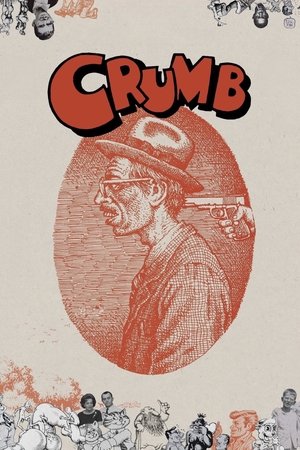
This movie chronicles the life and times of R. Crumb. Robert Crumb is the cartoonist/artist who drew Keep On Truckin', Fritz the Cat, and played a major pioneering role in the genesis of underground comix. Through interviews with his mother, two brothers, wife, ex-wife and ex-girlfriends, as well as selections from his vast quantity of graphic art, we are treated to a darkly comic ride through one man's subconscious mind.