In the 1940s, the world was in turmoil, and it was crucial to decipher the enemy's communication codes in a timely and accurate manner. Rong Jinzhen has shown amazing mathematical talent since her childhood, and because she solved the problems assigned by her math teacher, she was noticed by more people, and even walked into the door of code-breaking by mistake.
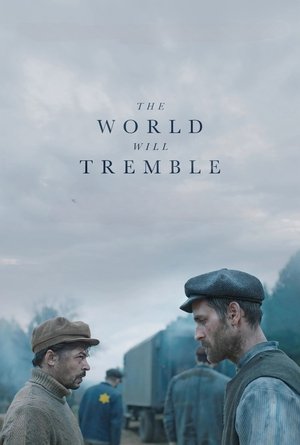
After losing his parents, a young Jewish boy wanders Eastern Europe, seeking refuge during World War II.
At the end of the 1960s, when the air is filled with rock-and-roll and student rebellions are changing the world, the older of two brothers joins a prestigious newsroom of the public radio broadcaster. Not long after, he finds himself in the middle of a dangerous conflict between journalists and the secret service.
Tells the life story of Danish author Karen Blixen, who at the beginning of the 20th century moved to Africa to build a new life for herself. The film is based on her 1937 autobiographical novel.
The Color Print of Edo is a 1939 black and white Japanese silent film with benshi accompaniment directed by Kazuo Mori. It is a cheerful period drama, sprinkled with comical scenes and tells the story of a loyal and handsome Edo period servant who fights to help his older brother marry the woman he loves. The star of this film, Utaemon Ichikawa, gained enormous popularity for his portrayal of a cheerful and chivalrous man.
In 1912, the Titanic embarks on its inevitable collision course with history. In the wake of the over-spending required to build the largest luxury ship in the world, White Star Line executive Sir Bruce Ismay schemes to reverse the direction of his company's plummeting stock value. Onboard the Titanic, brave German 1st Officer Petersen struggles to convince his self-important British superiors not to overexert the ship's engines.
When loyalty to country becomes loyalty to a lie, one teen risks everything to expose the truth. With the Gestapo closing in, he must decide what it really means to be a good German.
A parable about honor and true character, inspired by the reality of the 18th century. Constantin Brâncoveanu preferred to be beheaded in Constantinople alongside his four sons - Constantin, Stefan, Radu, and Matei - as well as by his counselor Ianache Vacarescu, instead of renouncing the Christian faith.
Based on the life of Rosa Bonheur, a trailblazing feminist and artist who rose to fame in 19th century France.
It takes us back to the early 2000s, where handwritten letters held unspoken emotions, and love was both beautiful and fleeting. It follows the story of two souls drawn together by pain, healed by love, yet tested by fate.
Ming Wang is an impoverished Chinese prodigy who flees Communist China to become a pioneering eye surgeon in America. When tasked with restoring the sight of an orphan in India, who was blinded by her stepmother, Wang must confront the trauma of living through the violent uprising in his youth, the Cultural Revolution.
When a western Pennsylvania auto plant is acquired by a Japanese company, brokering auto worker Hunt Stevenson faces the tricky challenge of mediating the assimilation of two clashing corporate cultures. At one end is the Japanese plant manager and the sycophant who is angling for his position. At the other, a number of disgruntled long-time union members struggle with the new exigencies of Japanese quality control.
A chronicle of the life of infamous classical composer Ludwig van Beethoven and his painful struggle with hearing loss. Following Beethoven's death in 1827, his assistant, Schindler, searches for an elusive woman referred to in the composer's love letters as "immortal beloved." As Schindler solves the mystery, a series of flashbacks reveal Beethoven's transformation from passionate young man to troubled musical genius.
The story of Auschwitz's twelfth Sonderkommando — one of the thirteen consecutive "Special Squads" of Jewish prisoners placed by the Nazis in the excruciating moral dilemma of assisting in the extermination of fellow Jews in exchange for a few more months of life.
Bathory is based on the legends surrounding the life and deeds of Countess Elizabeth Bathory known as the greatest murderess in the history of mankind. Contrary to popular belief, Elizabeth Bathory was a modern Renaissance woman who ultimately fell victim to men’s aspirations for power and wealth.
Record high oil prices, global warming, and an insatiable demand for energy: these issues define our generation. The film exposes shocking connections between the auto industry, the oil industry, and the government, while exploring alternative energies such as solar, wind, electricity, and non-food-based biofuels.
Teenager Owen is just trying to make it through life in the suburbs when his classmate Maddy introduces him to a mysterious TV show — a vision of a supernatural world beneath their own. In the pale glow of the television, Owen’s view of reality begins to crack.
A sailor prone to violent outbursts is sent to a naval psychiatrist for help. Refusing at first to open up, the young man eventually breaks down and reveals a horrific childhood. Through the guidance of his doctor, he confronts his painful past and begins a quest to find the family he never knew.
Under the regime of Louis XVIII. Years after Waterloo, Napoleon's loyal officers live in retirement on half-pay. Useless and idle, they have lost their prestige and keep meeting in the hope of the Emperor’s return. When Napoleon dies, they decide to plot the rise to power of Napoleon II.
The film is a series of vignettes from Taiji Tonoyama's life and film clips, interspersed with a dialogue to camera by Nobuko Otowa, addressing the camera as if she is addressing Tonoyama himself, recollecting events in his life. The film focuses on Tonoyama's alcohol dependence and his various sexual relationships, as well as his film work with Shindo.