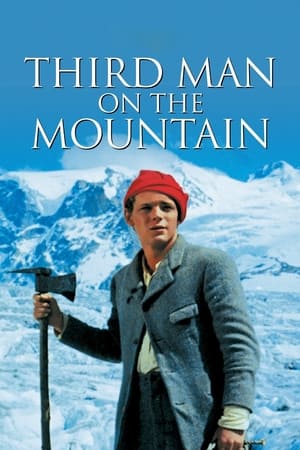
Famous British mountaineer Winter wants to climb a difficult summit, the Citadel. He goes to a small village but no guide wants to accompany him. A young man from the village, Rudi Matt, whose father died fifteen years earlier during an attempt to climb the Citadel, is determined to accompany him, with the help of his uncle. Winter also manages to hire a guide from a neighboring village and competitor, Emil Saxo. The roped party of four men then begins the ascent of the still untouched summit.
The connection between an artist and their art can be sacred. For Lebrock Raymone Jameson Sr., this proves especially true.
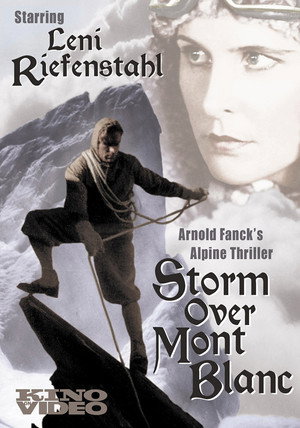
Hannes is employed at the Mont Blanc Observatory; the only outside connection is a pilot and Hella over the radio. Hella ascends the mountain but her father dies along the way.
Detective Norman Brook reunites with an old friend to investigate a series of eerie murders.
During an early, unsuccessful attempt at climbing the Matterhorn, Edward Whymper finds himself rescued by an italian guide, Jean Antoine Carrel. The two men quickly build a friendship and agree to reach the peak together. However, local villagers ploto to divide the alliance of Whymper and Carrel and both men join rival teams as they set out in a race to conquer the mountain. A mountaineering drama based on the novel by Carl Haensel and inspired in the dramatic true story of Edward Whymper, who led the first successful ascent of the Matterhorn in 1865. There is another version of the film titled Der Berg Ruft, shot the same year in German.
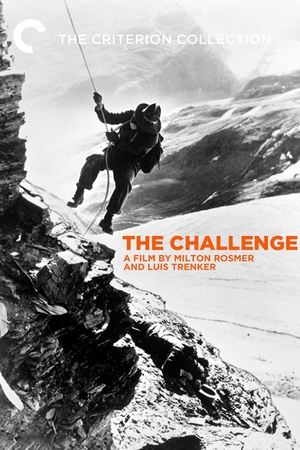
The idea is a simple one: three alpinists climb in the Mont Blanc Massif. This situation brings one face to face with the dangers of the mountain: avalanches, crevasses, fog, the climbing of the rocks, roping up, etc. All of this is magnified, transcended by a remarkable and strong use of the language of cinema. One of the first films about high mountains with Roger Frison-Roche and magnificent music by Maurice Jaubert
Ado's Vivarium short music film. This is an accompany to the book about Ado that is titled "Vivarium: Ado and I"
In beginning of the 20th century, two climbers carry a statue of the Virgin to the top of a mountain.
The ins and outs of four housemates in shared accommodation in Galway City
A young man enters a forest with nothing to lose in search of a strange batch of missing people until he is stalked by someone among the trees. This is the recovered footage from the incident.
1902, cinematography by Frank Ormiston-Smith
A party of tourists ascending to the peak of the Rigi find a fresh fall of snow covering the summit. They soon divided into battalions, and bombard each other with snowballs.
Released in 1923, produced by Frederick Burlingham.
The Arrow: O Filme
LOOP: Apresentação de História e Jogabilidade
On September 28th, 1903, the Urban Mountaineering Expedition, headed by Frank Ormiston-Smith, left Zermatt to attempt the conquest of the Matterhorn. On the 29th, the conquest was completed by the filming of the panorama from the actual summit of the mountain. The film consists of 20 scenes and illustrates the whole ascent from Zermatt through the Hornli Ridge. A copy of the film was found in Zermatt in 1953 and was was erroneously attributed to Frederick Burlingham and dated 1901. Since then, the film has been widely publicized as the first mountain film under the title of 'Cervin 1901', but this is incorrect. Ormiston previously had made 'Alpine series' (1901), 'The ascent of Mont Blanc' (1902), 'Climbing the Great Schreckhorn' (1902) and 'Ascent of the Jungfrau' (1903). The pictures and descriptions of the Charles Urban Trading 1903 film catalogue show without any doubt that 'Ascent of the Matterhorn' and 'Cervin 1901' are the same film.
Following in the footsteps of Captain John Noel and his immensely popular documentaries taken on the Mount Everest expeditions of the 1920s ("Climbing Mount Everest"/"The Epic of Everest"), Frank Smythe hoped to help finance his 1931 attempt on Kamet, another Himalayan peak, by bringing back film footage of a successful ascent including summit shots which were at that time the highest ever taken in the world.
"A rock climbing traverse in the Gastlosen Massif. Arrival of the train to Saanenmöser, three men walk to reach the wall. Crossing the rock face to reach the Wandspits, the first summit of the Gastlosen. Crossing the whole chain and climbing the last summit, the Katze. Rappelling of the Katze to cross the Markzähne and ascent of the highest point of the Gastlosen. After a picnic in the summit, the mountaineers greet with their hat." 1920's.
Three mountaineers, including a woman, climb the l'Aiguille du Moine, in the Mont Blanc Massif departing from the Couvercle Shelter. Facing walls that are sometimes rocky and sometimes snowy, they end up reaching the summit, which rises to 3412 meters high. One of the mountain guides in the film is Hermann Perren, who also participated in the another film by René Moreau: A la conquête des cimes (1927).
A short version of the film 'A la conquête des cimes' by René Moreau released for the domestic market in two Pathe Baby big reels. In the film, the mountain guide Hermann Perren prepares the ascent of Dent du Requin with a companion. He checks the equipment necessary for any mountaineer, rope, ice axe, glasses, double socks and iron shoes. They leave Chamonix, cross the Mer de Glace and arrive at the Requin Refuge. The next morning, Perren and his companion cross the glacier and encounter huge crevasses and seracs, which slow their progress. They cautiously cross a snow bridge and bivouac a few hours later. The climb is more and more difficult. They reach the Requin shoulder and have to climb the vertical wall to the summit.