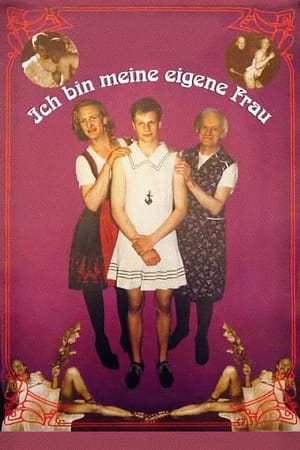
A young teacher in Zurich in the 1950s falls in love with a transvestite star but is torn between his bourgeois existence and his commitment to homosexuality. He joins a gay organization that is eventually seen as the pioneer of gay emancipation in Europe.
An obituary for Victor Jara, the Chilean folksinger who was murdered in a football stadium by the military junta during the days of the September 1973 coup.
In a darkened classroom, the white cracked walls serve as a movie screen. We are in a remote mountain village in Georgia. The light from the projector breaks the darkness: the children's first cinematic experience is about to begin. Among the kids are Iman and Eva, two Muslim girls, for whom the experience becomes a turning point and inspires them to pick up a camera and start filming their daily lives. The girls are growing up in a valley infested by radicalism, where most people live in constant fear that their relatives will sacrifice their lives in the name of God.
Les Lycéens, le Traître et les Nazis
Filmmaker Alain Resnais documents the atrocities behind the walls of Hitler's concentration camps.
A look at the ruins of the ancient city of Angkor. The largest collection of sculptures the world has ever seen - an entire metropolis of palaces and temples recovered from the jungle.
Spy Capital is a documentary exploring Vienna's deep-rooted espionage history, establishing the city as a key hub for international spy operations over the past 150 years. Directed by espionage expert Boris Volodarsky and produced by Dennis Dewall, the film spans from Vienna's 1873 World Exhibition to espionage tied to the 2023 Russia-Ukraine conflict. Featuring interviews with prominent figures like Christo Grozev and Gert Polli, it also includes dramatic reenactments of historical events. Notorious cases such as Colonel Alfred Redl, a Russian double agent, are highlighted. The film delves into Vienna's pivotal role in intelligence during the World Wars and the Cold War. With striking visuals and advanced technology, Spy Capital: Vienna immerses viewers in a blend of history and drama, offering a thorough look into the covert world of spies that has shaped the city.
In 1968, a convoy set off to transport a Calandria, the 70-ton core of a Canadian nuclear reactor, to Rajasthan in India. Even the largest semi-trailers could not keep up with this transport, which drove over specially reinforced roads and through city walls that had been demolished to make room.
Everyone has heard about bee declines, but with so much attention focused on domesticated honeybees, someone has to speak up for the 4,000 species of native bees in North America. Natural history photographer Clay Bolt is on a multi-year quest to tell the stories of our native bees, and one elusive species – the Rusty-patched Bumble Bee – has become his white whale. Traveling from state to state in search of the Rusty-patched, he meets the scientists and conservationists working tirelessly to preserve it. Clay’s journey finally brings him to Wisconsin, where he comes face to face with his quarry and discovers an answer to the question that has been nagging him: why save a species?
"The Pig and the Society," symbolizes the stark contrast between the excesses of wealth and the plight of those left behind. It invites viewers to reflect on their perceptions and prejudices, challenging them to see beyond the surface and understand the systemic issues perpetuating homelessness.
A state of secrets and a ruthless hunt for whistleblowers – this is the story of 25-year-old Reality Winner who disclosed a document about Russian election interference to the media and became the number one leak target of the Trump administration.
Katie Couric travels across the U.S. to talk with scientists, psychologists, activists, authors and families about the complex issue of gender.
A short silent documentary on the making of the 1931 Abel Gance directed film, "La Fin du Monde".
Greek Sarakatsani community members, a former group of nomadic animal breeders, share personal experiences and discuss the concept of identity in today's world. A tribute to collective memory through an experiential journey that sets out from the past, progresses into the present, and contemplates the future.
Three young queer people share their experiences on what it’s like to deviate from the straight cis-norm. Throughout the film, painful experiences make room for a more positive perspective, such as the overwhelming sense of connection with millions of other queer individuals worldwide or the freedom that arises as one can relinquish certain expectations. This so-called ‘queer-joy’ is being discovered, providing inspiring and moving insights.
Glauco Mattoso, a blind sadomasochistic poet, agrees to participate in a documentary about his own life, but the conditions he imposes raise difficulties to the work of the young director.
Life in a Kyrgyz aul (village) in the mountains connected to the rest of the world by a cable bridge, and the teenage boys who are constructing the rope of the bridge. A rope bridge which the locals call “The devil’s bridge” forms part of each and every event which takes place in a small village lost in the mountains of the Kyrgyz Republic. A platform driven by a huge winch which they have to pull with their own strength to cross the torrent is their only link with the outside world. But the director of the documentary wondered something else: “Does this bridge unite or does it actually separate?” Through the mist and over the thrashing waters, the inhabitants of the area glide along their ropes. A film, in the director’s own words, about ordinary people who live in an extraordinary place.
Narrated by Eastbourne's resident pier tarot reader Jennifer, this film is a visual exploration of the cycles of life and death in a town that is both the sunniest place in the UK and one of the top 3 suicide spots in the world.
Hanča, Janko a Lucia
Throughout the Islamic world, each year hundreds of women are shot, stabbed, strangled or burned to death by male relatives because they are thought to have “dishonoured” their families. They may have lost their virginity, refused an arranged marriage or left an abusive husband. Even if a woman is raped or merely the victim of gossip, she must pay the price. Crimes of Honour documents the terrible reality of femicide – the belief that a girl’s body is the property of the family, and any suggestion of sexual impropriety must be cleansed with her blood. We meet women in hiding from their families, a brother who describes his reasons for killing the sister he loved, and a handful of women who have committed themselves to the protection of young women in danger of losing their lives.