Deng Xiaoping's economic and political opening in China. Margaret Thatcher's extreme economic measures in the United Kingdom. Ayatollah Khomeini's Islamic Revolution in Iran. Pope John Paul II's visit to Poland. Saddam Hussein's rise to power in Iraq. The Soviet invasion of Afghanistan. The nuclear accident at the Harrisburg power plant and the birth of ecological activism. The year 1979, the beginning of the future.
With the Doomsday Clock the closest it's ever been to midnight, Jane Corbin investigates the proliferation of nuclear weapons across the globe. She visits Los Alamos, home to the United States’ nuclear weapons development facility and the historic home of Oppenheimer’s Manhattan Project. In Scotland, she reveals the strategy behind Britain’s nuclear deterrent, and speaks to campaigners in Suffolk fighting against US weapons they fear will be based on UK soil. Jane also discovers how many of the global agreements and safeguards that have constrained the spread of nuclear weapons since the 1970s are breaking down. This is a story told by the scientists, investigators and diplomats who set the clock and have fought to ensure that the ultimate deterrent has not been used in over 70 years.
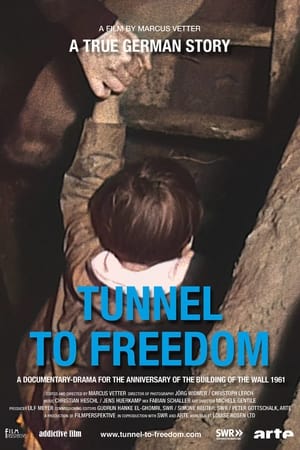
13 August 1961: the GDR closes the sector borders in Berlin. The city is divided overnight. Escape to the West becomes more dangerous every day. But on September 14, 1962, exactly one year, one month and one day after the Wall was built, a group of 29 people from the GDR managed to escape spectacularly through a 135-meter tunnel to the West. For more than 4 months, students from West Berlin, including 2 Italians, dug this tunnel. When the tunnel builders ran out of money after only a few meters of digging, they came up with the idea of marketing the escape tunnel. They sell the film rights to the story exclusively to NBC, an American television station.
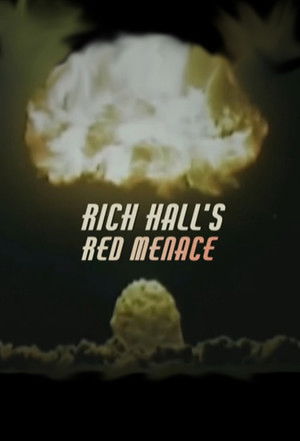
2019 marks the 30th year since the fall of the Berlin Wall and the end of the Cold War. Rich Hall examines the relationship between the West and the USSR in his inimitable fashion.
In a quiet forest, a sign warns of radiation hazard. “Is this the past or the future?” muses the masked figure who appears like a kind of ghost in nuclear disaster areas. At a time when nuclear power may be re-emerging as an alternative to fossil fuels, this calmly observed and compelling tour takes us to places that may serve as a warning.
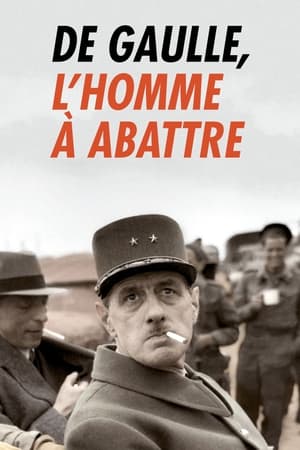
De Gaulle, l'homme à abattre
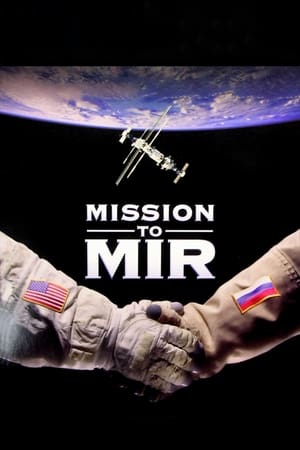
This film shows how far we have come since the cold-war days of the 50s and 60s. Back then the Russians were our "enemies". And to them the Americans were their "enemies" who couldn't be trusted. Somewhere in all this a young girl in Oklahoma named Shannon set her sights on becoming one of those space explorers, even though she was told "girls can't do that." But she did.
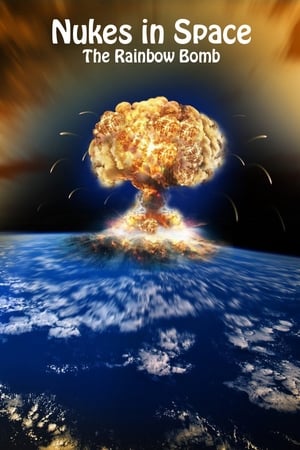
U.S. nuclear tests in space, and the development of the military intercontinental ballistic missile (ICBM).
Made at the height of 'cold war' paranoia, this drama-documentary shows the work of the UK Warning and Monitoring Organisation, who's duties included the issuing of public warnings of any nuclear missile strike and the subsequent fallout.
19 years after the dropping of atomic bombs in Japan, the Olympic Games of 1964 took place in Tokyo. In the midst of the cold war, the games are supposed to become a symbol for a peaceful world. Especially the divided Germany is expected to prove this: By order of the IOC, both German states must participate in Tokyo with a joint team despite deep ideological rifts. The fact that athletes from both German states still had to compete against each other in order to form a joint team for the 1964 Olympic Games in Innsbruck and in Tokyo is all but forgotten. The film tells the story of the East-West German team of 1964 for the first time and is simultaneously a current document about the relation of sports and politics in international relations.
Film sponsored by Western Electric (AT&T's equipment manufacturing division), the builder of the United States Air Force's White Alice Communications System in Alaska. Introduces the people and geography of the new state as well as the Western Electric radio-relay system, which links far-flung military sites, alert stations, and missile-warning facilities. Ralph Caplan praised the film's "intrinsically dramatic and highly photogenic" portrayal of communications equipment.
In August 1962, director Leslie Woodhead made a two-minute film in Liverpool's Cavern Club with a raw and unrecorded group of rockers called the Beatles. He arranged their first live TV appearances on a local show in Manchester and watched as the Fab Four phenomenon swept the world. Twenty-five years later while making films in Russia, Woodhead became aware of how, even though they were never able to play in the Soviet Union, the Beatles' legend had soaked into the lives of a generation of kids. This film meets the Soviet Beatles generation and hears their stories about how the Fab Four changed their lives, including Putin's deputy premier Sergei Ivanov, who explains how the Beatles helped him learn English and showed him another life. (Storyville)
"Trinity and Beyond" is an unsettling yet visually fascinating documentary presenting the history of nuclear weapons development and testing between 1945-1963. Narrated by William Shatner and featuring an original score performed by the Moscow Symphony Orchestra, this award-winning documentary reveals previously unreleased and classified government footage from several countries.
President Mikhail Gorbachev recounts the end of the Cold War and the reduction of nuclear arms.
Documentary chronicling the government relocation of 10,000 Navajo Indians in Arizona.
It is happening all across America-rural landowners wake up one day to find a lucrative offer from an energy company wanting to lease their property. Reason? The company hopes to tap into a reservoir dubbed the "Saudi Arabia of natural gas." Halliburton developed a way to get the gas out of the ground-a hydraulic drilling process called "fracking"-and suddenly America finds itself on the precipice of becoming an energy superpower.
Rock and roll's part in bringing down the Berlin Wall and smashing the Iron Curtain is told from the perspective of rockers who played at the time, on both sides of the Wall, and from survivors of the communist regimes who recall the lifeline that rock music provided them.
This short shows how the city of Reading, Pennsylvania would implement civil defense procedures to help residents survive a nuclear attack. Through a network of volunteers, makeshift hospitals would be set up, auxiliary police officers would maintain order, and other elements of the civil defense program would be put in place.
The story of the unconditional, no-holds-barred tour of America by Soviet Premier Nikita Khrushchev, leader of World Communism and America's arch nemesis, during 13 sun-filled days in the fall of 1959.
How in 1959, during the heat of the Cold War, the government of the United States decided to create a secret military base located in the far north of Greenland: Camp Century, almost a real town with roads and houses, a nuclear plant to provide power and silos to house missiles aimed at the Soviet Union.