Romantic river banks and unspoilt nature - these landscapes flank the Danube River. This comprehensive cinematic portrait of Europe's secondlongest river presents scenes of breathtaking beauty along the banks of the Danube, and investigates the tension between humans and nature, civilisation and wilderness
Rosa is a Mexican woman who, at the age of 17, migrated illegally to Austin, Texas. Some years later, she was jailed under suspicion of murder and then taken to trial. This film demonstrates how the judicial process, the verdict, the separation from her family, and the helplessness of being imprisoned in a foreign country make Rosa’s story an example of the hard life of Mexican migrants in the United States.
Vento di primavera
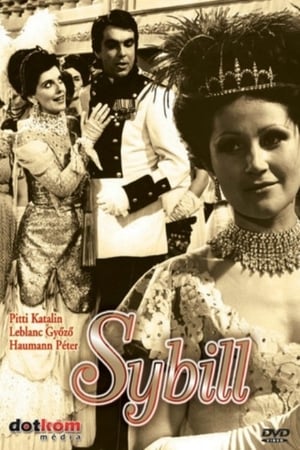
A musician is offered a job in Vienna as stage director, but his disagreements with the aristocratic opera manager end in abrupt firing in spite of a mutual attraction. He's quickly engaged by another theatre and becomes famous for his lavish stage productions and fine acting, which begins their golden age with Suppé and Strauss.
This telecast offers a rare opportunity to see the legendary Joan Sutherland in the role that first catapulted her to international stardom. She drove audiences wild by the way her opulent voice caressed the music’s long phrases and sprinted effortlessly through the fiendish runs, trills, embellishments and stratospheric high notes. One of the glories of the operatic world, her portrayal of Donizetti’s hapless heroine is a multifaceted and moving characterization. The incomparable tenor Alfredo Kraus is Edgardo, the man Lucia loves but cannot have. (Performance taped November 13, 1982. Broadcasted September 28, 1983.)
Iraqi-American filmmaker Usama Alshaibi shares his own story of experiencing racism in post-9/11 America. Showcasing the diversity of Arabs living in the United States, "American Arab" sparks a frank conversation about identity and perception, and argues for giving people "the space to be complicated."
'9-Man' is an independent feature documentary about an isolated and exceptionally athletic Chinese-American sport that's much more than a pastime. Since the 1930s, young men have played this gritty streetball game competitively in the alleys and parking lots of Chinatown. At a time when anti-Chinese sentiment and laws like the Chinese Exclusion Act forced Chinese restaurant workers and laundrymen to socialize exclusively amongst themselves, nine-man offered both escape and fraternity for men who were separated from their families in China and facing extreme discrimination and distrust. Pivoting between oil-spotted Chinatown parking lots and jellyfish-filled banquet scenes, the film captures the spirit of nine-man as players not only battle for a championship but fight to preserve a sport that holds so much history.
Two years prior to the opening scene, the nobleman Florestan has exposed or attempted to expose certain crimes of the nobleman Pizarro. In revenge, Pizarro has secretly imprisoned Florestan in the prison over which Pizarro is governor. The jailer of the prison, Rocco, has a daughter, Marzelline, and a servant (or assistant), Jaquino. Florestan’s wife, Leonore, came to Rocco’s door dressed as a boy seeking employment, and Rocco hired her. On orders, Rocco has been giving Florestan diminishing rations until he is nearly starved to death. Place: A Spanish state prison, a few miles from Seville; Time: Late 18th century.
The Gettysburg Address is the subject of a new documentary by Ken Burns. The documentary tells the story of students at the Greenwood School whose study of the Gettysburg Address brings new understanding to the speech.
Mozart and Da Ponte use the theme of "fiancée swapping", which dates back to the 13th century; notable earlier versions are found in Boccaccio's Decameron and Shakespeare's play Cymbeline. Elements from Shakespeare's The Taming of the Shrew are also present. Furthermore, it incorporates elements of the myth of Procris as found in Ovid's Metamorphoses, vii.[10] Place: Naples Time: the 18th century
Pelléas et Mélisande (Pelléas and Mélisande) is an opera in five acts with music by Claude Debussy. The French libretto was adapted from Maurice Maeterlinck's Symbolist play Pelléas et Mélisande. It premiered at the Opéra-Comique in Paris on 30 April 1902 with Jean Périer as Pelléas and Mary Garden as Mélisande in a performance conducted by André Messager, who was instrumental in getting the Opéra-Comique to stage the work. The only opera Debussy ever completed, it is considered a landmark in 20th-century music.
The carnage in Sarajevo provides the focus of this French documentary which seeks to call attention to the terrible conflict in the hopes of finally ending it. The film is divided into five parts. Each part covers a time frame ranging from April 4, 1992, the beginning of the war, to the present. The major issues that occur are three-fold. It depicts the systematic genocide of Bosnians, the silence of Western countries, and the determination of the Bosnians to resist. They refuse to be seen as victims, even though the filmmakers portray them so. Also included are the origins and political aspects of the war. It offers interviews with participants. It also reveals how the U.S. State Department censored reports about Serbian death camps.
The ideologies underlying the foundation of modern Israel are explored in this documentary, the third of a trilogy (created over a twenty year span) exploring the Jewish experience. The two earlier documentaries, "Porquoi Israel," and "Shoah," have had great effect on the ways documentaries are produced. "Tsahal" zeroes in on the crucial role of the military in Israeli society and politics. The film uses many in-depth interviews to present the many feelings and thoughts about the Israeli military.
While, during World War II, European Jews were being dragged by the Nazis to the extermination camps and most people bowed their heads, some brave men and women risked their lives to save them: a journey through the world and history in search of those who, by their heroic and pious deeds, deserved to be known as the righteous.
I、D、Z ~LEGEND "D" SU-METAL Birthday Festival (I、D、Z ~LEGEND "D" SU-METAL 聖誕祭; I、D、Z LEGEND "D" SU-METAL Seitansai) was a concert held on December 20, 2012, at Akasaka BLITZ in Tokyo, Japan. This show celebrated SU-METAL's 15th birthday.
I、D、Z ~LEGEND "Z" was a concert held on February 1, 2013, at Zepp Tokyo in Tokyo, Japan. The show concluded with the announcement of their next concert, LEGEND "1999", confirming the continuance of their group activities. SU-METAL had recently graduated from Sakura Gakuin, and there was much anticipation regarding her future endeavors with BABYMETAL.
Circo Voador
Rio de Janeiro, 2011. Announced worldwide as the main stage for Brazilian social ills, Rio's favelas are, paradoxically, among the most seductive postcards in Rio de Janeiro. Immersed in the tours through Favela da Rocinha, the documentary investigates the desires and images involved in the construction of this disputed tourist destination. A market that, attentive to the demands, does not cease to project its new attractions.
The Polish city of Łódź was under Nazi occupation for nearly the entirety of WWII. The segregation of the Jewish population into the ghetto, and the subsequent horrors are vividly chronicled via newsreels and photographs. The narration is taken almost entirely from journals and diaries of those who lived–and died–through the course of the occupation, with the number of different narrators diminishing as the film progresses, symbolic of the death of each narrator.