From the filmmakers of the critically-acclaimed blockbuster #UNFIT: THE PSYCHOLOGY OF DONALD TRUMP, which grossed over $2.5 million, has been viewed by millions, and was nominated for the IDA Documentary Awards Video Source Award Director, producer, and writer Dan Partland and producer Art Horan are back with #UNTRUTH: THE PSYCHOLOGY OF TRUMPISM examines the psychology of “Trumpism” and the authoritarian strain that it seeded in the American political landscape.
On June 1st, 2019, around 11:30pm, the shoot which represents a turning point in the federal republic falls. In the hessian small town Wolfhagen-Istha, the district president of Kassel, Walter Lübcke, is murdered during this night, while, just a few meters away, the annual carnival is putting the locals into a festive mood. It is DNA-evidence on the clothes of Walter Lübcke which leads the investigators on June 15th, 2019, to his presumptive murderer: Stephan Ernst. The previously convicted right-wing extremist Ernst gets arrested by a SEK unit in Kassel. A first background check reveals: Stephan Ernst was known to the security authorities, but they did not have him on their radar for six years. Now he is back. And a person is dead. The docu-drama “Schuss in der Nacht” („Shoot in the dark“) tells emotionally, and simultaneously factually, how the deadly attack on Lübcke came to be. It tells about the first far-right motivated murder of a politician since the era of national socialism.
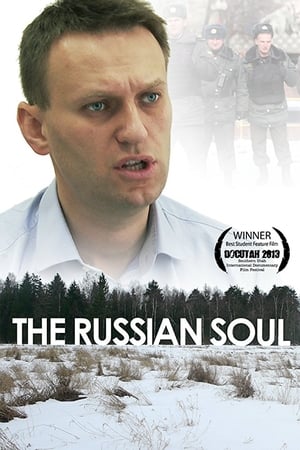
An intimate portrait of Russian opposition leader Boris Nemtsov — once Deputy Prime Minister and “an heir of President Yeltsin”, later an uncompromising adversary of Putin — that was assassinated near the Kremlin in February 2015. Election campaigns and hotel beds, protest rallies and office routine, train compartments and courtrooms, night walks and police vans – you have never seen any politician so close. This is a story how a journalist assignment turns into a genuine friendship.
When the Chinese Communist Party backtracks on its promise of autonomy to Hong Kong, teenager Joshua Wong decides to save his city. Rallying thousands of kids to skip school and occupy the streets, Joshua becomes an unlikely leader in Hong Kong and one of China’s most notorious dissidents.
In August 1936, the Olympic Games, orchestrated by Joseph Goebbels, the Third Reich's Minister of Propaganda, took place in Berlin. This was a vast charm offensive designed to present Germany as a nation that respected the Olympic principles of equality and fraternity. This documentary reveals the political strategies of the Third Reich, which benefited from the complicity of the International Olympic Committee in thwarting calls for a boycott by several countries. Once the games were over, Nazi policy intensified. How could the civilized world turn a blind eye to this "great illusion"? Gretel Bergmann, the German Jewish athlete at the center of a bargaining chip between the German authorities and the US government, and Noël Vandernotte, who won a bronze medal in rowing, share their stories.
With the help of Steve Bannon and Cambridge Analytica, Trump was groomed to appeal to those who have lost faith in media and politics. Bannon has admitted that he modeled his campaign on the one crafted for Hitler, who was a puppet of dark forces. Through meticulous investigation, John Hankey explores this, and how the media circus following Trump is a strategy for dividing a "United" States.
Mexico City was built on a lake, yet today it faces water scarcity. This film allows us to reflect on this contradiction. It also travels back in time to the day when a monolith representing Tlaloc, the aquatic deity, was transported to the center of the city.
This film is a comment on a current political scenario, where history is in Flux. In a documentary disguise, this film tries to revive faded memories of bygone public figures like Kartar Singh Thatte and other right-wing hardliners... and through the collective memoir, draws a trajectory of a political narrative to understand the 'paradox of tolerance'.
An enlightening investigative report on Rosatom, Russia's powerful atomic energy agency and Vladimir Putin's formidable geopolitical tool for increasing his influence around the world.
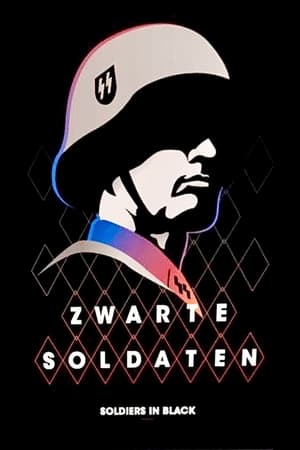
A video about Neo-Nazis originating in Sweden provides the starting point of an investigation of extremists' networks in Europe, Russia, and North America. Their propaganda is a message of hatred, war, and segregation.
In the 1940s, about three thousand people were expelled from Coimbra's Alta (Upper Town) to make way for the University City. This is the testimony of the last survivors of that community and of one of the greatest urban transformations in Portugal, in a time when forced evictions, lack of access to housing, and social segregation still make headlines. A journey into the memory of the historic neighborhood swept off the map under the regime's impetus for renewal, and to the buzz of students, tricaninhas (Coimbra's traditional working-class women), grocers, and tailors hidden beneath the faculties. A documentary about people, but also about power, resistance, identity, and the price of progress.
FRONTLINE tells the story of how crisis and tragedy prepared Joe Biden to become America’s next president. Those who know him best describe the searing moments that shaped President-elect Biden and what those challenges reveal about how he will govern.
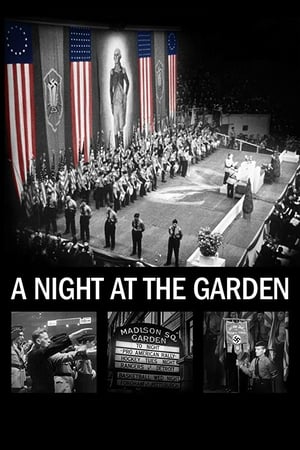
One of the key works in creating the American social documentary film, this 1934 newsreel compilation crams a lot of information into just 11 minutes. Skillfully edited, the picture captures a panorama of international events centered on the labor movement. Scenes include Mussolini, Hitler and FDR preparing for war, Nazi soldiers persecuting German Jews, a political strike in Paris, the Scottsboro demonstration in Washington, DC, police violence against striking steelworkers in Pennsylvania and union members stopping scab workers from delivering milk during a dairy farmers strike in Wisconsin. Under the direction of pioneering documentarian Leo Hurwitz, the images are edited together to create a powerful image of a world that, in his view, desperately needed radical change.
Hong Kong's high-speed rail link, the demolition of Choi Yuen Village, the impending budget and the influence of the global Occupy movement are at the centre of independent filmmaker Lo's timely measure of the city's pulse. Ostensibly the third entry in a trilogy that began with 21 years after. (2010) and to be continued (2010), which also captured public reaction to watershed moments in Hong Kong's political life since 2009. The documentary was built upon the material used in its previous installment (to be continued, 46 minutes). It disproves the notion of a passive Hong Kong in a chronicle of a generation poised for massive social change.
PUBLIC ENEMY NUMBER ONE looks at the war on drugs from 1968 until today and looks at trigger points in history that took cannabis from being a somewhat benign criminal activity into a self-perpetuating constantly expanding policy disaster.
Crump's mission to raise the value of Black life as the civil lawyer for the families of George Floyd, Breonna Taylor, Black farmers and banking while Black victims, Crump challenges America to come to terms with what it owes his clients.
A portrait of Argentine libertarian politician Javier Milei.
Stalin’s statue in the garden of a nunnery provokes discussion – plenty of it – in a small Georgian village. Some of the locals used to know Stalin personally because he visited the village several times when he was young, and they continue to see him as a benign ruler from the good old days rather than the brutal dictator he was. Whenever an episode of purge shook the Soviet Union’s republics, they hid the statue in the woods. The church also plays an important role in people’s lives. All in all, the film reveals a fundamental conflict in Georgian society.
A documentary following the civil rights movement and how the media, in particular the burgeoning TV, was used to fight for equality in the 1960s. From Selma to Charlottesville, we also see how modern activists use today's technology to continue fighting injustice today.
Dare to Dream was directed by Marianne Jenkins, a film student from Goldsmiths' College, University of London, in 1990. It looks at the history of anarchism in the UK and beyond, as well as the state of the movement in the tumultuous year the poll tax uprising finally led to the resignation of Thatcher. Among the anarchist heavyweights interviewed are Albert Meltzer, Vernon Richards, Vi Subversa, Philip Sansom, Clifford Harper and Nicholas Walter, as well as a host of lesser known but equally committed dissidents. The film also features the miners strike and class struggle, squatting and social centres such as Bradford's 1in12 club, animal rights and feminism.