Six blind Tibetan teenagers climb the Lhakpa-Ri peak of Mount Everest, led by seven-summit blind mountain-climber Erik Weihenmayer.
The American mountaineer Gary Hemming marked the era of the 1960s. The story of this "exceptional" character is intimately linked to that of the rescue of the two German mountaineers on the west face of the Drus, in 1966, a rescue which he had took the initiative. While the official emergency services of the EHM try to reach them from above, a pirate rope made up of Gary Hemming, René Desmaison, Lothar Mauch, Gil Bodin, Mike Brurke, François Guillot, the filmmaker Gérard Bauer organizes to join them from below and succeeded after a fierce struggle the rescue. The press seizes the event and elevates Gary Hemming to the rank of national hero. All the newspapers feature this big guy with a cool attitude, mismatched clothes, jovial smile and long blond hair on the front page. From then on, he was nicknamed: "the beatnik of the peaks".
In October 2014, Steve Wakeford, a sports broadcast editor, fell 70 metres whilst climbing a mountain known as Les Petites Jorasses in the French Alps. It was a fall that required him to be airlifted out of the mountains suffering from a number of serious injuries and resulted in him being temporarily left in a wheelchair - he is lucky to be alive. At the start of a long journey of rehabilitation, he began to ask himself some serious questions - 'Regardless of injury or trauma, why are we drawn to the mountains in the first place? Is risk an essential part of what we do? Perhaps most importantly, why is it that I am planning to climb the same route from which I fell?'
In the heart of the Hoggar Mountains, Algerian and French climbers meet on the legendary walls of the central Sahara. More than just an ascent, Tissalatine tells the story of an encounter with oneself, with the land, and with history. The film also retraces Thomas Dulac's return, ten years later, to a site he helped to open up. Driven by the profound voice of singer Djam and the vision of director Hamza Mendil, Tissalatine unveils a living, vibrant Sahara, far removed from clichés, in a sweeping epic of adventure, brotherhood, and spiritual elevation.
Nicolas Jean, a 14-year-old climber, decided to meet climbers who have left their mark on their era and contributed to the evolution of climbing in their own way. Among them is his coach, Laurent Perez, who will guide him on an original project: re-equipping a 7c+ route and adding a variation that will make it his first 8a if he manages to complete it! Nicolas Jean will later become a high-mountain guide and the alter ego of his climbing partner, Benjamin Védrines, with whom he will achieve numerous first ascents, including the summit of Jannu Est (7468 m) in October 2025.
27-year-old German alpinist Jost Kobusch wants to climb Everest, alone, without oxygen and in Winter, when the roof of the world is deserted.
For nearly three years, director Dina Khreino interviewed world-class mountain climbing athletes, listening to what compels them to leave behind families, friends, and everyday comforts to risk everything for a fleeting glimpse into the unknown. What she found was a tribe, a diverse group of professional adventurers and amateur philosophers forged by the ultimate test of body, mind, and spirit. In the face of shifting winds, sheer granite cliffs, and impossible odds, they climb. Each for their own reason, but every one connected by the vertical world. In this rarefied air, these athletes are fundamentally changed, not just as climbers, but as human beings.
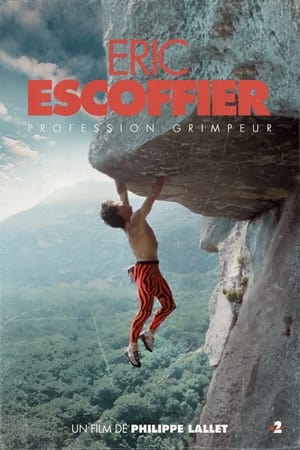
A documentary portrait of the legend Eric Escoffier at the height of his mountaineering career. A true athlete, Escoffier has comprehensive, cutting-edge preparation in three different climbing disciplines: rock climbing, ice climbing and solo free climbing, without any safety devices. Philippe Lallet's camera follows Eric in his performances and in his preparation for one of the first La Sportroccia climbing competitions, in 1985 in Bardonecchia in Italy.
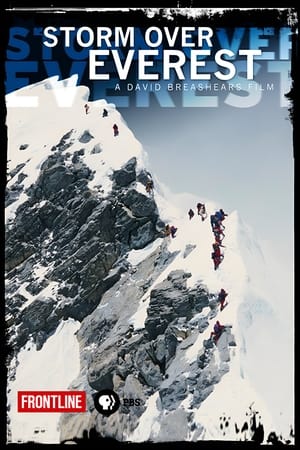
As darkness fell on May 10, 1996, a fast moving storm of unimaginable ferocity trapped three climbing teams high on the slopes of Mount Everest. The climbers, exhausted from their summit climb, were soon lost in darkness, in a fierce blizzard, far from the safety of High Camp at 26,000 feet. World-renowned climber and filmmaker David Breashears, who aided the rescue efforts back in 1996, now returns to Everest to tell the fuller story of what really happened on that legendary climb. Through remarkably intimate interviews with the climbers and Sherpas many who have never spoken before on American television Breashears sheds new light on the worst climbing tragedy in Mount Everest s history.
The Queen Swing follows climbers Laura Pineau and Kate Kelleghan as they chase history on Yosemite’s granite walls, attempting to become the first women to complete the legendary Triple Crown: linking El Capitan, Half Dome, and Mount Watkins in a single 24-hour push. But this isn’t just a story about summits and speed records. It’s about what happens between two people when the only thing keeping you alive is the person on the other end of the rope. Through extreme conditions and risky terrain, the film reveals how trust gets built in increments through shared confidence, quiet encouragement, and the kind of vulnerability that only emerges when you’re too exhausted to pretend. The Crown is the goal, but the partnership is the heart of the climb.
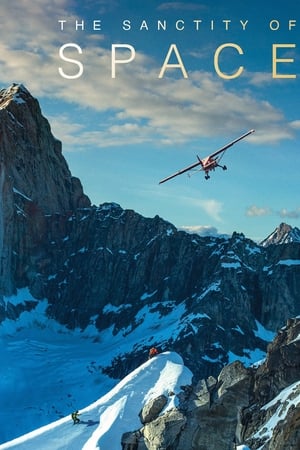
Seventy-five years after Brad Washburn, one of the greatest aerial mountain photographers of all time, first shot Alaska’s Denali Mountain from the open door of an airplane, climbing buddies Renan Ozturk, Freddie Wilkinson, and Zack Smith look at some of his mountain photographs and have this crazy idea. Rather than go up, their dream is to go sideways across the range’s most foreboding peaks, the Moose’s Tooth massif. It’s a fresh new way to explore the same landscape Washburn first discovered. As the group endures rough conditions, disintegrating ropes, and constant rockfall, their desire to be the first to complete the audacious line grows into an obsession. But friendships begin to fray when Renan suffers a near-fatal brain injury, forcing all three partners to decide what’s most important to them.
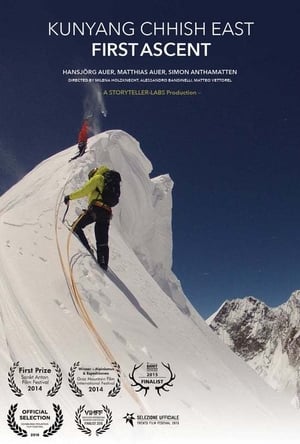
A story of chopped fingers, fun, friendship and the First Ascent of Kunyang Chhish East (7,400m). Following the rules of true alpine style Hansjörg Auer, Matthias Auer and Simon Anthamatten embark on an adventure for the summit and for survival on Kunyang Chhish East.
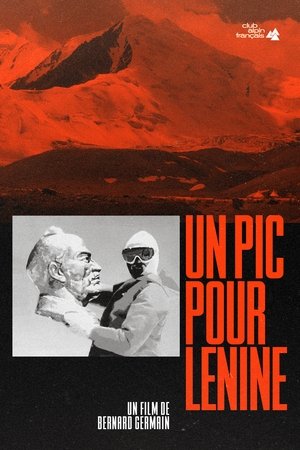
Un Pic pour Lénine
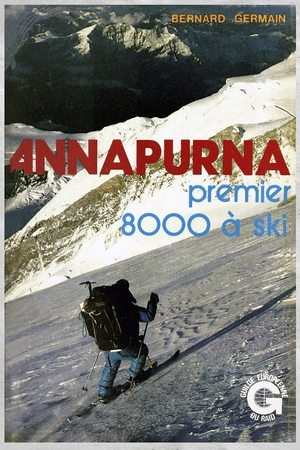
Annapurna, premier 8000 à ski
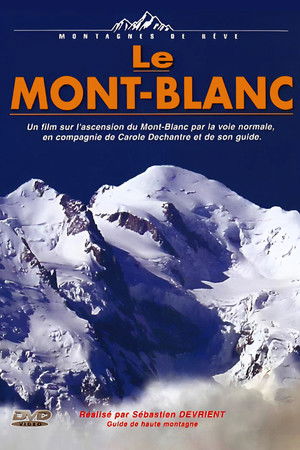
The ascent of Mont Blanc takes two days. First, you have to climb the Aiguille du Goûter, at the summit of which, at 3,817 meters, clings the Goûter refuge, a small metal box where you spend the night. The climb is 1,500 meters long, including some of the most technical sections. 2:00 a.m. The alarm rings, and Carole Dechantre and Jean-Paul Lemercier begin their ascent of the Dôme du Goûter by the light of their headlamps. With the first rays of sunlight, the Arête des Bosses is illuminated. Already, the surrounding mountains seem smaller. One last effort, and they finally reach the summit of Mont Blanc, the roof of the Alps, at 4,810 meters.
Mont Blanc, the roof of Europe, attracts the attention of mountaineers from all over the world, from seasoned climbers to novices. With its extensive media coverage, this mountain represents a dream of adventure for an ever-growing audience. Catherine and Maël, natives of Chamonix, also dream of reaching its summit. But climbing the giant of the Alps is a major undertaking that requires rigorous high-altitude training. Aware of the risks, the two novices enlist the help of Jean-Paul Lemercier, a high-mountain guide. He will give them the opportunity to learn about this challenging environment during a "Mont Blanc Course," which includes ice climbing school, two acclimatization peaks, and the ascent of the legendary mountain over three days. Set against the majestic backdrop of the Mont Blanc massif, this film retraces their preparation, their attempts, and the realization of their dream, day by day.
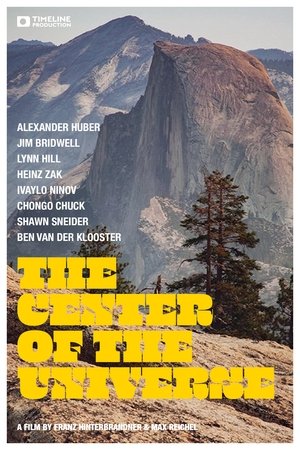
The Center Of The Universe chronicles four days in the life of German climber Alexander Huber in Yosemite Valley, California. Living the typical Yosemite vagabond lifestyle, Alex reflects on his goal of successfully free-climbing "El Corazon" (35 pitches, 8a) on the famous El Capitan face, which is a combination of the historic routes "Salathé," "Albatross," "Son of Heart," and "Heart Route," connected by newly laid out sections. 35 challenging pitches, combining technicality, stamina, and commitment, with difficulty levels up to 8a. The film showcases the unique style of climbing in Yosemite, as well as a piece of history of the famous valley, narrated by Heinz Zak, Jim Bridwell, Lynn Hill, Alexander Huber, and Chongo Chuck themselves.
Five young Italian climbers, Paolo Grunanger, Lorenzo Marimonti, Pietro Meciani, Lodovico Gaetani and Giorgio Gualco, members of the expedition organized under the patronage of the Milanese section of the Italian Alpine Club, reached Tamanrasset, in Hoggar, the Tuareg kingdom. From there, with a caravan of camels, they head towards the mountainous volcanic chain of Tahalra, little known to Westerners. During the exploration, climbers will climb seven virgin peaks via very difficult routes and at the same time carry out topographical surveys.
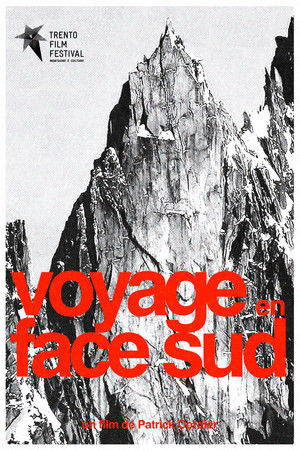
Voyage en face sud (Journey to the South Face) is a mountaineering documentary by Patrick Cordier and Jacques Ramouillet that shows the first solo ascent of the south face of the Aiguille du Fou in 1976 by Patrick Cordier himself. The climb was filmed by Jacques Ramouillet from a nearby ridge. Pierre Torlasco was tasked with belaying Jacques Ramouillet while he filmed. For this filmed ascent, Patrick Cordier opted for the dress code of his time—white clothing, bell-bottom trousers, and a headband—rather than the traditional mountaineering attire. The film was presented at the Trento Film Festival in 1977 and at the Gala de la Montagne (Mountain Gala) at the Salle Pleyel in Paris.
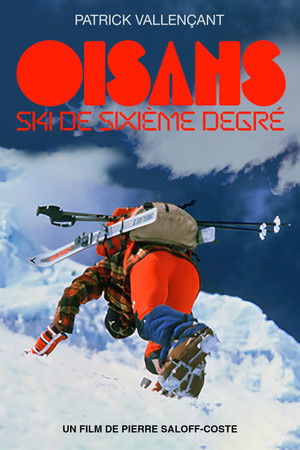
In 1975, Patrick Vallençant skied in some very challenging couloirs in the Oisans region: the north couloir of the Col du Diable, the north couloir of the Coup de Sabre, the couloir of the Pic sans Nom, the Barre Noire couloir in the Écrins massif, and the Gravelotte couloir on the Meije. He was accompanied by Jean-Marc Boivin, P. Guillet, P. Perrier, Gérard Pétrignet, Jacques Ramouillet, Pierre Saloff-Coste, and Joseph Spagnolo. In the second part of the trip, Vallençant completed a circuit of the Meije in three mixed-mountain ascents and, above the avalanche debris, skied off-piste through the steep couloirs and glaciers of the Oisans. He then climbed the routes to the summit of the Meije alone, following the stages of a high-mountain itinerary from the Refuge de l'Aigle.