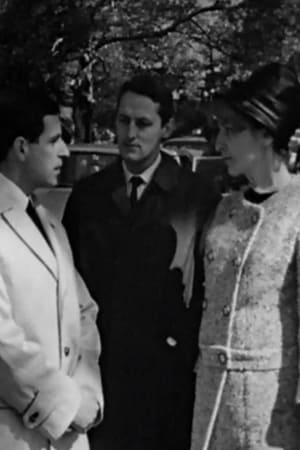
After film school, Godina’s first professional work as a director was “Picnic on Sunday,” a 1968 black-and-white short without any words that shows how seven different people spend a Sunday. A simple concept, but in Godina’s hands the short is suffused with both sexuality and revolution. - Paste
The head of a quartet of jewel thieves tries to make a getaway with the one female in the gang.
Cremaster 5 is a five-act opera (sung in Hungarian) set in late-ninteenth century Budapest. The last film in the series, Cremaster 5 represents the moment when the testicles are finally released and sexual differentiation is fully attained. The lamenting tone of the opera suggests that Barney invisions this as a moment of tragedy and loss. The primary character is the Queen of Chain (played by Ursula Andress). Barney, himself, plays three characters who appear in the mind of the Queen: her Diva, Magician, and Giant. The Magician is a stand-in for Harry Houdini, who was born in Budapest in 1874 and appears as a recurring character in the Cremaster cycle.
Ms. Isabel Archer isn't afraid to challenge societal norms. Impressed by her free spirit, her kindhearted cousin writes her into his fatally ill father's will. Suddenly rich and independent, Isabelle ventures into the world, along the way befriending a cynical intellectual and romancing an art enthusiast. However, the advantage of her affluence is called into question when she realizes the extent to which her money colors her relationships.
Living on a shoestring in Montreal, a Vietnamese mother must act in bad faith to assert her right to buy 12 discount laundry detergents that she's been refused at a grocery store.
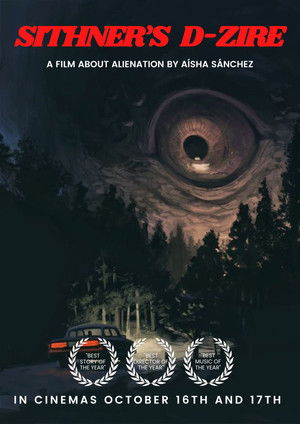
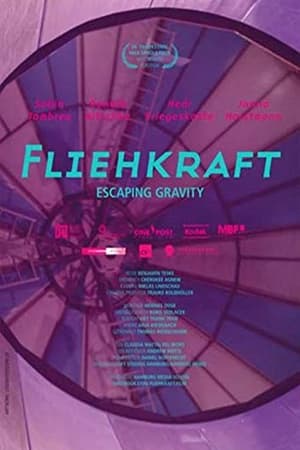
In a strange morning, Gabi had the feeling of being absorbed by something unusual.
A military explorer meets and befriends a Goldi man in Russia’s unmapped forests. A deep and abiding bond evolves between the two men, one civilized in the usual sense, the other at home in the glacial Siberian woods.
Lucy and Johanna are on their honeymoon. Johanna is partially, and Lucy profoundly, deaf. They arrive at a B&B where they are greeted by a sullen landlady. A seemingly insignificant disagreement silently turns into a hurtful argument, as the noise of the weir dominates the background.
Hirayama Jirou has lost his mother in the Great Kanto Earthquake and now runs a soba stall with his father. He decides to join the crew of the famous ocean liner Hikawa Maru and finds work cooking in the ship's galley. Through his eyes, the film explores the ship's 85-year history.
Razões
When sixth-grader boy Qiu is bullied in school for having gay dads, his stepfather Howard, a flamboyant Jazz trumpet player, must confront his own nightmares of childhood bulling before he can provide his son a feeling of security.
On the verge of becoming a woman Sora is woken by a nightmare and decides to follow a group of men into the city in the hope of finding her mom.
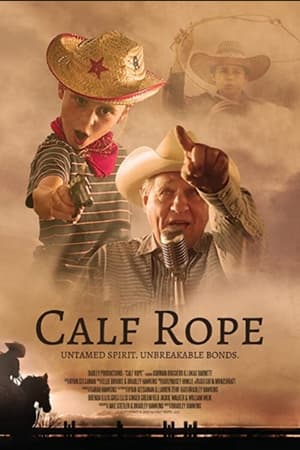
The biggest boxing fight of 1960 takes an unexpected turn with the help of a powerful twin connection.
The impressionistic story of a Texas family in the 1950s. The film follows the life journey of the eldest son, Jack, through the innocence of childhood to his disillusioned adult years as he tries to reconcile a complicated relationship with his father. Jack finds himself a lost soul in the modern world, seeking answers to the origins and meaning of life while questioning the existence of faith.
Twenty-five films from twenty-five European countries by twenty-five European directors.
Opposites attract when, during their college days, Katie Morosky, a politically active Jew, meets Hubbell Gardiner, a feckless WASP. Years later, in the wake of World War II, they meet once again and, despite their obvious differences, attempt to make their love for each other work.
Aymé Pigrenet, a recently widowed farmer, is eager to find a new wife to help him run his farm. Desperate, he seeks the aid of a local matchmaker who suggest that he go to Romania to find a new wife. There he meets Elena.
Short film produced by the BBC about JG Ballard's Crash. “The film was a product of the most experimental, darkest phase of Ballard’s career. It was an era of psychological blowback from the sudden, shocking death of his wife in 1964, an era that had produced the cut-up ‘condensed novels’ of Atrocity plus a series of strange collages and ‘advertisers’ announcements. After Freud’s exploration within the psyche it is now the outer world of reality which must be quantified and eroticised. Later there were further literary experiments, concrete poems and ‘impressionistic’ film reviews, and an aborted multimedia theatrical play based around car crashes. After that came an actual gallery exhibition of crashed cars, replete with strippers and the drunken destruction of the ‘exhibits’ by an enraged audience.” (from: http://aaaaaaaaaaaaaaaaaaaargh.blogspot.de/2013/01/short-film-adaptation-of-jg-ballards.html)
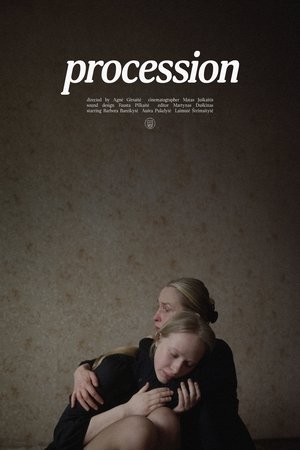
A journey of a woman's body who is shot and killed on a vacation with her family.