From Scotland to Ecuador, passing through Canada, Spain and Angola, 21 young Cubans who grew up in 9 countries outside the island tell their experiences of adaptation living between two cultures and the survival of the Cuban identity despite their stories of familial rupture and alienation.
Tanit, Valeria and Shaila are three women from very different parts of the world who face the same problem: climate change. They will lose everything because of global warming effects and they will be forced to emigrate to survive.
The Ta'ang or Palaung people, an ethnic minority living in the mountainous area between Myanmar's Kokang region and China's Yunnan province, have historically suffered many forced migrations due to war. When their survival is threatened again in 2015, thousands of them flee across the border. Filmmaker Wang Bing accompanies them and becomes a privileged witness to a human story that is both a modern reportage and a mythical epic.
This documentary explores the history of Canada’s first major migration of non-European and non-white refugees who arrived in 1972 when Ugandan President Idi Amin expelled all South Asians from the country. Their story of struggle and hope became part of Canada’s conversations about refugees and cultural pluralism, and informed the Canadian response to future refugee movements.
The 40th anniversary of Idi Amin's expulsion of Ugandan Asians in 1972 coincides with the festival of Dussehra in which Hindus celebrate the victory of good over evil. Victims of this forced migration to Great Britain relive the shock and dangers of their escape, the hardship and heartbreak of their journey, arrival and first desperate days, to the turning points as they began to make new lives for themselves.
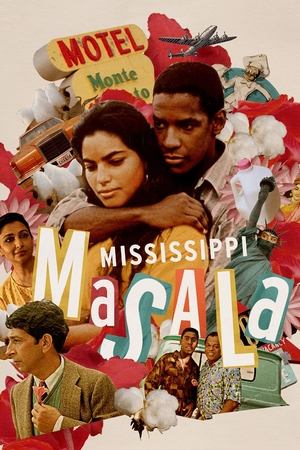
Years after her Indian family was forced to flee their Uganda home, twentysomething Mina finds herself co-operating a motel in the faraway land of Mississippi. Her passionate romance with charming Black carpet cleaner Demetrius challenges the prejudices of their conservative families and exposes the rifts between the region's Indian and African-American communities.
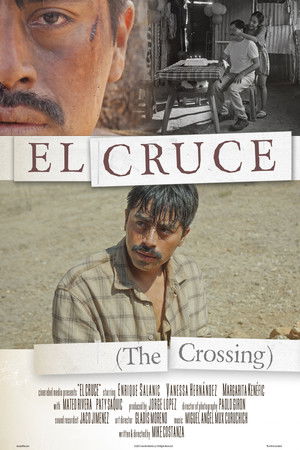
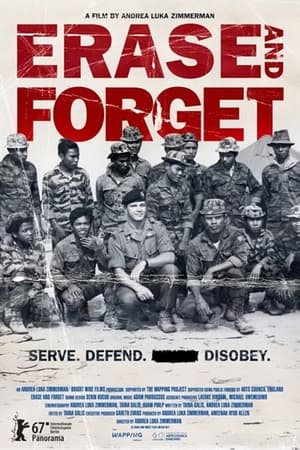
On a perilous journey north, a Guatemalan farmer risks everything to secure a future for his family, as past and present collide in a story of survival, memory, and sacrifice.
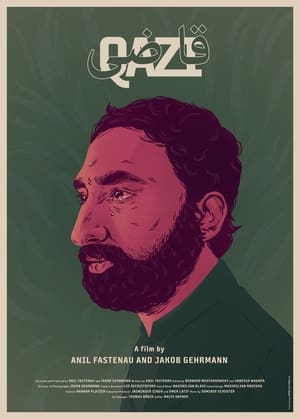
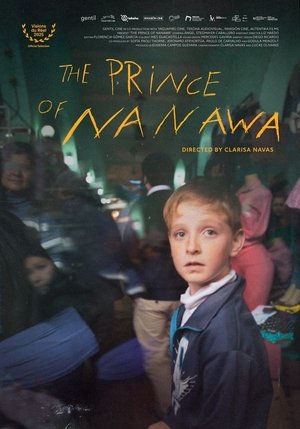
Qazi is the story of a young Pakistani refugee who is forced by economic and family circumstances to seek his fortune in Europe.
Una Isla
This film traces the road of the Blues and takes us on a journey to mythical places: From the banks of the Niger to New Orleans, going up the Mississippi through Memphis to the skyscrapers of Chicago. It tells the story of this culture which faced the worst barriers and shows that Humanity can overcome barbarity.
Comprised of two interviews with President Barack Obama conducted both before and after the 2016 Presidential election, The 44th President: In His Own Words is the President’s first-hand account of his time in office–his successes, his failures, his unfinished business–and what he hopes will be his legacy. Including additional interviews with members of his staff, Congress, and the press, The 44th President: In His Own Words is a unique examination of the Obama presidency from the inside out, and a profound and candid historical record that will stand for generations.
2014 documentary featuring interviews with Petzold, Hoss, actors Nina Kunzendorf and Ronald Zehrfeld, and production designer K. D. Gruber
Narrated by veteran Hollywood actor Tom Selleck, REMEMBER PEARL HARBOR chronicles the personal stories of veterans and citizens who witnessed the surprise attack by the Japanese on the American Pacific Fleet on December 7, 1941, launching the United States into World War II. Using archival footage and photos and graphics, the documentary shows in detail the bombings on Oahu, along with the fiery explosion of the USS Arizona, the sinking of the USS Oklahoma, and the attacks on Hickam Field, as well as on other parts of the island. REMEMBER PEARL HARBOR documents the 75th anniversary, the tragic events and the courageous acts of those who were in or near Pearl Harbor on that day.
In this short making-of documentary, director Nicolas Roeg discusses the production history of the film and the unique qualities of Daphne Du Maurier's story that inspired it, while director of photography Anthony B. Richmond explains the significance of specific scenes, including the notorious sex scene, and how they were shot. Editor Graeme Clifford also discusses his contribution to the film.
Ralph Ellison was an African-American writer and essayist, who's only novel Invisible Man (1953) gained a wide critical success. Ellison's ambitious journey from a childhood of hardship and poverty to celebrated African American writer is chronicled in this inspiring program through exclusive interviews and personal recollection.
Filmed on location in Nevada at the Casablanca Resort, Jamaica and Grand Bahamas Island. Swimsuit Illustrated goes behind the scenes at the Sea Doo Challenge, Miss Swimsuit Illustrated competition, Life Quest Triple Crown fitness competition and the Swimsuit Illustrated cover shoot.
Unterhaltung für Millionen - Quiz und Show im Fernsehen
OCEAN RAMSEY attributes her unparalleled connection with sharks to over a decade of research, but many are convinced it is something more... The media has dubbed her "The Shark Whisperer". Battling a looming extinction, Ocean and her team of marine biologists will travel the globe for 12 months, conducting research and expanding their conservation efforts. From renowned scientists and PHDs, to elite athletes and celebrities, "The Shark Whisperer" will lead humans from all walks of life out of their element and into the deep... free-diving with some of the worlds most dangerous sharks. Her goal: To give the world the opportunity to see sharks the way she does.
Working men and women leave through the main gate of the Lumière factory in Lyon, France. Filmed on 22 March 1895, it is often referred to as the first real motion picture ever made, although Louis Le Prince's 1888 Roundhay Garden Scene pre-dated it by seven years. Three separate versions of this film exist, which differ from one another in numerous ways. The first version features a carriage drawn by one horse, while in the second version the carriage is drawn by two horses, and there is no carriage at all in the third version. The clothing style is also different between the three versions, demonstrating the different seasons in which each was filmed. This film was made in the 35 mm format with an aspect ratio of 1.33:1, and at a speed of 16 frames per second. At that rate, the 17 meters of film length provided a duration of 46 seconds, holding a total of 800 frames.
Chitrakathi is about the folk artists of western India who narrate with the help of leather puppets. Mani takes us to the sleepy Konkan coastal village and introduces us to the family that has preserved this unique art for several centuries.