Although he is unanimously credited with having democratised opera, making it accessible to the greatest number, focus is rarely put on the strategy he devised and implemented in order to carry out his actions, nor what his actions reveal of the man and artist, and of the resulting metamorphosis from opera singer to pop artist. Through this angle, this film sets out to pay tribute to the man who summed up his credo, obsession and life’s work, in the following way: “They led the public to believe that classical music belonged to a restricted elite. I was the way to prove to the world that was wrong.
Letters, Riddles and Writs is a one act opera for television by Michael Nyman broadcast in 1991.
Frederick Ashton's La Fille mal gardée (The Wayward Daughter) is one of the choreographer's most joyous and colourful creations. Inspired by his love for the Suffolk countryside, the ballet is set on a farm and tells a story of love between Lise, the daughter of Widow Simone, and Colas, a young farmer. It contains some of Ashton's most stunning choreography, most strikingly in the series of energetic pas de deux that express the youthful passion of the young lovers, performed here by Natalia Osipova and Steven McRae. The ballet is laced with exuberant good humour, and elements of national folk dance, from dancing chickens and a maypole dance to a Lancashire clog dance for Widow Simone, performed by Philip Mosley.
The Happines Boys Billy Jones and Earnie Hare are invited to a party, but separate themselves from the rest of the guests, so they can not be urged to perform. However, they are watching the other guests from radio doing their stuff: song team Reece & Dunn, as well as the Funnyboners are singing, Smith Ballew and Frances Langford are exchanging love songs, Arthur Tracy tries his luck with a girl, just to find out that she prefers Bing Crosby and 4 orchestra leaders are trying to find out, who the best conductor is, by conducting a piece of recorded music....
Aladár Móži hrá husľové miniatúry
Documentary about an emblematic institution of the Spanish Arts, Madrid's Teatro Real, or Royal Theatre, released to celebrate it's 2nd centenary anniversary.
Lyrical biography of the classical composer, depicted as a romantic hero, an accursed artist.
Jenny is young. Her life is over. She killed someone. And she would do it again. When an 80-year-old piano teacher discovers the girl’s secret, her brutality and her dreams, she decides to transform her pupil into the musical wunderkind she once was.
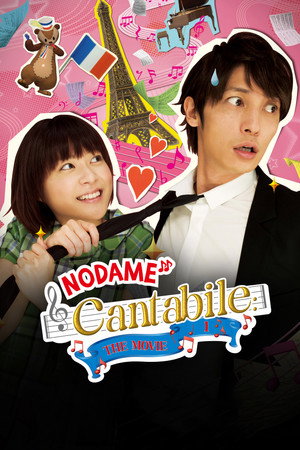
Tonoin Kei, a musical genius, becomes the new conductor of Fujimi, clashing with the group's leader, Morimura Yuuki, who is unaware of Kei's feelings for him.
The film covers a hundred years in the lives of the Ricordi family, the Milan publishing house of the title, and the various composers and other historic personalities, whose careers intersected with the growth of the Ricordi house. It beautifully draws the parallel between the great music of the composers, the historic and social upheavals of their times, as well as the "smaller stories" of the successive generations of Ricordi.
This feature length documentary tells the story of Mahani Teave who grew up on Rapa Nui (Easter Island) and left at age 9 to pursue her dream of being classical pianist-a journey that takes her from mainland Chile to The Cleveland Music Institute to Berlin and the great concert halls of Europe. At the age of 30, on the brink of international success, Teave gives up her career to pursue a new dream, coming back full circle to Rapa Nui to found a free music school for the island's children. The resulting school-named Toki, after the basalt tool once used to shape Easter Island's iconic sculptures-is a model of sustainability, incorporating tons of tires, bottles and Pacific Ocean plastic; surrounded by agri-environmental gardens to grow food. With Toki, Mahani hopes to shape a bold new future for Rapa Nui and inspire hope and change on Earth, our island home.
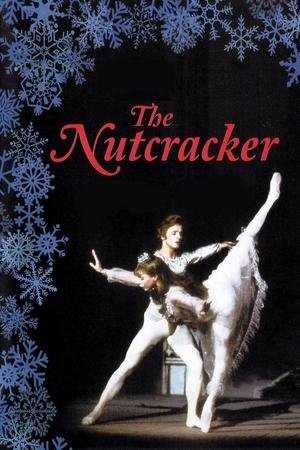
The Nutcracker is Mikhail Baryshnikov's breathtaking and critically acclaimed Emmy-nominated production. This spectacular performance is danced by the magnificent team of Baryshnikov, one of the greatest classical dancers of the century, and Gelsey Kirkland, both showcased at the peak of their careers, with members of the American Ballet Theatre.
Anna Netrebko und Rolando Villazón singen "La Traviata"
A documentary that explores the challenges that a life in music can bring.
John Eliot Gardiner goes in search of Bach the man and the musician. The famous portrait of Bach portrays a grumpy 62-year-old man in a wig and formal coat, yet his greatest works were composed 20 years earlier in an almost unrivalled blaze of creativity. We reveal a complex and passionate artist; a warm and convivial family man at the same time a rebellious spirit struggling with the hierarchies of state and church who wrote timeless music that is today known world-wide. Gardiner undertakes a 'Bach Tour' of Germany, and sifts the relatively few clues we have - some newly-found. Most of all, he uses the music to reveal the real Bach.
In the spotlight of global media coverage, the first transgender woman ever to perform as Don Giovanni in a professional opera, makes her historic debut in one of the reddest states in the U.S.
Emmy Award winning documentary, directed by Peter Rosen, about the Eighth Van Cliburn International Piano Competition in 1989, featuring interviews with the contestants and jurists, and footage from rehearsals and performances, including by competition winner Alexei Sultanov.
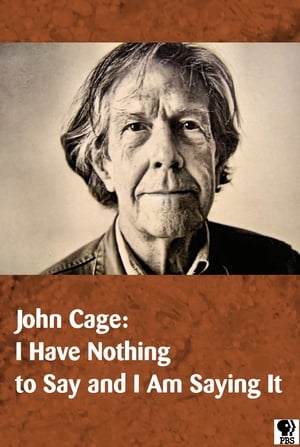
This is a full-length documentary honoring the life and work of American composer and artist John Cage. Cage is considered one of the most influential composers of the 20th century. This documentary features interviews with various personalities from different fields as they introduce us to the life and work of this great American artist.
Avant-garde composer John Cage is famous for his experimental pieces and "chance music" but temporarily branched into video in 1992 with this art film about meaningless activity. The work is composed of two segments that are supposed to be played simultaneously: "One 11" contains the artistic statement, and "103" is a 17-part orchestral piece. Also included is a revealing documentary about Cage and director Henning Lohner.
At the beginning of 1964, the music world experiences something completely unexpected. Maria Callas returns to the opera stage as the prima donna. Her “Tosca” at the Royal Opera House becomes a sensation. Maria Callas wants to show everyone once again that she deserves the title of “prima donna assoluta.” On the condition that star director Franco Zeffirelli take over the direction, the exceptional singer agrees to sing the role of Tosca. The BBC recorded the 2nd act of the opera for television. It is one of the most dramatic acts in opera history: in order to free the painter Cavaradossi from the hands of torturers, Tosca ends up murdering the police chief Scarpia. The film footage is one of the rare opportunities to see Maria Callas in an opera performance and to experience her highly emotional performance art and vocal abilities...