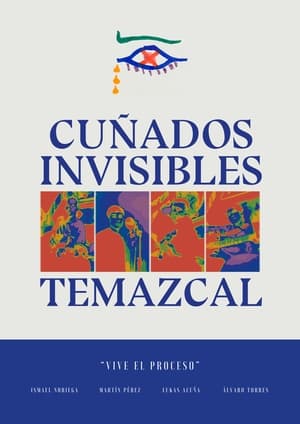
"Temazcal, the documentary" is the final result of over a year of collecting audiovisual material from the emerging Seville-based band Cuñados Invisibles. It offers a look through videos, images, and interviews at what it's like to form a music group from scratch, as well as the creation process of their first album, "Temazcal".
Official music video of the song 1:01 by Cuñados Invisibles.
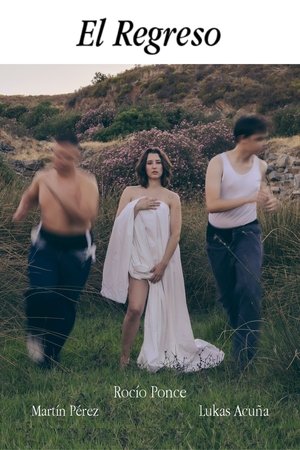
In 'El Regreso', you’ll see the process of evolution and change over the past year of Cuñados Invisibles — from their split, to the first meet-ups, to the hiring of their new vocalist, Rocío Ponce.
A story of young and eternal love creates the perfect atmosphere for the official music video of *Superamor*, by Fran Aguilar, Cuñados Invisibles, and Blanca Soler.
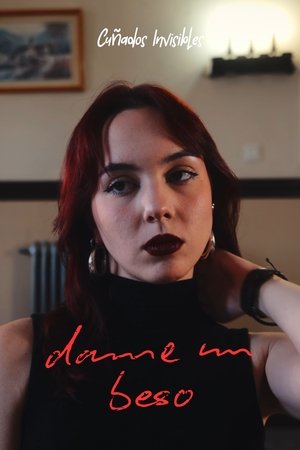
Official music video of the song 'dame un beso' by Cuñados Invisibles
Official music video of the band Cuñados Invisibles.
Official music video of the band Cuñados Invisibles, where our protagonists delve into the world of the subconscious.
The music video plays with the concept of bad habits, portraying a group of interconnected characters whose harmful routines lead them to live out this story.
Story of two women's feud continues during the events of The Seven Years' War Music video for Mylène Farmer's song Pourvu qu'elles soient douces
Live performance, Bayerische Staatsoper, 2011. The Tales of Hoffmann (French: LES CONTES D'HOFFMANN) is an opéra fantastique by Jacques Offenbach that combines three short stories by E.T.A. Hoffmann into a haunting whole: a melancholy poet reflects on three women he loved and lost in the past: a mechanical performing doll, a Venetian courtesan, and the consumptive daughter of a celebrated composer. One of the questions this opera poses for any director is how to link the 'tales' of Hoffmann's three lost loves together and knit them satisfactorily into the Prologue and Epilogue. In this production, Richard Jones solves the puzzle by turning it into an autobiographical journey which ends with a grand meet-up of all the characters Hoffmann has encountered: for once, Hoffmann is not presented as a rollicking kind of drunken story-spinner, but rather a sad-eyed, sobered-up depressive, who reaches for the bottle only because his disastrous love life has gone wrong yet again.
Ruth Sherwood and her sister, Eileen, have moved to 1935 Greenwich Village. They're surrounded by colorful Village characters (including an out-of-work football player known as the Wreck, and Mr. Appopolous, a modern painter and their landlord) and embark on various New York adventures. Ruth, who's trying to make it as a writer, meets up with a sleazy newspaper writer named Chick and a kindly editor named Bob, both of whom take an interest in both her career and her.
Part of Tutto Verdi series - Nabucco (2009) Parma. NABUCCO was Verdi’s third work for the stage and proved his first great success when performed in 1842. It deals with the Hebrew’s attempts to break free from the yoke of their Babylonian oppressors and is nowadays numbered among Verdi’s most popular works, not least on account of its famous Chorus of Hebrew Slaves, which has one of the best-loved melodies in the whole history of opera.
Mega Mindy: Uit het Dagboek van Mega Mindy
This DVD is a compilation of all US television performances between 1964 and 1969, including their guest spots on Shivaree, Shindig and all the legendary Ed Sullivan Show appearances.
A tribute to the words and music of Mark Heard (1951-1992), an American record producer, folk rock singer, and songwriter originally from Macon, Georgia, United States.
On August 19th, 2005, on what would have been the eve of his 56th birthday, a statue of Phil Lynott was unveiled in Dublin’s Grafton Street by his mother. There to witness the event were members of Thin Lizzy from throughout the band’s career. The following evening, they joined forces under the leadership of Gary Moore for a concert that paid tribute to Lynott’s memory.
The film follows four families, with different nationalities (French, German, Russian and American) but with the same passion for music, from the 1930s to the 1960s. The various story lines cross each other time and again in different places and times, with their own theme scores that evolve as time passes. The main event in the film is the Second World War, which throws the stories of the four musical families together and mixes their fates. Although all characters are fictional, many of them are loosely based on historical musical icons (Édith Piaf, Josephine Baker, Herbert von Karajan, Glenn Miller, Rudolf Nureyev, etc.) The Boléro dance sequence at the end brings all the threads together.
Throwback Thursday