Loosely based on Charles Dicken’s book “A Tale of Two Cities”, Working Class tells the tale of underground street artists Mike Giant and Mike Maxwell and their decade long friendship that started with a tattoo. The story is told through the cities they call home by, cutting back and forth between the neighborhoods of San Francisco and San Diego, as the artists talk about their life philosophies and the work they create.
Arctic Tale is a 2007 documentary film from the National Geographic Society about the life cycle of a walrus and her calf, and a polar bear and her cubs, in a similar vein to the 2005 hit production March of the Penguins, also from National Geographic.
Tout le temps, tout le temps, tout le temps...?
This mini documentary features a rare interview with infamous graffiti artist Banksy, delving into how he started out as a graffiti writer up to his shift to gallery art, installations, CDs, and more. Til this day only a hand full of people know his real identity, such as friends appearing here: 3D of Massive Attack, Damien Hirst, and others.
What happens when your child comes out to you? In this feature documentary, parents of lesbian, gay, bisexual and trans-gender individuals in Turkey intimately share their experiences with the viewer, as they redefine what it means to be parents in this conservative society.
Gaza-London
The documentary's title translates as "to be and to have", the two auxiliary verbs in the French language. It is about a primary school in the commune of Saint-Étienne-sur-Usson, Puy-de-Dôme, France, the population of which is just over 200. The school has one small class of mixed ages (from four to twelve years), with a dedicated teacher, Georges Lopez, who shows patience and respect for the children as we follow their story through a single school year.
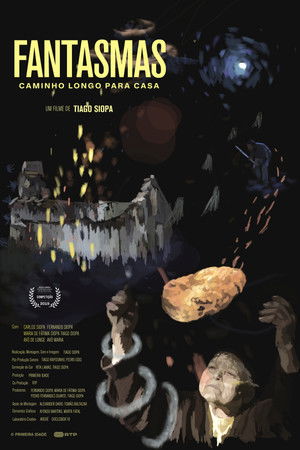
Amanda’s perspective on her hometown changes drastically when she discovers that the simplicity and memories in Neves have shaped her true home.
Travel back to Victorian Britain and wander the cobbled streets of Haworth to the sites that inspired the great Brontë sisters’ classic novels.
Mon premier cri
Angels Gather Here’ follows Jacki Trapman’s journey back to her hometown of Brewarrina to celebrate her parents, Bill and Barbara’s 60th Wedding Anniversary. Going home is never easy for Jacki. Amidst the family celebrations she reflects on her life; her story symbolising the strength, dignity and resilience of many Aboriginal people in the face of adversity.
Faced with an assignment to film something personal, Cem begins a quiet search for what that really means. A casual conversation with a close friend leads him to turn the camera toward the people who already shape his life. Through moments with his grandmother, spontaneous talks about family, and reflections on his dream of becoming a filmmaker, MozikMoro slowly transforms into a portrait of connection and self discovery. Between the ordinary and the intimate, Cem captures a world that is both deeply personal and universally human.
Documentary about brother and sister duo The Carpenters, one of the biggest-selling pop acts of the 1970s, but one with a destructive and complex secret that ended in tragedy.
Short documentary about artist Keith Haring, detailing his involvement in the New York City graffiti subculture, his opening of the Pop Shop, and the social commentary present in his paintings and drawings.
SauAcker depicts the obstacles faced by Philipp, a young farmer determined to modernize his father's old-fashioned farm. His motto is "I'll do it my way". Philipp is fully committed and is even risking his relationship to attain his goals. The documentary paints a funny and charming picture of the two wayward heroes and presents an entertaining angle on the realities of contemporary society.
An older woman cooks for a fisherman by the sea.
A family gathering around what used to be an everyday activity.
A year after Thadd and Shannon gave birth to their son, A Conversation Between Parents highlights a climactic conversation in their lives -- as both young parents grasp at the last threads of their ideal family. On an afternoon off of work, the couple sits on their couch, while their son sleeps in his crib, and the family grapples with their limited options one last time. Dietrich’s camera ties the couple’s painful conversation together with flashbacks of both parents’ precious memories of their first year with Jasper, attempting to find a way to articulate their struggles in the last conversation they have together as a couple.
The Kitades run a butcher shop in Kaizuka City outside Osaka, raising and slaughtering cattle to sell the meat in their store. The seventh generation of their family's business, they are descendants of the buraku people, a social minority held over from the caste system abolished in the 19th century that is still subject to discrimination. As the Kitades are forced to make the difficult decision to shut down their slaughterhouse, the question posed by the film is whether doing this will also result in the deconstruction of the prejudices imposed on them. Though primarily documenting the process of their work with meticulous detail, Aya Hanabusa also touches on the Kitades' participation in the buraku liberation movement. Hanabusa's heartfelt portrait expands from the story of an old-fashioned family business competing with corporate supermarkets, toward a subtle and sophisticated critique of social exclusion and the persistence of ancient prejudices.
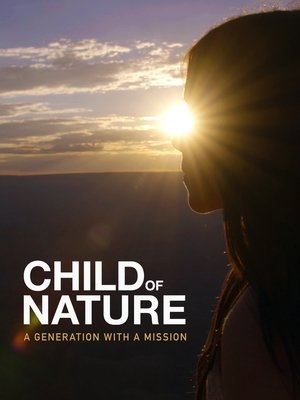
Being mother is the most natural thing in the world. Or so it seems. Yet the demands on women with children have rarely been as overloaded and contradictory as they are in today’s Western world. Promises of happiness are often followed by disadvantages, excessive demands and feelings of guilt. The mother has become an artificially glorified ideal, which nevertheless is often legitimized by the „nature of the woman“. We live in a time when three people could claim to be the same child’s mother: egg donors give their genes to beget children, surrogate mothers deliver babies which they give away immediately after birth, and men raise children by themselves – without a woman at their side. Hence the question arises: What makes a human being a real mother?