This short documentary is a tribute to the unknown father. Emerging filmmaker Danic Champoux poses the question "How many men still have to uproot themselves and leave their families to get work?" as he sets out to search for his own father. He wonders about these men who are labourers, itinerants, and mostly nameless, but who are all exemplary providers. But at what cost? This film was produced as part of the Libres Courts collection of first-time documentary shorts.
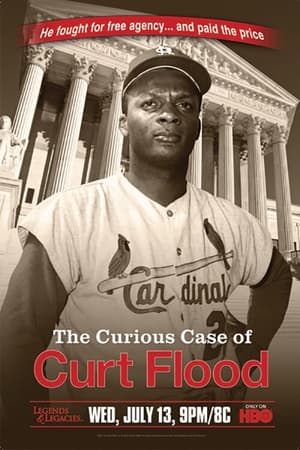
Inside the life of former baseball star Curt Flood whose fight against MLB's 'Reserve Clause' led to reform, but destroyed his career.
A portrait of Chicagoland ICU nurse Jeanette Alvarez-Basem captured through the perspective of her son Ben Basem. Between her night shifts and Illinois Nurses Association union meetings, Jeanette navigates what it means to be a nurse and a human during the first year of the COVID-19 pandemic.
This film was shot between 2014 and 2019 in the town of Zhili, a district of Huzhou City in Zhejiang province, China. Zhili is home to over 18,000 privately-run workshops producing children's clothes, mostly for the domestic market, but some also for export. The workshops employ around 300,000 migrant workers, chiefly from the rural provinces of Yunnan, Guizhou, Anhui, Jiangxi, Henan and Jiangsu.
This film documents the coal miners' strike against the Brookside Mine of the Eastover Mining Company in Harlan County, Kentucky in June, 1973. Eastover's refusal to sign a contract (when the miners joined with the United Mine Workers of America) led to the strike, which lasted more than a year and included violent battles between gun-toting company thugs/scabs and the picketing miners and their supportive women-folk. Director Barbara Kopple puts the strike into perspective by giving us some background on the historical plight of the miners and some history of the UMWA. Preserved by the Academy Film Archive in partnership with New York Women in Film & Television in 2004.
Brothers on the Line explores the extraordinary journey of the Reuther brothers – Walter, Roy, and Victor – union organizers whose unshakeable devotion led an army of workers into an epic human rights struggle.
In the late 1960s and early 1970s, girls aged 12 to 16 began working at Pyeonghwa Market. Running sewing machines, they also study the Labor Standards Act under the tutelage of Jeon Taeil. On September 9, 1977, they were imprisoned fighting against the government that closed labor classes, shouting, “The next Jeon Taeil will be a woman!” Now the middle-aged girls recall the memories of the life of female workers, social contempt, and stigma. Watching the sunrise in the East Sea, they admire, ‘How fair it is because everybody can see it.’ Sewing Sisters rewrites the history of maledominated Korean labor struggles in the 1970s with news interviews of female workers belonging to the Cheonggye Clothes Union.
When workers at the Hormel meatpacking plant in Austin, Minnesota are asked to take a substantial pay cut in a highly profitable year, the local labor union decides to go on strike and fight for a wage they believe is fair. But as the work stoppage drags on and the strikers face losing everything, friends become enemies, families are divided and the very future of this typical mid American town is threatened.
A documentary centered on the union formed by Bolivian farmers in response to their government's (which was urged by the U.S.) effort eradicate coca crops, and the man who would come to represent them, Evo Morales.
Blair Brown narrates this gripping account of a community's struggle to preserve its way of life. In the summer of 1892, a bitter conflict erupted at the Carnegie Works in Homestead, Pennsylvania. The nation's largest steel maker took on its most militant union with devastating consequences for American workers.
Migrating is seldom an easy solution. It is rather a journey, that begins with a journey. After more than eight years of campaigning, the immigrant cleaners outsourced at the School of Oriental and African Studies (SOAS) in London continue to demand being brought in-house. Limpiadores charts the history of their and others’ campaigns – from winning the London Living Wage to the deportation of nine colleagues, and the day-to-day invisible labour of cleaners on our campus.
The super-rich determines virtually every aspect of the lives of the other 90% of Americans. This film examines the hidden struggles of American families, the calculated political maneuvers of the elite, and the long overdue uprising of American workers. With affection for the middle-class and the outrageous attempt to color them as lazy, the film explores the question: How do we make sure workers are paid what they are worth, instead of believing they are only worth what they are paid?
This 1996 documentary takes a nostalgic ride through history to present the experiences of Black sleeping-car porters who worked on Canada's railways from the early 1900s through the 1960s. There was a strong sense of pride among these men and they were well-respected by their community. Yet, harsh working conditions prevented them from being promoted to other railway jobs until finally, in 1955, porter Lee Williams took his fight to the union.
Solidarnosc, la première brèche
The lowest paid teachers in the nation are in the middle of a statewide walkout in Oklahoma. From start to finish, Walkout follows the teachers as they get organized and demand raises from their state legislature. From crowded classrooms to a packed state capitol, Walkout offers an in-depth, personal look at the latest strike at the heart of a nationwide movement for education funding.
It was women who closed the gates and launched the Solidarity strike when, on a Saturday in August 1980, workers, satisfied with a raise, stopped their protest and wanted to leave the Gdansk shipyard. If it had not been for the initiative of several determined women, perhaps there would not have been any August 1980 in Polish history. Under martial law, with the men in prisons, the women took on their role. They were not interested neither in joining the union’s power structure, nor in particular posts. The most important thing was their work and its results. When communism in Poland came to an end on June 4, 1989, the vast majority of women in Solidarity disappeared from the political stage. They let themselves be forgotten when their colleagues were taking over the most important posts in power in a free Poland. This documentary by Marta Dzido and Piotr Śliwowski reminds us about these forgotten heroines, giving us a new perspective on the last 30 years of Polish history.
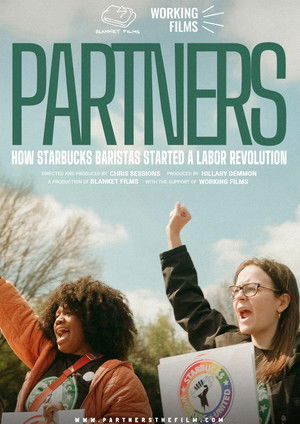
Starbucks baristas in Buffalo unite against corporate exploitation, sparking a generational uprising among working-class Millennials and Gen Z as they challenge a powerful billionaire CEO and fight for their rights.
This feature film made during an exceptionally feverish period of popular revolt that saw the coming together of Quebec’s 3 main unions (CSN, FTQ, CEQ) is a cinematic tract by socially engaged filmmaker Gilles Groulx. Propped against the backdrop of the 1970 October Crisis, the film is a frontal assault denouncing a “consumer society” viewed as the ultimate embodiment of evil.
Produced by the International Ladies Garment Workers Union, the film used actors to recreate the Triangle Shirtwaist Factory fire and compare working conditions of the early 20th century to that of the 1950s.
Made in L.A. follows the remarkable story of three Latina immigrants working in Los Angeles garment sweatshops as they embark on a three-year odyssey to win basic labor protections from a mega-trendy clothing retailer. In intimate verité style, Made in L.A. reveals the impact of the struggle on each woman's life as they are gradually transformed by the experience. Compelling, humorous, deeply human, Made in L.A. is a story about immigration, the power of unity, and the courage it takes to find your voice.