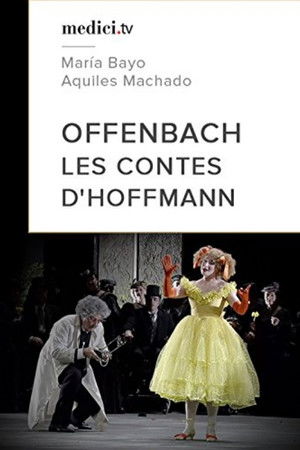
When Barbe-bleue loses his fifth wife, the turbulent Boulotte is selected at random to be the next one. But Barbe-Bleue falls in love with Hermia – who loves the shepherd Saphir – and soon wearies of Boulotte. So, he asks his alchemist to concoct for him an “anti-wife” philtre. But, as on the previous occasions, it is merely a sleeping potion and Boulotte wakes up the other five “dead” wives. They reappear, dressed up as gypsies and bring the truth to light.
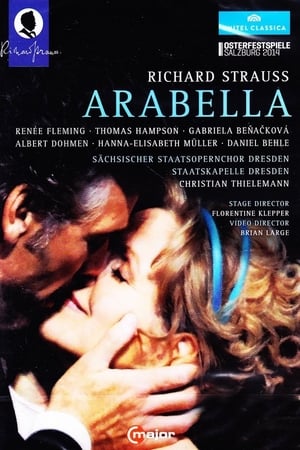
Richard Strauss's opera, from the Royal Opera House, Covent Garden.
Live performance at the Metropolitan Opera in 2000.
Live performance from the Opéra National de Paris, 2003.
The Met assembled an ideal cast for François Girard’s acclaimed new production of Wagner’s final masterpiece: Jonas Kaufmann in the title role of the fool “made wise by compassion”, René Pape as Gurnemanz, the veteran Knight of the Grail, Katarina Dalayman as Kundry, Peter Mattei is Amfortas, the anguished ruler of the Grail’s kingdom, and Evgeny Nikitin sings the evil magician Klingsor.
Anna Netrebko as the beautiful and wealthy Adina leads the cast in Barlett Sher’s production of Donizetti’s charming comedy, first seen on Opening Night of the Met’s 2012–13 season. Matthew Polenzani is Nemorino, the poor but good-hearted country boy who wins her love—with the help of the magic “elixir” sold by the quack Dulcamara, played by Ambrogio Maestri. Mariusz Kwiecien is the swaggering Sergeant Belcore and Maurizio Benini conducts.
New tenor star Vittorio Grigolo takes on the title role in Offenbach’s fantastical opera, giving a tour-de-force performance as the tortured poet unlucky in love. He is joined by a trio of leading ladies: Erin Morley sings the mechanical doll Olympia, Hibla Gerzmava is the fragile Antonia, and Christine Rice sings Giulietta, the Venetian courtesan. Bartlett Sher’s colorful production, seen here in its second Live in HD presentation, also stars Thomas Hampson as the sinister Four Villains and Kate Lindsey as Niklausse, Hoffmann’s friend and muse. Yves Abel conducts.
Live performance from Schwetzinger Festspiele, 1988. What sets this IL BARBIERE DI SIVIGLIA apart from all others available is its elegant realism. None of its visuals are the least bit cartoonish or blatantly designed for comedy. Dr. Bartolo’s house is a stark, stern-looking structure of plastered brick with a comfortable yet plain, white-curtained interior, while the costumes are highly realistic 18th century garb in subdued colors. Yet despite its fairly austere appearance the production is delightful, thanks to its performers and staging. The stage business is lively, witty and free of excessive slapstick, and every singer brings his or her character to life, all offering rich, vibrant characterizations that strike a perfect balance between comedy and humanity.
Jonas Kaufmann and Anna Caterina Antonacci bring rare erotic intensity to the drama of Don José and Carmen in this darkly passionate reading of one of the most popular operas. Kaufmann uses his burnished tenor and smouldering good looks to portray the man undone by Carmen's love. As the object of his desire, Antonacci gives a physical and compelling performance.
Live from La Scala Saturday 07 July 2007. In this live performance of Giuseppe Verdi's opera, Violetta, a courtesan much wooed by Parisian society, organises a grand party that is attended, amongst others, by the young Alfredo Germont. He confesses his feelings to Violetta, who is already suffering from consumption. She vacillates between genuine affection and a realistic assessment of her situation as a "fallen woman", which precludes any lasting relationship with a man.
Director Robert Carsen and his creative team flood the stage with summer blossoms, drifts of autumn leaves, winter snows and thunderous spring storms. The cast of 140 are attired in elegant costumes inspired by late 1940s Dior. This mythical tale of a young queen, Alphise, determined to abdicate rather than contemplate an enforced marriage to a descendant of Boreas, is nothing less than highly-charged.
Inspired by a fable by La Fontaine, [composer Jean-Philippe] Rameau produced perhaps his most brilliant music for his penultimate great work, blending reality and the surreal on several levels.
The Otto Schenk production of Richard Strauss's "Elektra", filmed live at the Metropolitan Opera in January, 1994. Hildegard Behrens stars as Elektra, with Deborah Voigt as Chrysothemis, Brigitte Fassbaender as Klytämnestra, Donald McIntyre as Orest, and James King as Aegisth. James Levine conducts.
The Queen of the Night enlists a handsome prince named Tamino to rescue her beautiful kidnapped daughter, Princess Pamina. Aided by the lovelorn bird hunter Papageno and a magical flute that holds the power to change the hearts of men, young Tamino embarks on a quest for true love, leading to the evil Sarastro's temple where Pamina is held captive. The internationally renowned Mozart interpreter Sir Colin Davis conducts the chorus and orchestra of the Royal Opera House and a glittering cast in David McVicar's 2003 production of the opera Mozart wrote in the final year of his life, recorded live at Covent Garden.
Jessye Norman is a regal Ariadne, the mythological Greek heroine in this opera-within-an-opera, opposite the passionate Bacchus of the great James King. Kathleen Battle delivers the coloratura fireworks of Zerbinetta, the leader of a commedia dell’arte troupe that finds itself stranded on Ariadne’s island. Tatiana Troyanos and Franz Ferdinand Nentwig star as the young Composer and the Music Master in the opera’s prologue. James Levine brings out all the color and charm of Strauss’s brilliant chamber-sized score with its equal amounts of pathos and humor. Bodo Igesz’s production features sets by esteemed designer Oliver Messel.
From the world famous Arena of Verona, an international cast perform one of Puccini's best loved operas. The cruel Princess Turandot, ruler of China, will only wed a prince who can answer correctly her three riddles. Those who fail are executed. Prince Calaf, son of the exiled king of Tartary, falls in love with Turandot as soon as he sets eyes on her, and despite the protestations of his friends and family sets out to pass her test.
The French have occupied Sicily, and Hélène is held hostage by Montfort, the French governor, who has had her brother executed. She turns to the partisan Jean Procida and the rebellious patriot Henri in her bid for vengeance. Les Vêpres siciliennes is one of Verdi’s lesser-known mature operas, but was vital to his development as a composer. It was created for the Paris Opéra in 1855, providing Verdi with an opportunity to embrace the elaborate style and traditions of French grand opera. First seen at the Royal Opera House in 2013, this staging of Verdi's rarely-performed opera Les Vêpres siciliennes – directed by Stefan Herheim and conducted by The Royal Opera’s Music Director, Verdi specialist Sir Antonio Pappano – went on to win the prestigious Olivier Award for Best New Opera Production.
Among DVDs of "Hoffmann" currently available, this is the only one that even begins to stand comparison with the superlative Powell and Pressburger film (whose ideas it occasionally borrows). Olivier Py's baroque imagination, which sometimes leads him into self-indulgence and incoherence, is well suited to bringing out this opera's darkness and he does an excellent job
This is a joy from beginning to end. Although there are many tricks and ideas from Laurent Pelly, as always he seems to still retain the Offenbach magic. La Lott and Monsieur Beuron are a joy, but so is everyone else. The Patriotic Trio by the sea is both a hoot and wonderfully sung, the score seems truly complete yet never flags and the finale sequences for especially acts 1 & 2 are a joy of movement and sound fused as one glorious Offenbachian moment.
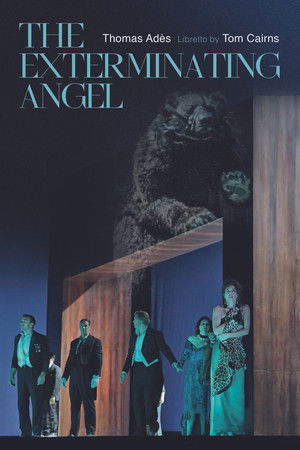
After the acclaimed Met premiere of Thomas Adès's "The Tempest" in 2012, the composer returned with another masterpiece, this time inspired by filmmaker Luis Buñuel's seminal surrealist classic "El Ángel Exterminador", during the 2017–18 season. As the opera opens, a group of elegant socialites gather for a lavish dinner party, but when it is time to leave for the night, no one is able to escape. Soon, their behavior becomes increasingly erratic and savage. The large ensemble cast tackles both the vocal and dramatic demands of Adès's opera with one riveting performance after another. Tom Cairns, who also penned the work's libretto, directs an engrossing and inventive production, using a towering wooden archway to trap the characters onstage. And Adès himself takes the podium to conduct the frenzied score, which features a host of unconventional instruments, including the eerie electronic ondes Martenot.