In 1671, with war brewing with Holland, a penniless prince invites Louis XIV to three days of festivities at a chateau in Chantilly. The prince wants a commission as a general, so the extravagances are to impress the king. In charge of all is the steward, Vatel, a man of honor, talent, and low birth. The prince is craven in his longing for stature: no task is too menial or dishonorable for him to give Vatel. While Vatel tries to sustain dignity, he finds himself attracted to Anne de Montausier, the king's newest mistress. In Vatel, she finds someone who's authentic, living out his principles within the casual cruelties of court politics. Can the two of them escape unscathed?
55 years ago, on October 1 1968, the first brand advertising spot appeared on the French television screen. Over the next three decades, thousands of creative little films would seduce and build our collective memory. Kitschy or cult spots, humor, slogans, music, stars, gimmicks, grand spectacle or sex appeal: during its golden age, how did advertising convince? Thierry Ardisson has brought together almost 400 advertising clips to relive the era of the conquest of minds and wallets.
In May 1943, Ernst Kaltenbrunner, the new head of the Reich Central Security Office, gave Hitler a report describing in detail the organization of the French Resistance. Indeed, during the Second World War, most of the Resistance networks had been infiltrated by traitors, the "V Man" (trusted men) in the service of the occupier. The Germans had established treason as a system and recruiting Frenchmen ready to inform on them was one of their priorities. It was these Frenchmen, whose number is estimated at between 20,000 and 30,000, who dealt terrible blows to the Resistance.
Following the 1974 French presidential campaign with Valéry Giscard d’Estaing.
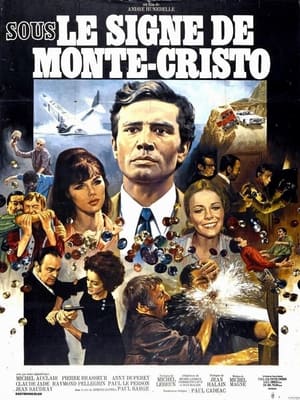
Adaptation of Alexandre Dumas's novel 'The Queen's Necklace' which portrays the Affair of the Diamond Necklace which occurred before the French Revolution.
After many years of confrontation, the treasures of Spain and France are empty. In 1721, the regent of France draws up an ambitious plan to inaugurate an era of peace and prosperity that will heal the economies of both nations: his intention is to build a solid network of marriage alliances that will involve four children of very different ages who know nothing of betrayals and power games…
Academy Award®-winning filmmaker Errol Morris confronts one of the darkest chapters in recent American history: family separations. Based on NBC News Political and National Correspondent Jacob Soboroff’s book, Separated: Inside an American Tragedy, Morris merges bombshell interviews with government officials and artful narrative vignettes tracing one migrant family’s plight. Together they show that the cruelty at the heart of this policy was its very purpose. Against this backdrop, audiences can begin to absorb the U.S. government’s role in developing and implementing policies that have kept over 1300 children without confirmed reunifications years later, according to the Department of Homeland Security.
Ancient Caves brings science and adventure together as it follows paleoclimatologist Dr. Gina Moseley on a mission to unlock the secrets of the Earth’s climate in the most unlikely of places: caves. Moseley and her team of cave explorers travel the world exploring vast underground worlds in search of stalagmite samples – geologic “fingerprints” – that reveal clues about the planet’s climate history. Their quest leads them to some of the world’s most remote caves, both above and below the water, in France, Iceland, the Bahamas, the U.S. and Mexico’s Yucatan Peninsula. Together, they go where very few humans will ever go, revealing the incredible lengths scientists will go to study the unknown.
J'écris dans l'espace
“Forgetting is complicit in recidivism,” says the commentary of this film dedicated to the demonstration of October 17, 1961 in Paris and the savage repression that followed. 11,538 Algerians will be arrested, which is reminiscent of the great Vel d’hiv roundup of July 16 and 17, 1942 where 12,884 Jews were arrested. The film brings together eyewitnesses including a priest, a peacekeeper, a couple of workers sympathetic to the Algerian cause, a lawyer, Paris municipal councilors including Claude Bourdet (then one of the leaders of the PSU and journalist to France Observateur), Gérard Monatte, the future police union leader, and the editor and writer François Maspero.
A legendary city everyone dreams of visiting, Paris has retained all its authenticity, resembling more a collection of villages rather than one major metropolis. From the Eiffel Tower to Notre Dame de Paris, we discover the French capital's most emblematic monuments, and the vibrant life of its boulevards
Twenty-five films from twenty-five European countries by twenty-five European directors.
In this modern, coming of age documentary, Naomi, Jojo and Arham grapple with economic divides, gender roles, and family dynamics while competing in the fastest growing high school sport in the country: girl’s wrestling.
Henry II and his estranged queen, Eleanor of Aquitaine, battle over the choice of an heir.
David Olusoga opens secret government files to show how the Windrush scandal and the ‘hostile environment’ for black British immigrants has been 70 years in the making.
This documentary film explores the world of the bow and the extraordinary masters who make them. The bow is the Cinderella of the orchestra—the overworked and overshadowed ally to its more glamorous partners. Few people, even among lovers of classical music, think of the bow as an instrument in its own right, but players of stringed instruments see them differently. To musicians, the bow is as essential to expressing the soul of the music as the violin or cello. The film follows the journey of the “silent servant” of the music world—from the workshops of the virtuosos of the trade, to the birthplace of the bow in France, and to Brazil, home to the imperiled tree from which the world’s finest bows are made.
A family portrait in which the director profiles his grandmother, Odette Robert. Eustache includes in the film the conditions of its production — he is seated at the table with her, pours her some whiskey, speaks with the camera operator, manipulates the clapboard at the head and tail of the reels, and even takes a phone call. Robert, who was seventy-one, speaks rapidly and tells the story of her life, starting from her early childhood in villages in the Bordeaux region of France. A shorter version of the film ("Odette Robert") was edited in 1980 to be broadcast on television on TF1. The complete film only gained exposure in 2002, when it was salvaged by Boris Eustache, Thierry Lounas, João Bénard da Costa, Jean-Marie Straub, and Pedro Costa.
The only thing colder than a Canadian winter is Canadian bureaucracy (probably). Based on five real life stories, Romy Boutin St-Pierre and Joe Nadeau pay homage to the nation-wide stress headache of phone calls with the government in this surprising short.
Aboard a specially decorated motorhome made by Lulu, they will travel the roads of France for the first time, following "an itinerary as twisted as Lucie's spine" (sic). From the French Riviera to Mont-Saint-Michel, via the Arcachon basin, Hauts-de-France and Lot, before reaching the Champs-Elysées for a finish as prestigious as the Tour de France. On the agenda: a reunion with a fourth-grade class, funny gypsies, a haunted castle, oysters and white wine with the most famous oyster farmer, but also a few activities strongly discouraged for people with muscular dystrophy... and above all, big-hearted French people, as funny as they are generous, who offer us the best of their country through their hospitality.
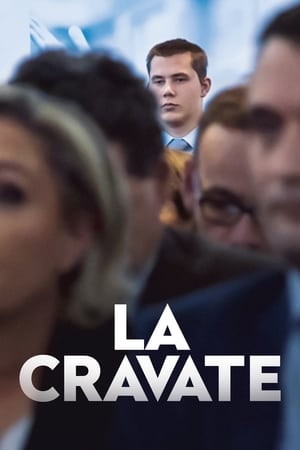
Bastien is twenty years old and has been an activist for five years in the main extreme right party. When the presidential campaign begins, he's invited by his superior to commit even further. Initiated into the art of decking himself out like a politician, he starts to dream of a career, but old demons surge forth...