Since World War II North Americans have invested much of their newfound wealth in suburbia. It has promised a sense of space, affordability, family life and upward mobility. As the population of suburban sprawl has exploded in the past 50 years Suburbia, and all it promises, has become the American Dream. But as we enter the 21st century, serious questions are beginning to emerge...
SUZY & THE SIMPLE MAN is an environmental love story about sustainability and the cycle of life. Eight years in the making, this intimate, funny and uplifting film features Suzy and her adventurer husband Jon Muir who live a simple life off the grid — growing organic fruit and vegetables and caring for their chooks and sheep. But the simple life is never as easy as it seems. When all seems perfect something changes their world and life takes an unexpected turn. With bravery and conviction Suzy and Jon confront perhaps their greatest challenge yet, and consider taking the road less travelled. SUZY & THE SIMPLE MAN is a modest story with big questions at its heart: our relationship to each other, to nature and to other creatures, the care of the planet and ourselves, and confronting our own mortality.
A Tainha e a Onda
Through economic necessity, an Aran Islander is forced to travel to England to work on building sites so that he can earn money to support his family back on the Islands.
In this documentary short, summer trippers line up for the famous local fried clams and whole families dig for the white mollusc in the tangy air of the sandbars. But as the clams dwindle, so do these tableaux from Maritime culture. For commercial fishermen it's the end of a livelihood; for others, it's the death of a tradition. Can this really be the end of a resource that used to be as plentiful as the air we breathe?
In 1965, on the Eastern Shore of the Chesapeake Bay, there was the last operating fleet of sailing work boats in the United States. Forty-odd "Skipjacks" were still used by Maryland watermen to dredge up oysters from the Bay. At that time, the fleet had survived because of a Maryland conservation law which prohibits the use of motor power for oyster dredging. The watermen traditionally marked the opening of each oystering season with a skipjack race which the Maryland State Tourist Board incorporated into its annual "Chesapeake Bay Appreciation Day."
An experimental short documentary essay about the dreams of Roma women living in the ghetto in Kosice. Roma are one of the largest ethnic groups living in Slovakia. Despite this, integration into all spheres of society is difficult. And it should be noted that this applies not only to Slovakia. Luník IX houses the largest community of Romani people in Slovakia. Although originally built for 2,500 inhabitants, it is estimated that the population is now three times larger. Living standards are low, with services such as gas, water, and electricity cut off, as the majority of inhabitants are not paying rent or utilities fees.
Evan Evers investigates and attempts to stop the terror of the lake sturgeon, a murder-hungry fish bringing trauma to the Midwestern area surrounding the St. Croix river in IN THE REALM OF THE STURGEON.
In CATHEDRALS, filmmaker Dan Algrant embarks on a journey to reconnect with two black collaborators from a film made nearly 50 years ago. CATHEDRALS becomes a powerful exploration of the bonds that tie us together and the experiences that shape our identities. Through the lens of a creative collaboration, the film illuminates the struggles and triumphs that define life in a close-knit community, ultimately reaffirming the importance of human connection and the power of collective memory.
A compilation of interviews, rehearsals and backstage footage of Michael Jackson as he prepared for his series of sold-out shows in London.
Somewhere on the coast of the Bering Sea, a father and son make a living fishing in a community that seems almost outside of time. Aliaksandr Tsymbaliuk’s camera takes us in close to the subjects, recording both the harshness of their condition and the rigour of education, softened by paternal love and the universal insouciance of childhood.
Documentary about Japanese pearl fishers.
Made in memory of Kalbinder Kaur Hayre, a young British-Indian woman murdered in 1985 in a racist attack in England, Sari Red examines the effect of the ever-present threat of violence upon the lives of Asian women in both private and public spheres. In this moving visual poem, the title refers to red, the color of blood spilt and the red of the sari, symbolizing sensuality and intimacy between Asian women.
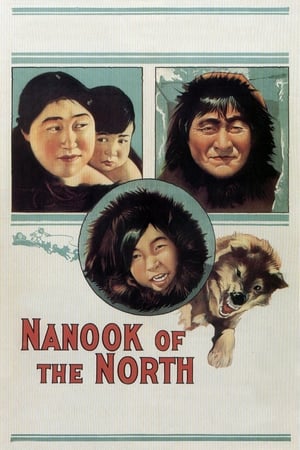
This pioneering documentary film depicts the lives of the indigenous Inuit people of Canada's northern Quebec region. Although the production contains some fictional elements, it vividly shows how its resourceful subjects survive in such a harsh climate, revealing how they construct their igloo homes and find food by hunting and fishing. The film also captures the beautiful, if unforgiving, frozen landscape of the Great White North, far removed from conventional civilization.
Two friends, both Indigenous fishermen, are driven to desperation by a dying sea. Their friendship begins to fracture as they take very different paths to provide for their struggling families.
The story was born from the pen of debutante Callie Khouri: Thelma, married to a macho man, and Louise, an independent waitress, go on a girls' getaway that turns into a runaway when the latter, during a stopover in a bar, shoots a man who was trying to rape her friend. But at the dawn of the 1990s, screens were dominated by testosterone-fueled opuses, and Hollywood studios were reluctant to entrust the steering wheel to a female duo. Seduced by the script, forwarded by his associate Mimi Polk, Ridley Scott agreed to produce the film and decided, against all odds, to direct it himself. Under the British director's watch, the two accidental outlaws, fabulously portrayed by Susan Sarandon and Geena Davis, flee across the vastness of the Far West on an emancipatory epic that sees them defy male oppression and reveal themselves to themselves.
A Scottish boat builder and fisherman perseveres in turning a vessel into an innovative solar-powered boat.
In 150 years, twice marked by total destruction —a terrible earthquake in 1923 and incendiary bombings in 1945— followed by a spectacular rebirth, Tokyo, the old city of Edo, has become the largest and most futuristic capital in the world in a transformation process fueled by the exceptional resilience of its inhabitants, and nourished by a unique phenomenon of cultural hybridization.
A documentary film from New Hampshire Sea Grant following the stories of women in New Hampshire's traditionally male-dominated seafood and aquaculture industries, why they chose to work on the water, the challenges they face, and the reasons they've stayed.
Take a revealing tour along a coast of contrasts, from the folksy freshness of Whitby to the coaly Tyne, queen of all rivers.