Three farming families in Hanyuan, China, strive to give their children a good life in the midst of an ecological crisis, as widespread use of pesticides leads to a dramatic decline in bees and other pollinating insects in the valley.
From space, our planet appears as a tiny blue dot in the vastness of space. Blue, because 99% of all living space on Earth occurs in the Ocean. But the seas are under threat. The industrialization that has occurred in the oceans over the last century mirrors the events that triggered mass extinctions on land. As we learn of the ecological crimes occurring worldwide, we also uncover the shocking truths happening on our own shorelines.
Nestled in the heart of America s great plains are contrasting tastes of a sacred land that beckons the visitor to enter the nation's mysterious and glorious West. A land of soaring pinnacles, deep canyons, hidden caves, national monuments and countless wildlife sanctuaries. It is also the place of the inglorious death of famed gunslinger, Wild Bill Hickok and the most sacred spot for the Lakota Sioux. Enjoy breathtaking aerial views and amazing tours with park rangers. Discover the wonder and awe of these contrasting spectacles of the West, one soaring, rich in forest and water and other barren and deeply eroded, which are brought to together by a shared geology and history. They are the Gateway to the Great American West. They are the Black Hills and the Badlands.
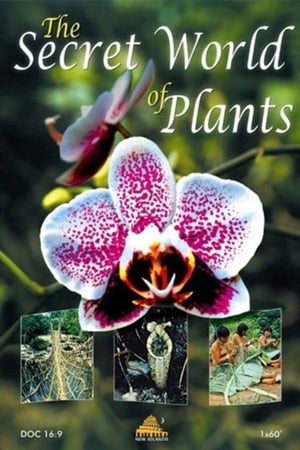
David Attenborough takes us on a guided tour through the secret world of plants, to see things no unaided eye could witness. Each episode in this six-part series focuses on one of the critical stages through which every plant must pass if it is to survive:- travelling, growing, and flowering; struggling with one another; creating alliances with other organisms both plant and animal; and evolving complex ways of surviving in the earth's most ferociously hostile environments.
In Iceland, volcanoes line up like pearls on a string. In the mountains and valleys the ground boils. It smokes, hisses and bubbles. Although rising from the sea as a bare lava island, life thrives on Iceland's volcanic slopes. Whether in icy heights or abysmal crevasses that tell of the fact that the earth is tearing apart here, between the North American and Eurasian tectonic plates - Iceland is a natural paradise. Magical Iceland: Living on the World's Largest Volcanic Island is a testament to the island's unexpected biodiversity and spectacular landscapes, both above and below the water.
It delivers enough venom in one bite to kill a hundred people, yet it solely preys on other snakes. Through rare footage follow the King Cobra on its journey throughout the rainforests of India seeking food and a mate.
Mandrills : le paradis retrouvé
Ultima Patagonia : la dernière frontière
The World's Biggest and Baddest Bugs, follows host Ruud Kleinpaste, as he embarks on an entomological odyssey around the globe in search of the ultimate biggest and "baddest" creepy crawlies. The World's Biggest and Baddest Bugs will then profile the "stars" of the show, with Ruud explaining in his audience-friendly style exactly what makes them so amazing.
The explorers Bruce Parry and Mark Anstice climb the remote and little known mountain Puncak Mandala in the Indonesian part of New Guinea. They have to cross remote jungles, climb icy cliffs and navigate the curiosity and fear of indigenous peoples in order to get to the top.
Sangduen Chailert, or Lek, as she is generally known, has already rescued over 200 elephants. She has dedicated her life to saving the Asian elephant and founded a special camp, The Elephant Nature Park to protect them. We follow this winner of Time Magazine’s “Asian Hero of the Year” Award in her work. Lek is on a mission to save the Asian elephant in her native Thailand. This film looks at the plight of the Asian elephant, as it goes from being a widely used domestic animal, to becoming a burden on modernizing communities. With experts predicting its extinction within four decades, Lek’s work is needed now more than ever and she has gathered a large group of supporters and volunteers in her quest for a better future for the Asian elephant. This moving film demonstrates Lek’s natural understanding of and rapport with these huge animals and will stir the viewers emotions as it highlights the often desperate state some elephants are kept in.
Au nom des jaguars
An experience of a camera swinging in different gestures facing the optical distortion of the Sun. The last appearance of the smudge.
Africa's Super Snake
A journey to seven of the most geographically dynamic locations on earth. The film features spectacular land forms, diverse wildlife and the people and cultures indigenous to these places. Distinct geographic places include the great island of Madagascar, home to unique limestone pinnacles and the playful lemur; and the greatest desert—the Namib—home of the largest sand dunes in the world that tower majestically over its western border, the Atlantic Ocean. Other locations featured are the great icecap of Greenland, Iguazu Falls in Brazil, the Okavango Delta in Botswana, the Chang Tang Plateau in Tibet, and the Amazon River in South America.
The white chalk cliffs of Rügen are among the most impressive natural monuments on earth, which the painter Casper David Friedrich immortalized for posterity as early as the 19th century. Germany's largest island with its seaside resorts from the Gründerzeit, its smaller side islands and peninsulas that give it its shape, its lagoon-like Bodden waters, the dense beech forests, the yellow rapeseed fields and the meadows, the shady tree avenues and the white sandy beaches is not only a magnet for tourists, but also a unique natural paradise in the middle of the Baltic Sea, a habitat for the rare white-tailed eagle, fallow deer, raccoon dogs and badgers as well as a resting place for huge swarms of migratory birds such as geese and cranes that can be heard trumpeting from afar. In this nature documentary, the unique landscapes and the diversity of the animal world of Rügen are captured with beautiful pictures during the changing of the seasons.
In southern Germany, winter can still be admired in all its glory every year. With its white coat of snow and icicles and myriads of small crystals that look like geometric works of art. In the valleys and on the slopes the snow is still so thick every year that the alpine huts are snowed in up to the windows. Cows and dairymen are safe in their farms at lower altitudes. But not the wild creatures of the mountains! They need strategies to survive the cold season and to defy snow masses, cold and ice. And some seem to do it so easily that they even raise their young in the middle of winter. But how do animals, plants and fungi cope with the annually recurring ice age, which from our perspective is a time of need? The many adaptations in nature prove that winter is an integral part of the natural cycle of the year and the living environment of species. They are adapted to cold and frost. That is why the animals and plants at the edge of the Alps suffer particularly from climate change!
Are tourists destroying the planet-or saving it? How do travelers change the remote places they visit, and how are they changed? From the Bolivian jungle to the party beaches of Thailand, and from the deserts of Timbuktu, Mali to the breathtaking beauty of Bhutan, GRINGO TRAILS traces stories over 30 years to show the dramatic long-term impact of tourism on cultures, economies, and the environment.
An excellent display of how humans can rehabilitate and restore an area where a heavy industry polluted the water so severely that it was unsuitable to sustain any kind of life. A a film showing how birds returned to an environment once devastated by industry. The lakes around the northern Slovenian town of Velenje, placed in the Central Europe, are geographic center of the film. They emerged as the land above the lignite mines subsided and the depressions were filled with water. The mines started operating at the end of the 19th century. In the mid 20th century a power plant was built that caused a severe pollution of the lake waters to the extent of the lakes not being fit for any kind of life. As a consequence many birds moved from these parts. After a long ecological restoration that started in the mid 1980s, life returned to the water. Gradually the birds returned as well, including some there were previously never observed in this area.
After years of extreme drought, the Boteti river in Botswana has finally returned in all its glory. This film documents the extraordinary shift in the ecosystem and the dramatic changes it brings to the resident animals.