On November 13, 2015, the attacks in Paris and Saint-Denis, carried out by three Islamist commandos and claimed by ISIS, were the deadliest in France since the end of World War II. In the months that followed, the November 13 Program was launched by the CNRS and Inserm to study the construction of individual and collective memory around an event that profoundly marked French society. Today, the testimonies of 27 volunteers—among some 1,000 people—who participated in the study form a mosaic of experiences that shows how trauma extends beyond the immediate circle to permeate the national collective memory.
This film offers us a juxtaposed journey of two priests: Father Van Ban, a Vietnamese priest from the parish of Thy Hu in the Hé region, who after nine years of training in Paris decides to return to Vietnam, and Bernard de Terves, a young deacon from the Foreign Missions of Paris who decides to leave for China after his ordination. Their intersecting paths allow us to address themes related to East-West intercultural dialogue, particularly that of transmitting the Gospel message.
Behind the iconic Eiffel Tower lies the story of an incredible challenge to erect a thousand-foot tower that went far beyond a design competition, and marked a major turning point in engineering history. It was the beginning of radical transformation where iron was pitted against stone, engineering against architecture, and modern design against ancients. Press campaigns, lobbying, public conferences, denigration of opposing projects, bragging about big names - all participants engaged in a fierce battle without concession. Using 3D recreations, official sources (reports, letters, drawings...) and intimate archives obtained from their descendants, this film will bring to life this vertical race through a fresh and visual way to mark the centenary of Eiffel death.
The story of Zineb El Rhazoui, a young Moroccan woman who, in the wake of the Charlie Hebdo attack, finds her life radically transformed : from a censored journalist in Morocco she becomes the most protected woman of France.
Paris Black Night
This is one of the blind spots of the November 2015 attacks, a piece of history that has been ignored and never told: an invisible consequence of that fateful Friday the 13th is that dozens of childhoods and adolescences were also cut short. That night, as a result of the various attacks, 69 children were left orphaned. Most of them reject the term "victim," which is too heavy a burden to bear.
Why did the series "In Therapy" on ARTE break audience records? Does it reflect the truth of psychoanalysis? From personal quests to collective traumas, this sensitive documentary explores the reciprocal influences between fiction and reality.
The story of Le Palace, the famous parisian night club in the late seventies. The documentary is a conversation between ex-clients, founders and workers of the place. Owned by Fabrice Emaer, this nightclub became in 1978 the center of the french social life.
From his childhood in a modest family in the Pyrénées to his unexpected career as a porn actor in the 1970s, the film traces the life of Claude Loir, who set out to fully embrace life. His homosexuality and curiosity guide him through encounters that lead into the shadowy, liberated circles of a pre-AIDS era, caught between conservatism and sexual freedom. Loves and lovers, flamboyance and fragility… the film offers a striking portrait of a fearless, hedonistic man navigating desire, identity, and society’s constraints.
In this special documentary that inspired a two-season television series, scientists and other experts speculate about what the Earth, animal life, and plant life might be like if, suddenly, humanity no longer existed, as well as the effect humanity's disappearance might have on the artificial aspects of civilization.
An aeronautical accident is caught on camera at a Parisian 'Aéro-Parc'.
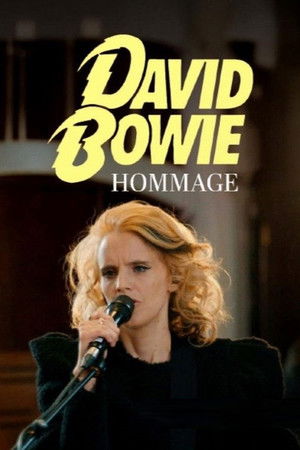
The Molotovs kick things off in style with “Rebel Rebel,” followed by magical covers of “Heroes” (The Horrors), ‘Fascination’ (La Roux), “Let's Dance” (Jeanne Added), “Rock'n'Roll Suicide” (The Libertines), “Sound and Vision” (Anna Calvi), “Starman” (The Divine Comedy), and “The Man Who Sold the World” (Yasmine Hamdan): eight intense reinterpretations of David Bowie's work, delivered during an arty and decidedly London-esque stroll, which, from stage to studio, recreates the fragile intensity of a live performance.
Paris, Rue Beautreillis, July 3, 1971. The corpse of rock star Jim Morrison is found in a bathtub, in the apartment of his girlfriend Pamela Courson. The chronicle of the last months of the life of the poet, singer and charismatic leader of the American band The Doors, one of the most influential in the history of rock.
Hauntology of the Retrodromomania is an essayistic motion picture, a locomotory legwork, a deambulatory non-rural land survey, a casual journeying in a punctual dissertation around the phenomenon of the nostalgic feeling, discoursing on a late capitalistic landscape of social emotions, which are of yore, yet coloured of the postmodern tint of pixelated neo-noir, a socio-philosophical flâneur’s trip in critical theory escorted by the spirits of French post-structuralists. For a Sociology of Nostalgia revisited.
Les bouillons parisiens, une histoire de goût
L'Explosion
A look at the life of Toty Rodríguez: An actress who made her career in France during the 60s, a well-known Diva in Ecuador as well as an icon of the women rights. She returns to Paris with her nephew to revisit her past in a town that changed her life.
The 1905 law proclaiming the separation of church and state is 120 years old. This law affirms freedom of conscience and religious freedom. It is considered the founding text of secularism. Secularism is the subject of endless controversy and debate.
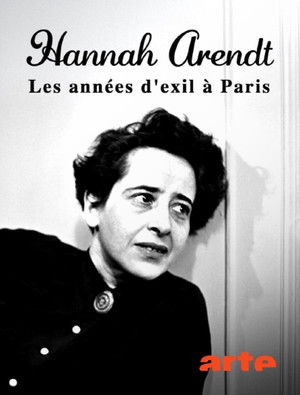
Hannah Arendt's views on Jewish identity, the Israel-Palestine conflict, and authoritarian-totalitarian systems seem more relevant than ever. Together with biographer Thomas Meyer, this documentary takes us back to the time of her exile in Paris. It was there, on the banks of the Seine, that she laid the foundations for her later works, which would bring her international renown.
With 66 million passengers coming through it each year, Roissy-Charles-De-Gaulle airport is Europe's second largest and busiest hub. Every day, up to 1800 aircraft land and take off in record time. This film provides a fascinating glimpse into how Roissy-Charles-De-Gaulle airport is able to welcome over 230,000 passengers a day with as little turbulence as possible.