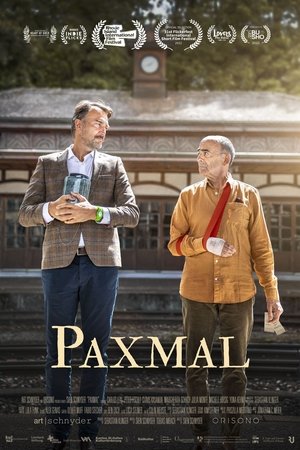
Eyal, an Israeli Mossad agent, is given the mission to track down and kill the very old Alfred Himmelman, an ex-Nazi officer, who might still be alive. Pretending to be a tourist guide, he befriends his grandson Axel, in Israel to visit his sister Pia. The two men set out on a tour of the country, during which Axel challenges Eyal's values.
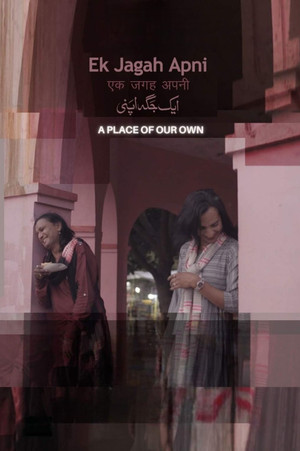
When a carefree woman learns that her closeted friend is gay, the two form an inseparable bond and find comfort in each other's company.
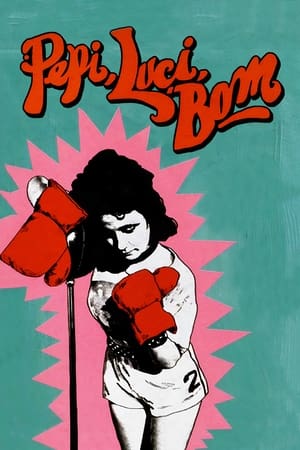
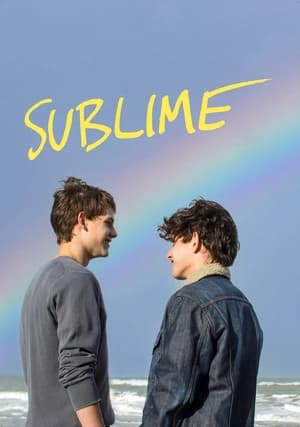
Singing and dreaming together, a talented singer-songwriter and a same-aged keyboardist add harmony and love to each other's lives.
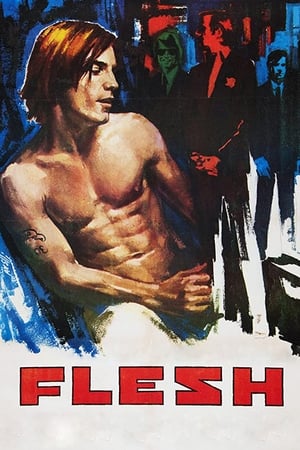
A young, struggling actress lands her dream role in a film by an emerging Italian director, starring alongside an American superstar. What begins as her big breakthrough quickly turns into a living hell.
County Durham, England, 1984. The miners' strike has started and the police have started coming up from Bethnal Green, starting a class war with the lower classes suffering. Caught in the middle of the conflict is 11-year old Billy Elliot, who, after leaving his boxing club for the day, stumbles upon a ballet class and finds out that he's naturally talented. He practices with his teacher Mrs. Wilkinson for an upcoming audition in Newcastle-upon Tyne for the royal Ballet school in London.
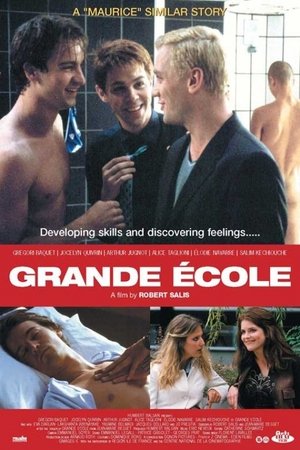
The heterosexual man Axel is thrown out of his girlfriends home for cheating and ends up moving in with a gay man. Axel learns the advantages of living with gay men even though they are attracted to him and when his girlfriend wants him back he must make a tough decision.
Several lonely hearts in a semi-provincial suburb of a town in Denmark use a beginner's course in Italian as the platform to meet the romance of their lives. The film, which unspools the connections and family drama shared between the students, complies with several aesthetic principles of Dogme 95 movement.
A young Polish filmmaker sets out to find out what happened to Mateusz Birkut, a bricklayer who became a propaganda hero in the 1950s but later fell out of favor and disappeared.
The Second World War is experienced through the journey of Private Cole, a dramatic study of the contrasting nature between the innocence of childhood and the reality of war, and the emotional struggle that accompanies it.
When an old friend brings filmmaker Enrique Goded a semi-autobiographical script chronicling their adolescence, Enrique is forced to relive his youth spent at a Catholic boarding school. Weaving through past and present, the script follows a transvestite performer who reconnects with a grade school sweetheart. Spurred on by this chance encounter, the character reflects on her childhood sexual victimization and the trauma of closeting her sexual orientation.
In 1960s Wyoming, two men develop a strong emotional and sexual relationship that endures as a lifelong connection complicating their lives as they get married and start families of their own.
In a small, conservative Scottish village, an oilman is paralyzed in an accident. His wife, who prayed for his return, feels guilty; even more, when he urges her to have sex with another.
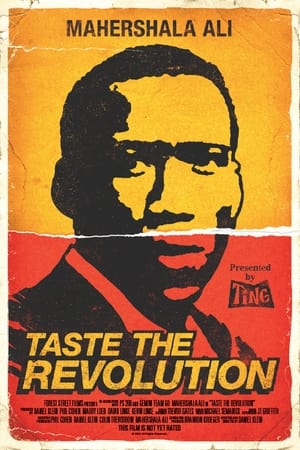
A band of displaced untouchables in Western Ghats of India embrace Buddhism in order to escape from caste oppression.
Invited by the conductor Premil Petrovic to stage Arnold Schoenberg’s Pierrot Lunaire, a musical theater work from 1912 based on the poems of Albert Giraud, LaBruce transposed a strange and tragic episode of true crime onto the composition. Complementing the original atonal score is a narrative about a trans man who is outed by his girlfriend’s father and forbidden from seeing the young woman again. Crestfallen, the protagonist decides to prove the fact of his manhood by castrating a taxi driver and then revealing his newly transplanted member to the two of them. This story, which for LaBruce “serves as a kind of allegory for all gender radicals and outcasts driven to extremes by the disapproval and hostility of the dominant order,” is rendered in a visual style that nods to the era of Schoenberg’s melodrama. LaBruce cheekily appropriates the formal vocabulary of silent cinema with black-and-white photography, irises, and intertitles like “A cock, a cock, my kingdom for a cock!”
Szabolcs plays in a German football team, as does Bernard. They are roommates, best friends, inseparable. A lost match makes him reconsider his life and he goes back to Hungary in hope for more simplicity. Yet his solitude does not last long. Soon after his arrival he meets Áron and a mutual attraction between the two boys develops when suddenly Szabolcs receives an unexpected phone call from Bernard: he has arrived to Hungary...
An orphaned heiress is forced to embrace her family's dark legacy.
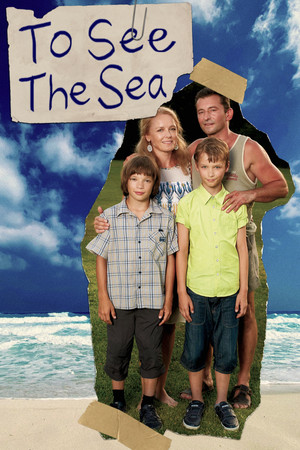
A tale about isolation and lack of communication, the gap between the reality a teenage boy lives, and how he would like it be. He has a secret that he would like to tell his family, something that he has come to terms with and is about to affect the rest of his life. But how will they react?
Following the tragic death of her teenage son, Manuela travels from Madrid to Barcelona in an attempt to contact the long-estranged father the boy never knew. She reunites with an old friend, an outspoken transgender sex worker, and befriends a troubled actress and a pregnant, HIV-positive nun.
It's Tonio's first time in Corsica. He wanders across the island and on dating apps until stumbling upon the Oracle, a user who tells him about gay life in Corsica. Their conversation is reenacted with an actor who seems to connect deeply with the Oracle's story.
Alexander, the King of Macedonia, leads his legions against the giant Persian Empire. After defeating the Persians, he leads his army across the then known world, venturing farther than any westerner had ever gone, all the way to India.