SONG 5: A childbirth song (the Songs are a cycle of silent color 8mm films by the American experimental filmmaker Stan Brakhage produced from 1964 to 1969).
SONG 8: Sea Creatures. The Songs are a cycle of silent color 8mm films by the American experimental filmmaker Stan Brakhage produced from 1963 to 1969.
SONG 13: A travel song of scenes and horizontals (the Songs are a cycle of silent color 8mm films by the American experimental filmmaker Stan Brakhage produced from 1964 to 1969).
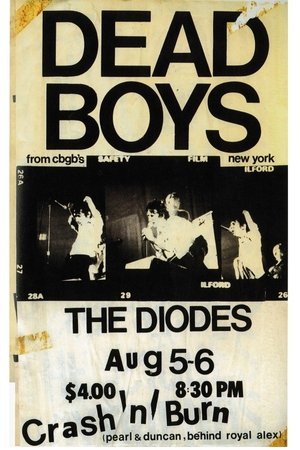
This is Poe and Král's first effort, shot on small-gauge stock, before their more well-known endeavor The Blank Generation (1976) came to be. A "DIY" portrait of the New York music scene, the film is a patchwork of footage of numerous rock acts performing live, at venues like Madison Square Garden, Radio City Music Hall, the dive bars of Greenwich Village and, of course, CBGB.
The director Andrés Kaiser combines hundreds of amateur films and photographs from the treasure trove of images belonging to his migrant grandparents creating a cinematic firework of analogies.
A traumatized cheer captain races to stop a masked killer and the new tourist attraction aimed to exploit her tragedy from a year earlier.
Lost Boundaries is comprised of footage shot by Julien on location, in England in the summer of 1985, during the making of the Sankofa film and video collective's first experimental feature film The Passion of Remembrance (1986), which he co-directed with Maureen Blackwood, another member of the collective. In recapturing those moment Lost Boundaries both deconstructs and foregrounds the means of 16mm film production while weaving together a fragile community of Black artists and actors who came to prominence at a time when debates in film theory - such as those of the Screen film journal and of "third cinema" discourses where cinema was intertwined within (Brechtian) filmmaking practices - were at the forefront of forging a new politics of artistic representation. A Black avant-garde.
In 1975, soon after the end of the Vietnam War, Hoa Thi Le and Hue Nguyen Che fled the country on a small boat. After nine days at sea, they docked in the Philippines, where they were utilized as background extras for “Apocalypse Now.”
Concert footage of The White Stripes recorded in January of 2004, featuring tracks from the band's four studio albums as well as live favorites like the Dolly Parton cover "Jolene"
A fragmented collection of independent closed cinemas, in London during lockdown, captured on Super 8mm film.
The biggest, most populated, and frantic city in South America. While Cariocas are like tropical birds, Paulistas are like frenetic ants. Distances are longer and they're always in a hurry. A busy journey through this beautiful Brazilian beast which cannot help but beating irregularly.
The first film by Chantal Akerman, a short silent 8mm film shot during the Brussels summer Midi Fair, that was one of four short films she made as a short of entrance exam at INSAS were she studied for just a couple of months.
Eerie images of landscapes after the Fukushima nuclear disaster shot on black and white 8mm.
In 1975, the long slog of civil war has recently begun in Beirut. Two friends, Tarek and Omar, suffer during the Lebanese civil war. Conflicts arise when they decide to cross from West to East, crossing the Muslim-Christian line that divides Beirut.
Join Lucy as she embarks on a spiritual journey to Mars in this psychedelic short film full of music and mischief.
Set in an alternate, post-apocalyptic 1976, a filmmaker follows a worn and disillusioned photographer who, despite the circumstances, continues to make pictures.
A young girl’s fiery dance, accidentally caught on 16 mm film in the street. The viewer is confronted by the sacrificial and the passionate, the strong and the fragile, the fleeting and the eternal. These are the faces of femininity.
In late 1970s Ohio, a group of friends filming a homemade zombie movie witness a devastating train derailment. Soon after, their quiet town is gripped by unexplained disappearances, strange phenomena, and a growing sense of fear, as they uncover that something terrifying has been set loose.
In 1948, French singer Charles Aznavour (1924-2018) receives a Paillard Bolex, his first camera. Until 1982, he will shoot hours of footage, his filmed diary. Wherever he goes, he carries his camera with him. He films his life and lives as he films: places, moments, friends, loves, misfortunes.
Thurston Moore, Kim Gordon, and Lou Reed roam the streets of Los Angeles searching for James Woods.