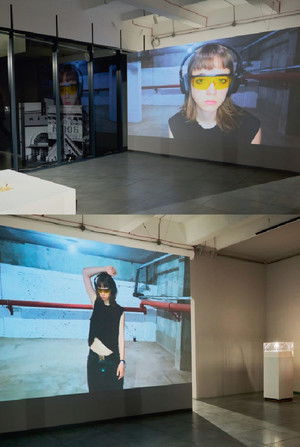
Número 98, casa
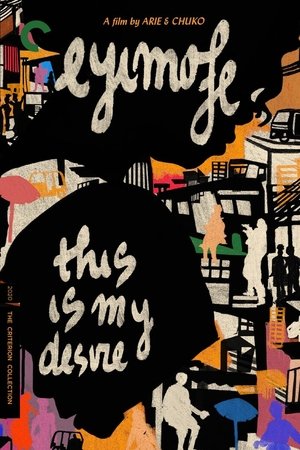
The film tells the story of Imri, who at 19 goes to live in Tel Aviv, but dreams of moving to Japan. Through his relationships and encounters and in diverse cinematic tools, we are introduced to the young person’s life. An exploration of living in the exotic city of Tel Aviv is presented through a hero who are themselves in the midst of exploring his own choice of an exotic place. A unique correlation is formed between the hero’s misconception of Japan and ours of them. The movie was constructed by both improvised and pre-scripted scenes, as required by the nature of each scene. (Source: Filmmaker Website)
A man and a woman in Lagos want to escape their everyday lives, but extricating themselves is no easy task. Two stories narrated with tenderness and restraint that only fleetingly touch, the dream of migrating to Europe floating above them all the while.
The protagonists of this docudrama are old farmers who migrated to Banat after the First World War, in 1922. The film is focused on a couple of important events in their impressive lives, which are woven into lively scenes and stories full of wise instances. Their statements become spontaneous recounts of the lives of people in this region.
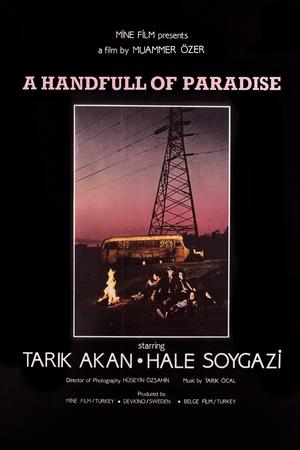
The story of a family who moved from a village to Istanbul with two children in order to live a better life, but ended up living in an abandoned bus due to poverty and lack of accommodation.
ADRIFT- People of a Lesser God is the story of an incredible odyssey made by several-times Pulitzer Prize-nominated undercover reporter Dominique C. Mollard. In this gripping story, Mollard sails with 38 African migrants, among them a five-month-old baby, out of West Africa on a quest to reach the golden shores of Europe. All aboard are packed together like sardines in a leaky fishing canoe as they set off under full moon on their harrowing journey. ADRIFT-People of a Lesser God captures the struggle of these desperate migrants as they brave their way across the cold Atlantic, risking their lives in search for a better future. —Ziad H. Hamzeh
"All Five Millions of Us" is a hybrid of documentary and fiction feature film about father absence, based on data released by the National Council of Justice: there are 5.5 million children without paternal recognition in Brazil.
An epic love story spanning decades is sparked by a chance encounter between two men in provincial Mexico. Based on a true story, ambition and societal pressure propel an aspiring chef to leave his soulmate and make the treacherous journey to New York, where life will never be the same.
When Pak Tin Estate is going to be demolished, the residents will move to a new place, but how about the dead residents? Where could they go? Ho Ying-kuen who majors in Myth and Poetry, and Playwriting, leads us to a time and space of a demolishing public estate. We will come across the residents of the estate, a mother with her two sons selling incenses, and two monkeys having conversation about their mother. A mixture of fiction, experimental and documentary images, Lost Cemeteries studies about filial piety and death with a strange and interesting approach.
LEI and WONG clandestinely arrive to Ecuador, on their way to the port city of Guayaquil. From here LEI plans to continue her journey to New York, but CHANG, a bipolar mobster will decide her fate. WONG unwillingly gets entangled in the web of corruption that operates the encroachment of Chinese immigrants. His only objective is to bring his twelve-year-old son from China.
Stephen Tan, the youngest and the only photographer in his family, is tasked with creating his grandmother's funeral portrait. Never having taken his grandmother's photograph, he searches for old photographs in his family's ancestral home. There, he finds his Aunt Ellen who is hastily preparing for the wake later the same day. As the clock ticks closer to the funeral, a mishap in the house catches them off guard, opening up sentiments long left in the past.
Three Venezuelan women cross the border into Colombia to buy a packet of pasta.
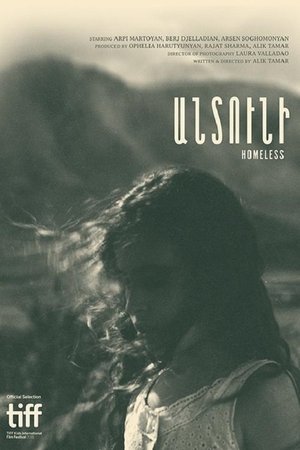
Lori, a Syrian-Armenian girl living in Armenia, believes her father is taking her on a summer trip. When she learns that her family is really leaving Armenia after already fleeing the war in Syria, she tries whatever she can to stay in a place that has great meaning for her.
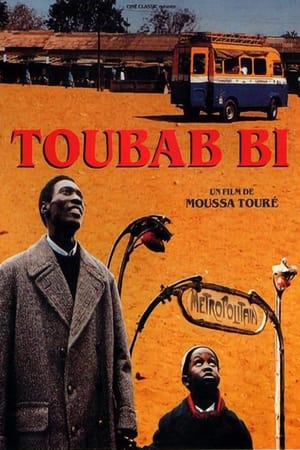
Soriba Samb is a Senegalese who has just received a much sought after internship to study filmmaking in Paris. Soriba heads to Paris, accompanied by the five-year old son of a friend who he believes to be still living in Paris. On arrival he struggles to find the boy’s father. In addition to coping with his new internship, Soriba has to also spend time tracking down the boy’s father ‘Issa’.
Maysa unfolds over a single afternoon as a young woman and her stoic middle eastern mother navigate the quiet tension of a long-held silence. As memories of migration and girlhood surface in fractured flashbacks, their unspoken history begins to unravel. A tender, restrained portrait of love, resilience, and the things women carry - even when they no longer have to.
A man encounters colorful characters while driving a taxi in Papua New Guinea.
Sister Tse is brought to New York by a Snakehead, a human smuggler. Although she is indebted to the crime family responsible for her transport, her survival instincts help her gain favor with the matriarch, and she rises quickly in the ranks. Soon Tse must reconcile her success with her real reason for coming to America—to find the child that was taken from her. In the end, Sister Tse must draw on the strength she found in transforming her victimhood into power.
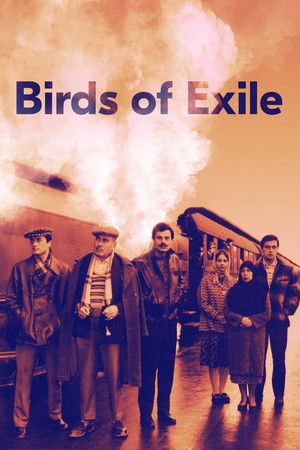
Tahir Agha sells all his assets when his business in Maraş deteriorates. He immigrates to Istanbul with his wife Hatice, sons Selim, Murat, Kemal and daughter Fatoş, where he sets his mind to open a repair shop. But in the metropolis, things don't go as planned.
HIDEO, It's Me, Mama is a psychological melodrama that introduces narrative and structural devices that are integral to Idemitsu's work. Exploring the flawed universe of the contemporary Japanese family, she focuses on a woman's identity as mother through mother-child and husband-wife relationships. Hideo, a young man living away from his parents, is kept under constant surveillance by his doting mother via an omnipresent television monitor. In a cogent metaphor for familial relations in the media-saturated culture of contemporary Japan, Mama can only communicate with her beloved, absent son through the video screen. Idemitsu's poignant irony is embodied in the scene in which Mama, blind to her husband's needs, caresses Hideo's video image. (Electronic Arts Intermix)
Liubov, a Russian lady who lives in Mexico City. During the routine of her day, Liubov will recall the experiences she had with death, from childhood to adulthood.