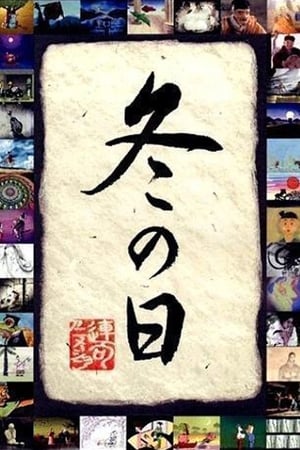
An animated film based on one of the renku (collaborative linked poems) in the 1684 collection of the same name by the 17th-century Japanese poet Bashō. The creation of the film followed the traditional collaborative nature of the source material – the visuals for each of the 36 stanzas were independently created by 35 different animators. As well as many Japanese animators, Kawamoto assembled leading names in animation from across the world. Each animator was asked to contribute at least 30 seconds to illustrate their stanza, and most of the sequences are under a minute (Yuriy Norshteyn's, though, is nearly two minutes long).
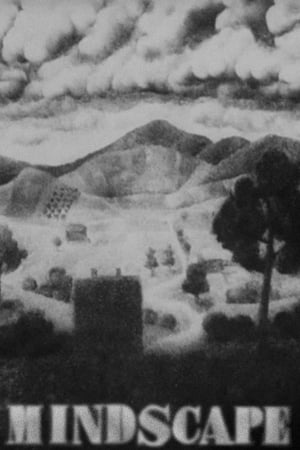
In this short, an artist creates a painting of the landscape he sees, then finds he can literally climb into the picture to see the fantastic world inside.
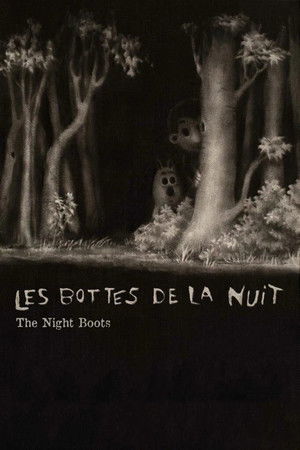
The forest can be full of scary creatures, Eliot’s parents caution, but the mystery might be too tempting for a kid who doesn’t want to go to bed.
When a man becomes blind, his life is all turned around. He can only use his touch to get around in his house. The objects become enemies. But an angel is looking over him.
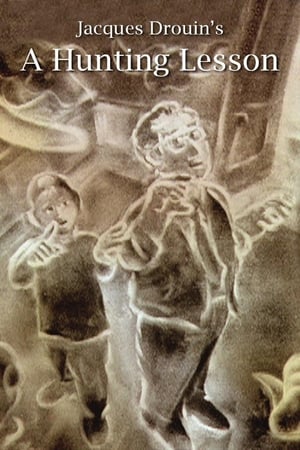
This short animated film follows Antoine, a young boy fascinated by his mysterious neighbour, a man rumoured to have once been a big game hunter. Antoine is eager to learn about hunting, but the lesson he learns from the wise older man is not at all what he had expected: Antoine is left with a profound reverence for life.
In this non-narrative animated film inspired by composer François Couperin's harpsichord composition "Barricades mystérieuses," Jacques Drouin explores a whole new way of using the pinscreen to create animated images. He pivots the screen and uses low-angled light to capture images in high relief. The result is like a sculpture whose expertly modelled forms are revealed through film. A film without words.
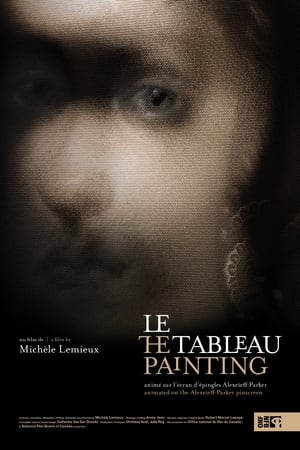
Utilising the Alexeïeff-Parker pinscreen technique, this visually poetic non-narrative film revisits Diego Vélasquez’s 1652 portrait of Queen Mariana of Austria with genuine feeling.
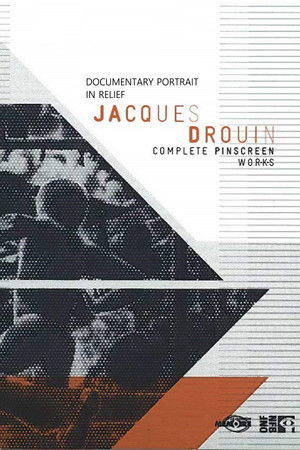
This documentary is a portrait of the animator of Le Paysagiste, from his childhood in Eastern Quebec to his career at the NFB. Trained at the École des beaux-arts de Montréal and the University of California at Los Angeles (UCLA), Drouin became in some ways the heir to Alexandre Alexeïeff when he began working with the Alexeïeff-Parker pinhole screen in 1974. Recounting his relationship with the filmmaker and inventor, coming back with lucidity and precision on the whole of his own filmography, Jacques Drouin delivers here a precious testimony on creation. Enriched with numerous excerpts and unpublished images from the filmmaker's personal archives, Jacques Drouin en relief is both the adventure of a lifetime and a valuable lesson in cinema.
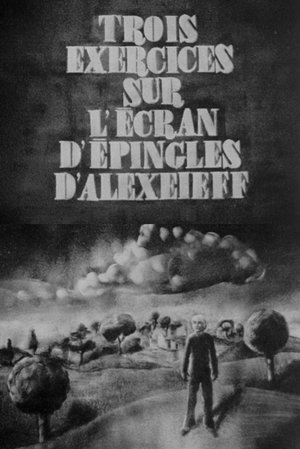
Animated short film made in three parts on the pin screen by Alexeieff-Parker. With these three exercises, director Jacques Drouin experiments with the play of light and shadow alone. Original, this experience presents us with a reality that is not truncated although it may appear as follows: the faculty of wonder will be able to create the necessary link between everyday life and the way it was rendered.
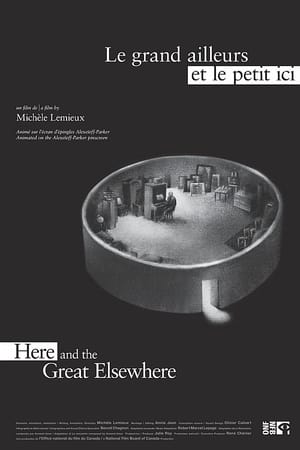
This abstract yet compelling philosophical tale uses the Alexeïeff-Parker pinscreen as a metaphor for the particles that make up the universe. Through 4 tableaux that explore her character’s thoughts, filmmaker Michèle Lemieux takes a look at the profound reflections of this everyman, whose questions are part of humanity’s eternal quest for meaning.
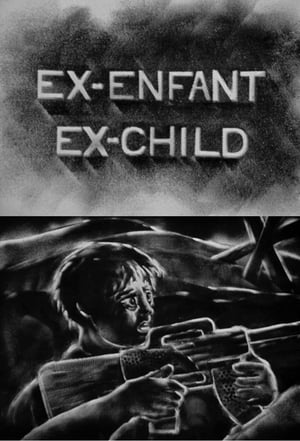
The story of a young boy and his father, both of whom are enlisted to fight in the war. The boy's pride soon turns to fear as the bullets whistle overhead. His father takes his place and is immediately shot and killed. Horrified, the boy understands that war is not a game.
Get ready to blast off to an out-of-this-world adventure with canine teenage astronaut, Pushok, who is determined to find his missing astronaut father. Against all odds, Pushok stows away on a US rocket ship to the moon but soon finds he is not alone, as he is reunited with his mom and encounters a macho monkey and a baby alien. Together, the furry heroes learn the true meaning of teamwork as they join the search for Pushok's dad.
Six classic stories retold by the Disney team. 'The Tortoise and the Hare' features the race between Max Hare and Toby Tortoise. In 'The Pied Piper', rats have overrun Hamelin and only the Pied Piper can get rid of them, whilst 'King Midas Gets the Golden Touch' is a cautionary tale. 'Toby Tortoise Returns' features Max Hare and Toby Tortoise again, this time in a boxing ring. In 'Old King Cole', all the storybook friends are invited to the King's castle, whilst 'King Neptune' saves his subjects from pirates.
A beautifully fluid sand animation inspired by Camille Saint-Saëns' piece, 'Danse Macabre.'
A compilation film of the Kintama Arc, episodes 1–4 in the third season, featuring additional footage. The movie is a part of the "Gintama 20th Anniversary Project."
28 of the very best animated shorts starring the very wackiest Warner Bros. cartoon characters. It's an unprecedented animation celebration for cartoon lovers eager to relive the heady, hilarious, golden age of Warner Bros. animation.
Remy, a rat, possesses a palate far more refined than that of his fellow comrades. He dreams of becoming a chef, one who creates rather than scavenges. When fate deposits him in the sewers beneath one of Paris’s most famous restaurants, he finds himself ideally placed to fulfill his dream. Forming an unusual alliance with a hapless young kitchen worker, Remy begins a daring culinary double life. As Remy pursues his vision, he must navigate the suspicions of the calculating Head Chef Skinner, the disapproval of Remy’s own colony, and the foreboding presence of renowned food critic Anton Ego, who strikes fear in the hearts of chefs all throughout France.
A love story between two fingers, presented in five scenes: digitisation, excitement, convulsions, complications, and outcome.
When Don Quichotte and Sancho Panza arrive in front of several windmills, Don Quichotte sees terrible enemies and decides to fight them. During the battle we slip into Don Quichotte's skin and discover the terrible monsters he imagines he is fighting.