Bajo el signo libertario is a propaganda documentary, with the script and direction of Les (known for his articles in Solidaridad Obrera and the magazine Espectáculo) whose central theme is the reconstruction of the development of life in a libertarian community in the Aragonese town of Pina de Ebro.
The documentary tells the story of Uschi, a farmer living free and recluded in the bavarian alps. Shot in epic black and white pictures, Still follows Uschi's life over a ten year period. From an untroubled summer of making cheese through pregnancy and the uncertain future of the parental farm, Matti Bauer portrays Uschi's struggle to keep alive the dream of a way of life that has become rather untypical in this day and age.
The film gives a survey on innate behaviour patterns of the grey-lag goose. The first part shows reproductive behaviour. In the second part some behaviour patterns of gosling being imprinted on their human foster parent are shown: following reaction, separation of two flocks according to their imprinting, response to the alarm call and landing "by order" of the flying young.
Swimming movements of a common seal under water, propulsion through hind extremities.
A portrait of the German city of Ulm and it's social activities, fassades, court building. Also about the role of the district court during National Socialism.
A couple looks back on the road trip that transformed their relationship and confronts the fear and vulnerability of falling in love. Early in their relationship, Evan and Laura embarked on a road trip to Evan's hometown in Alberta, Canada. Armed with an old Super 8mm movie camera, they documented their adventure, capturing candid moments of their burgeoning love story. Years later, they revisit the footage and reflect on the journey that defined their bond. TWO KINDS OF PEOPLE explores the deep emotional challenge of vulnerability and speaks to the profound power of acceptance and unconditional love.
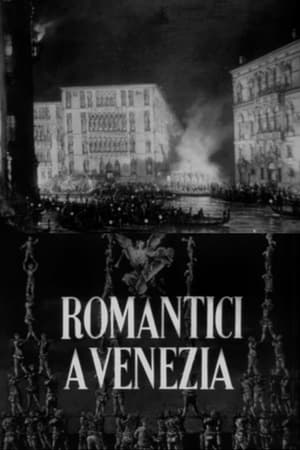
This is a documentary film on the romantic and decadent atmosphere of Venice at the end of the 18th century. A vigorous comment by Jean Cocteau tells us of the sick souls and the sorrows of literary characters and musicians who lived the dream of this city. It is the Venice of Lord Byron, Alfred de Musset, George Sand, d'Annunzio; a Venice made of precious images, palaces reflected in the water, mysterious moonlights, little squares where unhappy lovers wander under the music of Richard Wagner.
The lives of Jaipong dancers who persistently uphold tradition amidst economic pressures and changing times. Through their moving bodies and distinctive voices in traditional performing arts, these women dance not only for the stage but also to survive. Their voices, whether vocal expressions, soft utterances, or sinden singing, serve as the living spirit and "voice" that sustain and preserve their cultural heritage. An intimate portrait of resilience, steadfastness, and the voice in traditional arts that is gradually being marginalized.
Final Line
Presos del silencio
Après le déluge
Shortly after the construction of the wall in August 1961, many guests visit the East German army troops who protect the wall.
Heroes from the GDR's past are presented. Heroes will also be needed in the future.
After the publication of a CD book with the poems of Leopoldo María Panero, musicians Carlos Ann and Enrique Bunbury travel to the Canary Islands to meet the "cursed poet", who is hospitalized in the psychiatric hospital of Las Palmas.
For Filmmaker Film Festival (2023), Fulvio Baglivi and Cristina Piccino asked some filmmakers (R. Beckermann, J. Bressane, D’Anolfi/Parenti, T. De Bernardi, L. Di Costanzo, A. Fasulo, F. Ferraro, M. Frammartino, S. George, ghezzi/Gagliardo, C. Hintermann, G. Maderna, A. Momo, A. Rossetto, M. Santini, C. Simon, S. Savona) to give us their own "lost road," that is, a sequence, scene or piece of editing that did not later find its way into the final version of one of their works. Each fragment has its own accomplished presence, often has a different title from the film it was made for, which is not necessary to have seen in order to find meaning; on the contrary, those who set out thinking they know the world they are walking through will find themselves displaced.
Two unique perspectives on the city of Liverpool come from interviews with the director's parents.
Compilation of images of the amateur recordings of Madronita Andreu, Catalan intellectual of the nineteenth century, daughter of Dr. Andreu, famous for its pills and cough syrup.
Cautivos en la arena
The first woman to appear in front of an Edison motion picture camera and possibly the first woman to appear in a motion picture within the United States. In the film, Carmencita is recorded going through a routine she had been performing at Koster & Bial's in New York since February 1890.
A portrait of a traveling circus.