A community of cats lives in the Soledade Cemetery Park in Belém. "7 Vidas" follows these animals through a fictional letter written by one of them to his former owner. With real images of the cats among graves and trees, the film builds a sensitive narrative about abandonment, freedom and memory, revealing the poetry hidden in the coexistence between life and death.
In the same vein as Meri's other documentations, this one takes advantage of the glasnost policy to discuss the social and ecologic impact of the Russian oil industry on the natives and the lands they inhabit.
Nouveau Monde
A documentary on Al Gore's campaign to make the issue of global warming a recognized problem worldwide.
It has been described as a once in a generation piece of environmental legislation and is key to the government’s commitment to be the first generation to leave the environment in a better state than that in which we found it. The Environment Act passed into law on 9 November 2021 – more than 1,000 days and three Parliaments since its first draft was published in 2018. Its journey was tumultuous, and its fate, at times uncertain. In this documentary, ENDS Report speaks to politicians and environmental policy experts to get the inside story on how this landmark piece of legislation was created – and finds out what the act’s architects think of it now.
Every day our changing climate pushes us closer to an environmental catastrophe, but for most the problem is easy to ignore. David Hallquist, a Vermont utility executive, has made it his mission to take on one of the largest contributors of this global crisis-our electric grid. But when his son Derek tries to tell his father's story, the film is soon derailed by a staggering family secret, one that forces Derek and David to turn their attention toward a much more personal struggle, one that can no longer be ignored. - Written by Aaron Woolf
Filmmaker Cam Archer examines and explores his ordinary, suburban neighborhood in search of hidden truths, new narratives and a better understanding of his fading, creative self. Combining heavily degraded video with personal photographs and real life neighbors, Archer re-imagines the concept of 'home video'. In an attempt to distance himself from his subjects, actress Jena Malone narrates the piece as Archer in the first person.
"Losing The West" is a documentary film that promotes small ranching and farming, as told through the eyes of a 70-year-old Native American cowboy. The film was shot primarily in Colorado. The director was born in Denver and owns a small ranch near Ridgway, Colorado.
Tar Creek is an environmentally devastated area in northeastern Oklahoma with acidic creeks, stratospheric lead poisoning and enormous sinkholes. Nearly 30 years after being designated as a Superfund cleanup program, residents are still struggling.
What starts as a desire to experience nature more intimately develops into a relatable conversation on alternative pathways through life. Two friends go on a two-year road trip through Latin America. Presenting an insight into long term travel and how engaging in new cultures and environments can help widen our perspective and deepen our understanding of the world we live in. Pacifico forms a discussion around the pros and cons of living in the moment; Showing how slowing down and observing the world mindfully can aid in gaining perspective and broaden an understanding of what is important in life.
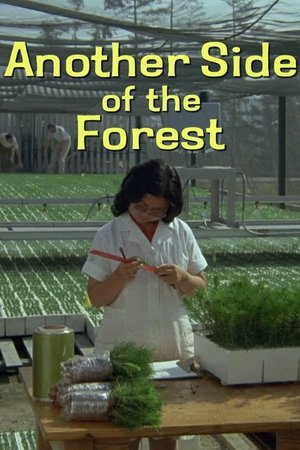
Developments in the Canadian forestry industry during the 1970s are shown being carried out both as lab experiments and in the field to protect and conserve the country's vast forests. These include turning a Newfoundland bog into woodland, fostering British Columbia seedlings that withstand mechanical planting, inoculating Ontario elms against the bark beetle, devising ways of controlling fire, and more.
Yirrkala is an Aboriginal township on the Gove Peninsula in Northeast Arnhem Land. It was established as a Methodist mission in 1935 and over the years Yolngu from many different clans moved there. Conversations With Dundiwuy Wanambi is a personal film which reveals something of the struggles and thoughts of one elder in the face of enormous change. In the early years Dundiwuy was a heavy drinker. In a disturbing interview in a pub, Dundiwuy explains his reasons for drinking. Then, through a dream, Dundiwuy realizes he must begin to protect his family and clan. He establishes his Marrakulu clan homeland center at Gurka'wuy, south of Yirrkala. He will hold a great ceremony there. Years later Dundiwuy returns to Yirrkala. His clan is small and he did not receive the necessary support from his sons. But Dundiwuy endures, continues his struggle, and we learn in the post-script of how he has become a successful and sought-after artist.
The story of lawsuit by tens of thousands of Ecuadorans against Chevron over contamination of the Ecuadorean Amazon.
Examines the devastating effect that overfishing has had on the world's fish populations and argues that drastic action must be taken to reverse these trends. Examines the imminent extinction of bluefin tuna, brought on by increasing western demand for sushi; the impact on marine life resulting in huge overpopulation of jellyfish; and the profound implications of a future world with no fish that would bring certain mass starvation.
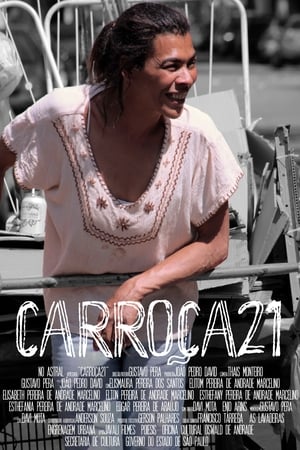
Maura is a black woman, mother of 7 children and recyclable material collector in one of the largest cities in Latin America. While she works hard to maintain herself, she has to deal with prejudice, invisibility and the ignorance of those who do not recognize the value and important role of the recyclable material collector bring to the city, as an environmental agent.
Five years ago Kisilu, a Kenyan farmer, started to use his camera to capture the life of his family, his village and the damages of climate change. When a violent storm throws him and a Norwegian filmmaker together we see him transform from a father, to a community leader and activist on the global stage.
Sixty years ago, the Canary Islands were the first in Europe to adopt desalination of ocean water to produce drinking water. Often considered a miracle solution, is this technique compatible with sustainable development?
Two very different men are brought together by New Brunswick's decision to hand the management of millions of acres of Crown land to six multinationals. One man is an Acadian woodlot owner retired after nearly 40 years in a pulp mill; the other is a painter and winemaker with homes in France and New Brunswick. They travel to Finland to urge officials at one of the largest licence holders of New Brunswick Crown lands to practise responsible forestry, then go head-to-head with the provincial government to secure a new community-based forestry policy that is environmentally sustainable and produces more jobs than the highly mechanized techniques used today.
This short documentary is a celebration of life on planet Earth. Made from haunting visual images selected from 50 years of NFB productions, the film looks at human beings, their place on earth, and their deep interconnection with all other beings. Evocations of forces that threaten the planet and all its inhabitants also offer avenues for reflection.
In this detective story, filmmaker Cullen Hoback investigates the largest chemical drinking water contamination in a generation. But something is rotten in state and federal regulatory agencies, and through years of persistent journalism, we learn the shocking truth about what’s really happening with drinking water in America.