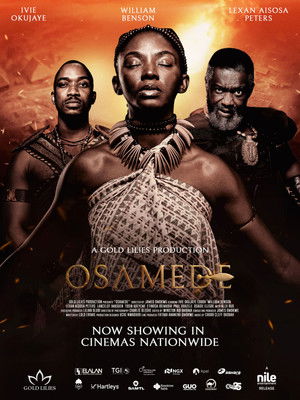
Bahram Beyzai's poetic imagining of the circumstances that led to the death of Yazdgerd III, the last of the Sassanid kings of Iran. His death in 651, during the Arab invasions that brought Islam to this Zoroastrian realm, was mysterious: his corpse was discovered in a mill, but the cause of his death—and the whereabouts of his remains—are unknown.
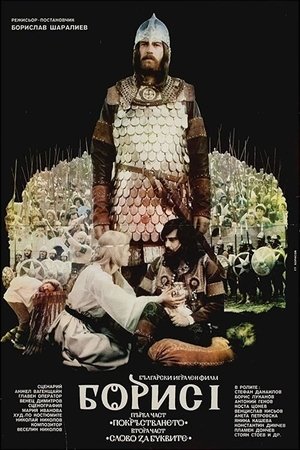
Part one of this two-part epic follows the life and deeds of Boris I – a strong historic personality, which completes his mission to the full and at the end of his life receives holy orders.
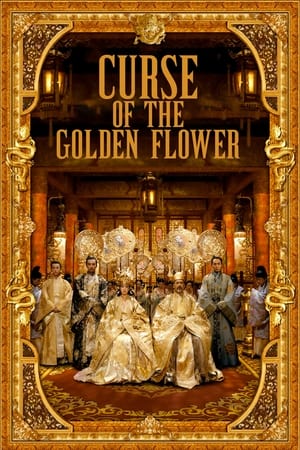
During China's Tang dynasty the emperor has taken the princess of a neighboring province as his wife. She has borne him two sons and raised his eldest. Now his control over his dominion is complete, including the royal family itself.
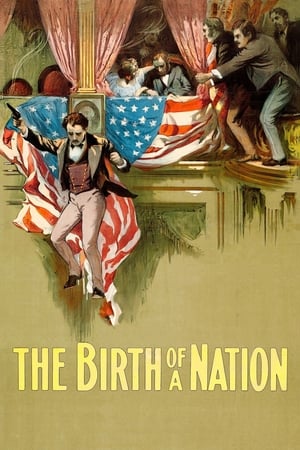
Two families, abolitionist Northerners the Stonemans and Southern landowners the Camerons, intertwine. When Confederate colonel Ben Cameron is captured in battle, nurse Elsie Stoneman petitions for his pardon. In Reconstruction-era South Carolina, Cameron founds the Ku Klux Klan, battling Elsie's congressman father and his African-American protégé, Silas Lynch.
After the Hungarian army was annihilated by the Mongols at the battle of Mohi, only the castle of Esztergom stood in the Mongolians' way of invading the rest of Europe. Batu Khan, the grandson of Genghis Khan, reaches the walls of Esztergom with his invincible troops. The castle's defenders, led by Eusebius, the canon of Esztergom, and a Spanish mercenary, Captain Simon, are preparing for the final battle. The sudden arrival of Cardinal Cesareani, the Papal Legate, coinciding with the Mongol Lunar New Year celebrations and the mystical practices of Eusebius, combine to offer the defenders a small glimmer of hope.
At the dawn of the modern era, Portuguese explorer Ferdinand Magellan leads an expedition under the Spanish crown in search of the first westward route to the Spice Islands. He embarks on a perilous journey across the uncharted Pacific, where his fleet faces starvation, mutiny, and the psychological toll of endless seas. Upon reaching the shores of Cebu, Magellan is pulled into a fatal conflict with the natives by his drive to spread Catholicism, culminating in his tragic doom.
In late 19th-century Sicily, the noble Uzeda family—whose lineage dates back to the ancient viceroys that ruled those lands—fights to preserve its waning power in the face of the newly unified Italian regime.
9th century China. Ten year old general’s daughter Nie Yinniang is abducted by a nun who initiates her into the martial arts, transforming her into an exceptional assassin charged with eliminating cruel and corrupt local governors. One day, having failed in a task, she is sent back by her mistress to the land of her birth, with orders to kill the man to whom she was promised – a cousin who now leads the largest military region in North China. After 13 years of exile, the young woman must confront her parents, her memories and her long-repressed feelings.
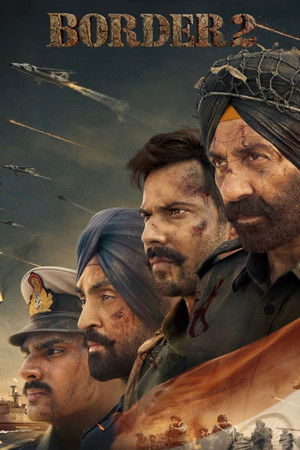
Amidst the 1971 Indo-Pak war, a company of 120 Indian soldiers stationed at the border region of Longewala in Rajasthan must defend their post through the night against two thousand Pakistani troops armed with tanks. Based on the true events of the Battle of Longewala.
Three idealistic soldiers in the Indian army, navy and air force face grueling combat conditions in this film set during the 1971 Indo-Pak war.
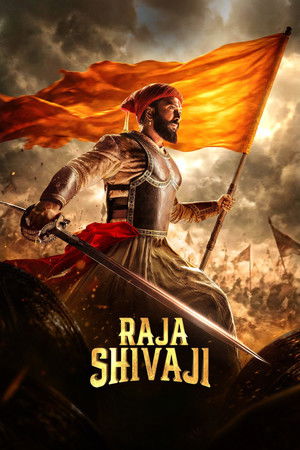
Shivaji's death sparks the Maratha-Mughal conflict. His son Sambhaji leads resistance against Aurangzeb's forces. Amid battles and intrigue, both sides face challenges in a struggle for power.
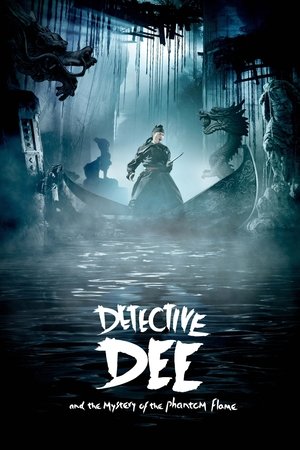
When the future empress Wu Zetian's two courtiers die in a mysterious fire, she gets Di Renjie, a former detective and rebel, released from prison to solve the mystery of the fire.
A Roman soldier becomes torn between his love for a Christian woman and his loyalty to Emperor Nero.
A biopic of Napoleon Bonaparte, tracing the Corsican's career from his schooldays (where a snowball fight is staged like a military campaign) to his flight from Corsica, through the French Revolution (where a real storm is intercut with a political storm) and the Terror, culminating in his triumphant invasion of Italy in 1797.
In the 14th-century, as the Silk Road crumbles and rival factions tear the land apart, fearless warrior Timur emerges from exile. Stripped of everything, he fights to unite the fractured kingdoms, using strategy and sheer will to carve an empire from chaos. Undefeated in battle and widely regarded as one of history’s greatest military leaders and tacticians, not to mention one of its most brutal, Timur would found the Timurid Empire, which ruled over modern-day Afghanistan, Iran and Central Asia.
Through four nonlinear but interconnected Finno-Ugric storylines, approximately 7,500 years ago, traces of the Kaalo meteorite – that struck the Estonian island of Saarema – left a profound mark on the peoples living along the Baltic Sea, shaping local myths and legends.
Disgusted with the policies of King Charles I, Oliver Cromwell plans to take his family to the New World. But on the eve of their departure, Cromwell is drawn into the tangled web of religion and politics that will result in the English Civil War.
Resistance leader Omar Mukhtar opposes Italian colonization before World War II. The brutal guerrilla war against Italian General Rodolfo Graziani and the Fascist forces of Benito Mussolini highlights the struggle for Libyan independence and the harsh tactics utilised by the colonisers.
The love story of young Countess Natasha Rostova and Count Pierre Bezukhov is interwoven with the Great Patriotic War of 1812 against Napoleon's invading army.
Charles Dickens tells his young son Walter the greatest story ever told, and what begins as a bedtime tale becomes a life-changing journey. Through vivid imagination, the boy walks alongside Jesus, witnessing His miracles, facing His trials, and understanding His ultimate sacrifice.