Why do we do incredibly difficult things that have no practical application? Is there a parallel between geographic and artistic exploration? Fram is a documentary and travel film about two friends journeying to the end of the earth, in order to make a dance film in the arctic wilderness of Svalbard. En route, they explore the history of our ideas of the Arctic, along with the grand questions of life, art and our place in the world. Sharing their love of discovering new geographic and artistic frontiers, choreographer-dancer-filmmakers and outdoor enthusiasts Thomas Freundlich and Valtteri Raekallio take the viewer on an engaging journey to a place where few have been and even fewer have danced.
A documentary trying to relive the 10 days of sailing around Svalbard in August 2019.
This short film from 1946 presents an outline of the fur trade's history and the commercial use of fur in Canada. A thirst for fur by the kings and courts of the Old World positioned the fur trade as part of the country's industrial economy. Fur farming and conservation became increasingly important, although the lonely life of the trapper remained the same. This film offers a view of both.
A short film produced during a photographic expedition of the Svalbard Archipelago. It takes the natural highlights of the expedition and includes Bråsvellbreen, Storøya, Alkefjellet, polar bears, walrus, and phenomenal seabird colonies.
Seven adventurers embark on an expedition in the world's most hostile environment, The Arctic. Starting from the Southernmost peninsula of Spitsbergen Svalbard, they travel to the Northernmost part of the Island lasting for 40 days.
Longyearbyen, Svalbard, is the northernmost settlement in the world. About 3000 polar bears and 400 snow scooters outnumber its 2700 inhabitants. It is a place where you can actually see climate change and social diversity.
A non-verbal visual journey to the polar regions of our planet portrayed through a triptych montage of photography and video. Landscapes at the World's Ends is a multi-dimensional canvas of imagery recorded above the Arctic Circle and below the Antarctic Convergence, viewed through the lens of whom is realistically an alien in this environment, the polar tourist. Filmed during several artist residencies on-board three expedition vessels, New Zealand nature photographer and filmmaker Richard Sidey documents light and time in an effort to share his experiences and the beauty that exists over the frozen seas. Set to an ambient score by Norwegian Arctic based musician, Boreal Taiga, this experimental documentary transports us to the islands of South Georgia, the Antarctic Peninsula, Greenland and Svalbard. Landscapes at the World's Ends is the first film in Sidey's Speechless trilogy, and is followed by Speechless: The Polar Realm (2015) and Elementa (2020).
"Svalbard- Arctic Seasons" features the the wildlife, spectaculer nature and human activeties of the archipelago known as Svalbard, which lies to the north of Scandinavia. The jurney through the artic seasons also features the life of trappers and scientists in the kingdom of the polar bear.
Beautifully filmed by New Zealand nature photographer Richard Sidey over the past decade around the polar regions, Speechless: The Polar Realm is a visual meditation of light, life, loss and wonder at the ends of the globe. This is the second film in Sidey’s non-verbal trilogy which is comprised of: - Landscapes at the World’s Ends (2010) - Speechless: The Polar Realm (2015) - Elementa (2020)
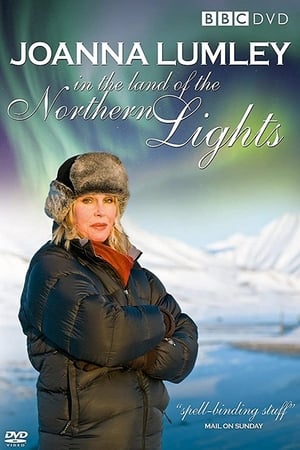
Comedy icon Joanna Lumley pursues a life-long dream to track down the elusive and beautiful Northern Lights. She travels North across the Arctic Circle, up through Norway and finally to Svalbard, the most northerly permanently inhabited place on Earth, where she has to cope with temperatures approaching minus 30° C. Joanna’s journey takes her from train to boat and huskysled to snowmobile as she is pulled ever northwards and finally, in a breathtaking climax to the film, Joanna gets to see with her own eyes the spectacular beauty of the Northern Lights. As seen on ABC1.
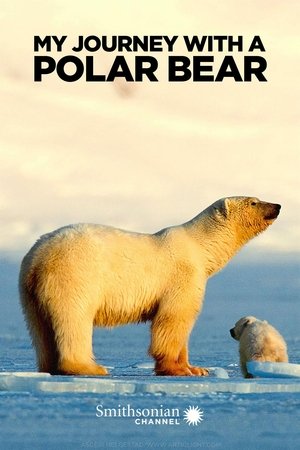
For four years, Asgeir Helgestad, a Norwegian wildlife filmmaker, has followed a beautiful polar bear mother named Frost in her home on Svalbard, a group of islands in the Arctic Ocean. Rising temperatures are causing dramatic changes in her ecosystem, leading to desperate struggles to find food for herself and her young cubs. Follow this tale of man and beast, hope and despair, and life and death in a land disappearing before their eyes.
Residents of the world’s northernmost town, which is steeped in darkness four months per year, grapple with why they inhabit such a hostile place—and how their unique relationship to the sun changes the meaning of light and darkness within their own lives.
Svalbard is a norwegian archipelago in the Arctic Ocean where the world's northernmost city is situated. It is a place where the underground, terrestrial and spatial universes blend into each other starting from a coal mine up to Venus.
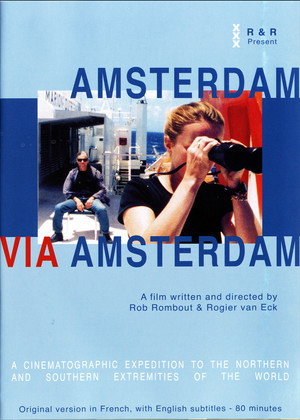
Four centuries ago Willem Barentsz sailed north and Cornelis de Houtman sailed south from Amsterdam, opening the way to two islands that bear the city's name, in Spitsbergen and in the southern Indian Ocean. Rob Rombout and Rogier van Eck, both with their roots in Amsterdam, follow their tracks. Their expedition is of another kind, but their doubts measure up to the daring of those navigators. Between the polar ice and the southern wind, the city comes into view as a triptych.
Several commercial fishermen were attacked by sea pirates and were forced to spend more than one year on a desert island. Many considered them dead - but almost all of them managed to survive ...
In Wyoming, mountain trapper Yancey goes to the nearest town to trade his pelts but gets into trouble when he tries to save runaway dance-hall girl Rosalie from her shameful job.
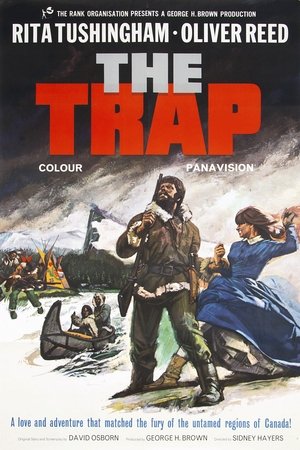
A French-Canadian fur trapper takes a mute girl as his unwilling wife to live with him in his remote cabin in the woods.
Ben Anderson, factor of the trading station, impatient with his daughter Anne's coquetries, calls all the trappers to him and promises to wed her to the one who brings back the most valuable catch of furs in the spring. Anne fancies herself in love with Henri Levesnue, a Frenchman. So when he is reported to have brought in the biggest prize she is delighted. But the following day, Joe Eagle, a quarter-breed, reaches the station with twice Henri's catch, Ben insists that Anne marry Joe, but she swears she never could become the wife of the French Indian, and because he really loves her, Joe, who has overheard her protestations, hides half his furs under his cabin floor. Anne is married to Henri, but in a few months is very unhappy. He is a heavy drinker; he neglects her, and at last, being penniless, he steals a bale of furs from the station. The factor sets Joe to catch the thief.
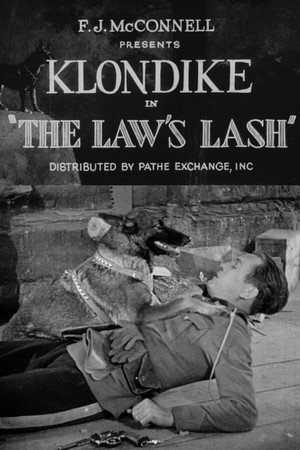
Klondike the German Shepherd dog works with the Northwest Canadian Mounted Police to track down smugglers.
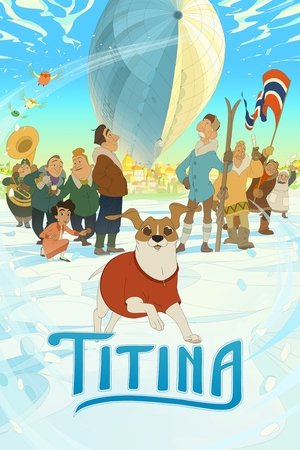
Italian airship engineer Umberto Nobile enjoys a quiet life with his beloved dog Titina. One day, Norwegian explorer superstar Roald Amundsen contacts him and orders an airship to conquer The North Pole.