In year 1250 B.C. during the late Bronze age, two emerging nations begin to clash. Paris, the Trojan prince, convinces Helen, Queen of Sparta, to leave her husband Menelaus, and sail with him back to Troy. After Menelaus finds out that his wife was taken by the Trojans, he asks his brother Agamemnon to help him get her back. Agamemnon sees this as an opportunity for power. They set off with 1,000 ships holding 50,000 Greeks to Troy.
Prince Paris of Troy, shipwrecked on a mission to the king of Sparta, meets and falls for Queen Helen before he knows who she is. Rudely received by the royal Greeks, he must flee...but fate and their mutual passions lead him to take Helen along. This gives the Greeks just the excuse they need for much-desired war.
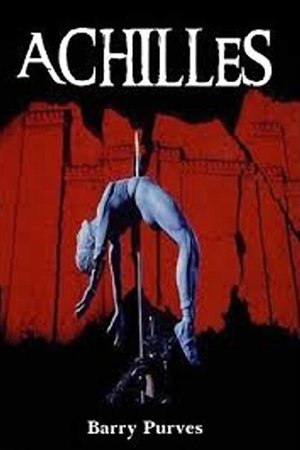
With the loss of Patroclus (his undeclared male lover), Greek warrior Achilles returns to the Trojan War.
Living in exile after the death of their father, the grown children of a murdered and usurped king converge to exact eye-for-an-eye revenge.
In the tenth year of the Trojan War, tensions between Achilles and Agamemnon divide the Greek camp while giving hope to the Trojans.
Maria Ewing, as Dido, heads an outstanding cast of young British singers in a film adaptation of Henry Purcell’s much-loved tragic opera. With spectacular sets, this intense tale of heroism, passion, betrayal and ultimate tragedy is played out against a backdrop of fiery rituals, evil spells and pageantry.
The story of the Trojan Horse is probably one of the most famous stories ever told: after ten years of bloody war, the Greek coalition decides to lift the siege and depart, but not before leaving at the gates a huge wooden horse, which the Trojans confidently lead into the city. A few hours later, the once invincible Troy goes up in flames. What exactly happened? Is this myth true or false?
Menelaus is the king of Sparta and temporarily departs from his residence, leaving Helen, the queen of Sparta, without him. When Paris of Troy, ambassador and son of the king, arrives in Sparta, he kidnaps Helen and brings her to Troy where the two fall in love. The Greeks attempt to siege the city walls of Troy, but fail. The Greeks then place a huge wooden Trojan horse with Greek warriors hidden inside under the walls of Troy, pretending to be dedicated to the gods and ending the war. Falling for the trap, the Trojans break down the city walls to bring the wooden horse inside.
La guerre de Troie a bien eu lieu
Trojan hero Aeneas battles to save his city from the Greeks, but once Troy falls, he leads the 600 survivors to Italy and founds the city of Rome.
The story of the Trojan war is one of history's most enduring legends. A beautiful queen elopes with a foreign prince, which results in a decade-long battle that ends in the complete annihilation of an entire city. However, what grain of truth is there to this mythologicale tale of love and destruction?
In the aftermath of the Trojan Wars, Queen Hecuba takes stock of the defeated kingdom. Her son has been killed, and his widow, Andromache, is left to raise their son, Astyanax, alone. Hecuba's daughter, Cassandra, fears being enslaved by her Greek masters, while Helen of Troy risks being executed. Astyanax also becomes the focus of the Greeks' attention as the last male heir of the Trojan royal family.
Two muscle-men come up against a tribe of Amazon women.
Troilus und Cressida
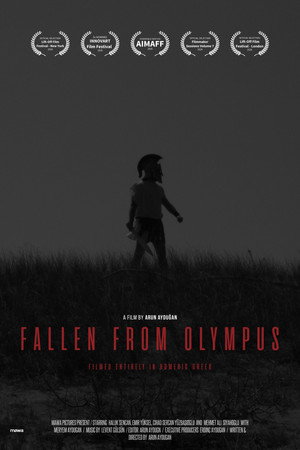
The ghost of a soldier from the Trojan War travels through the ruins of the ancient world to confront a council of tyrants who make war on reason. A film dramatizing the ancient relevance of protest over power. Available Now on: watch.eventive.org
The bitter Trojan War drags on - the Greeks blame Achilles' apathy for low morale, while Troy's hero Hector challenges one of the enemy to a personal duel. And after her father exchanges Cressida for a Trojan prisoner, the war becomes personal for her distraught lover Troilus.
Troilus and Cressida swear they will always be true to one another. But in the seventh year of the siege of Troy, their innocence is tested and exposed to the savage corrupting influence of war with tragic consequences.
A group of people are standing along the platform of a railway station in La Ciotat, waiting for a train. One is seen coming, at some distance, and eventually stops at the platform. Doors of the railway-cars open and attendants help passengers off and on. Popular legend has it that, when this film was shown, the first-night audience fled the café in terror, fearing being run over by the "approaching" train. This legend has since been identified as promotional embellishment, though there is evidence to suggest that people were astounded at the capabilities of the Lumières' cinématographe.
An American journalist arrives in Berlin just after the end of World War Two. He becomes involved in a murder mystery surrounding a dead GI who washes up at a lakeside mansion during the Potsdam negotiations between the Allied powers. Soon his investigation connects with his search for his married pre-war German lover.