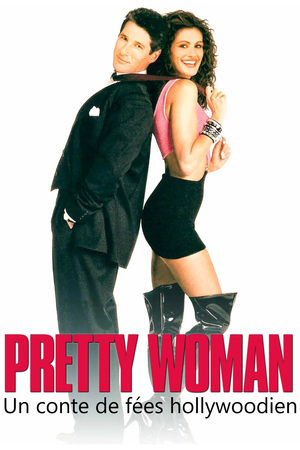
« Emmanuelle » was released 50 years ago. Its main character, played by the young Sylvia Kristel, delve freely into her sexuality, without taboo. This bold movie became one of the great success of french cinema in the 70s, and Emmanuelle became the face of sexual liberation. Through the gaze of a woman, the character is back on the screen in 2024. This new Emmanuelle, written by Audrey Diwan, go in quest of a lost pleasure.
A detailed chronicle of the famous 1969 tour of the United States by the British rock band The Rolling Stones, which culminated with the disastrous and tragic concert held on December 6 at the Altamont Speedway Free Festival, an event of historical significance, as it marked the end of an era: the generation of peace and love suddenly became the generation of disillusionment.
Primary is a documentary film about the primary elections between John F. Kennedy and Hubert Humphrey in 1960. Primary is the first documentary to use light equipment in order to follow their subjects in a more intimate filmmaking style. This unconventional way of filming created a new look for documentary films where the camera’s lens was right in the middle of what ever drama was occurring. Preserved by the Academy Film Archive in partnership with The Film Foundation in 1998.
In this wildly entertaining vision of one of the twentieth century’s greatest artists, Bob Dylan is surrounded by teen fans, gets into heated philosophical jousts with journalists, and kicks back with fellow musicians Joan Baez, Donovan, and Alan Price.
A day in the city of Berlin, which experienced an industrial boom in the 1920s, and still provides an insight into the living and working conditions at that time. Germany had just recovered a little from the worst consequences of the First World War, the great economic crisis was still a few years away and Hitler was not yet an issue at the time.
What does the looming A.I. revolution mean for us as individuals and as a society?
A documentation of the year of high school of 1970 to 1971 for students and teachers alike at the St. Mark prep-school community, from the 'weird drama and film students', to the most infamous teachers of the year like Mr. Burns and Mr. Whatley, along with many references to music and film of interest at the time; Consistently from the perspective of an intrusive senior, according to Mr. Whatley, "had the worst case of senioritis he had ever seen." Shot entirely in Super-8, narrated by the director.
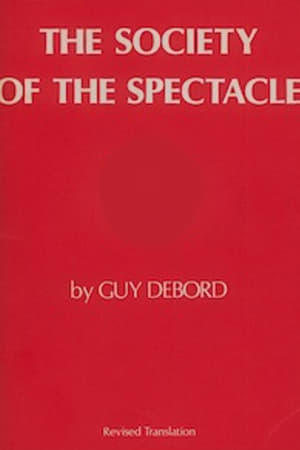
Guy Debord's analysis of a consumer society.
A remote and wild island on the west coast of Scotland is home to a small group of people that live in deep connection with the land, the sea and the weather. For different reasons, they left their city life to escape their inner demons and to live as eco-friendly and sustainable as possible.
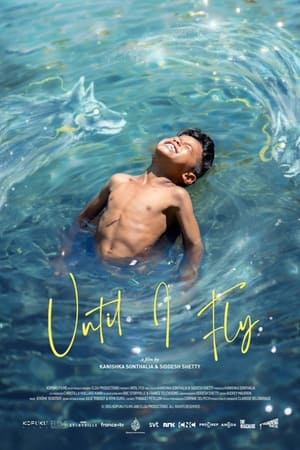
In French Polynesia, transgender people evolve with apparent fluidity in all components of society. Their presence, observed as early as the 18th century by Western travelers and missionaries, has never ceased to intrigue and fascinate, producing over time numerous myths that the transgender women and men of Polynesia are today attempting to deconstruct. Through a series of luminous and intimate portraits, this documentary gives them a voice and proposes a rereading of gender issues in the light of Oceanian thought: an obvious enrichment.
For more than 40 years Kathryn Bigelow has been making films that explore male violence. With movies like Blue Steel, Point Break, The Hurt Locker and Zero Dark Thirty, the Oscar winning American filmmaker has impressed with hard-hitting moviemaking that holds a mirror up to contemporary America and the world.
Intimately following 1st and 6th graders at a public elementary school in Tokyo, we observe kids learning the traits necessary to become part of Japanese society.
A cynical anti-American Hollywood filmmaker sets out on a crusade to abolish the 4th of July holiday. He is visited by three spirits who take him on a hilarious journey in an attempt to show him the true meaning of America.
A bold reveal of a rose tattoo opens this 1980 documentary on tattooing in New Zealand. The potted history includes visits to tattoo parlours on K' Road and Hastings, and the studios of industry legends Steve Johnson and Roger Ingerton. Tattooists discuss public stigma, people's reasons for getting inked, and popular designs: sailors, serpents, swallows and tā moko. Made for documentary slot Contact, Skin Pics chronicles a time when "folk art has become high art".
Tattooing — "the world's oldest skin game" — is the subject of this iconic documentary. Writer/director Geoff Steven scored a major coup by signing Easy Rider legend Peter Fonda as his presenter. Travelling to Aotearoa, Samoa, Japan and the United States, the doco traces key developments in tattooing, including its importance in the Pacific, prison-inspired styles, and the influence of 1960s counterculture. Legendary tattooists feature (including Americans Ed Hardy and Jack Rudy), while the closing credits parade some eye-opening full body tattoos.
A paralysingly beautiful documentary with a global vision—an odyssey through landscape and time—that attempts to capture the essence of life.
Starting with a long and lyrical overture, evoking the origins of the Olympic Games in ancient Greece, Riefenstahl covers twenty-one athletic events in the first half of this two-part love letter to the human body and spirit, culminating with the marathon, where Jesse Owens became the first track and field athlete to win four gold medals in a single Olympics.
Part two of Leni Riefenstahl's monumental examination of the 1938 Olympic Games, the cameras leave the main stadium and venture into the many halls and fields deployed for such sports as fencing, polo, cycling, and the modern pentathlon, which was won by American Glenn Morris.
Four years after Pour la suite du monde (1963), director Pierre Perrault asks Alexis Tremblay if he'll agree to travel with his wife Marie to the country of their ancestors, France. In a montage parallel, we follow them in France and listen to them talking to their friends about it.
Musician, octogenarian and transgender activist Beverly Glenn-Copeland and his wife navigate the implications of the former’s dementia diagnosis, contemplating high stakes, complex decisions about care and wellbeing while they embark on a mission to preserve his artistic legacy.