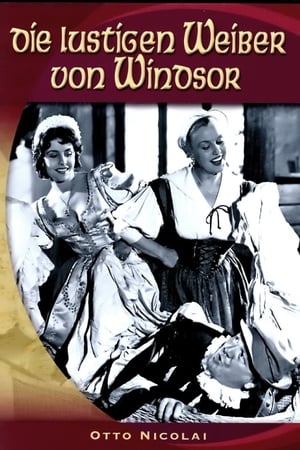
When Sir John Falstaff decides that he wants to have a little fun he writes two letters to a pair of Window wives: Mistress Ford and Mistress Page. When they put their heads together and compare missives, they plan a practical joke or two to teach the knight a lesson. But Mistress Ford's husband is a very jealous man and is pumping Falstaff for information of the affair. Meanwhile the Pages' daughter Anne is besieged by suitors.
Barokní opera
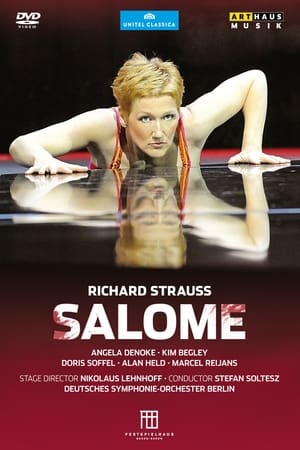
This highly acclaimed production of Strauss Salome from the Festspielhaus Baden-Baden is staged by German director Nikolaus Lenhoff. Starring Angela Denoke as a brilliant Salome, who is joined by a great ensemble of soloists, Kim Begley, Doris Soffel and Alan Held. Performing with great aplomb , the Deutsches Sinfonie Orchester Berlin, conducted by Stefan Soltez, was also enthusiastically celebrated by critics and audience.
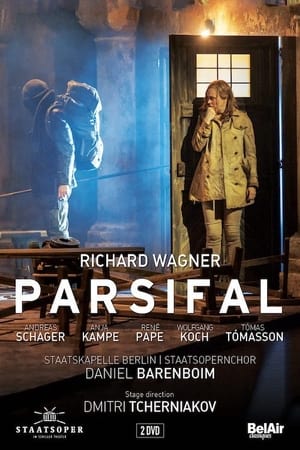
Wagner’s mystic masterpiece Parsifal at the Staatsoper Berlin, staged by Dmitri Tcherniakov and conducted by Daniel Barenboim. Wagner’s last opera, Parsifal is a medieval epic story marked by Christian, Buddhist and esoteric references. It is about redemption and renewal, but this new production by Russian director Dmitri Tcherniakov adds a jarring note : revenge. This “Festival Play for the Consecration of the Stage” is similar to a Medieval epic, a blend of metaphysical dreams and esoteric battles with constant spiritual references. This new production is directed by Dmitri Tcherniakov, conducted by Daniel Barenboim and sung by an international cast of excellent singers: Andreas Schager, Anja Kampe, Wolfgang Koch, René Pape, Tomas Tómasson and Matthias Hölle.
Idomeneo, König von Kreta - Mozart bei den Opernfestspielen Aix-en-Provence
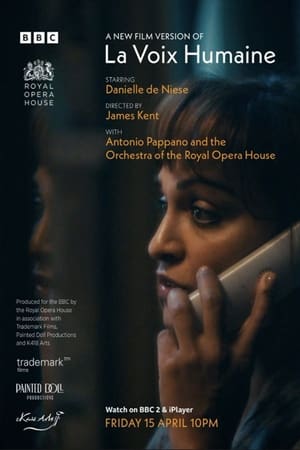
The Orchestra of the Royal Opera House presents a new production of Poulenc's short opera La Voix Humaine, featuring soprano Danielle de Niese and shot on location in Paris and London.
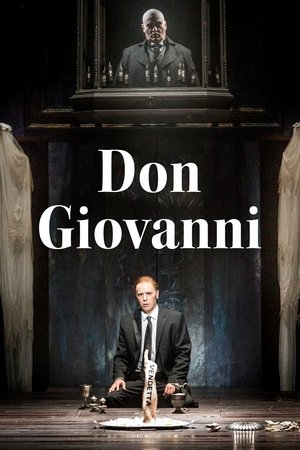
Mozart’s Don Giovanni was first performed in 1787, and was based on the story of the Spanish lothario, Don Juan. The title character seduces, deceives and murders his way through the opera, doing his utmost to experience life, and all that it has to offer, to the full.
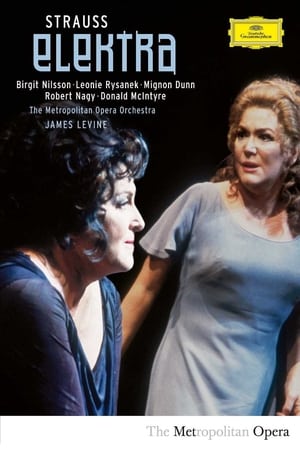
It's hard to imagine confirmed Straussians not wanting this starry Metropolitan Opera performance of Elektra. Strauss and his librettist, Hugo von Hofmannstahl, transformed Sophocles' take on Homer's tale into a harrowing opera noir. Elektra lives for one reason, to kill her mother, Klytämnestra, and her stepfather, Aegisth, the murderers of her father, Agamemnon. In contrast to Elektra's vengeful obsession, her sister Chrysothemis desires to get on with life. When their long-missing brother, Orestes, returns to do the deed, Elektra celebrates with a dance of death and, her sole purpose in life fulfilled, dies. Strauss joined the hermetic plot to music of the utmost opulence, violent and yearning by turns, evoking the cardinal principles of Greek tragedy - pity and terror.
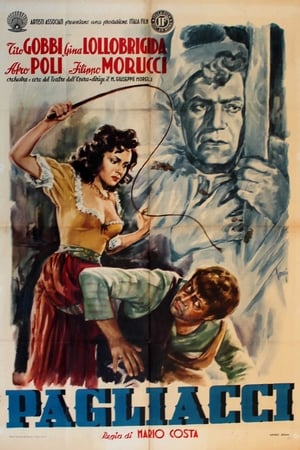
Based on Ruggero Leoncavallo's opera Pagliacci. The film recounts the tragedy of Canio, the lead clown (or pagliaccio in Italian) in a commedia dell'arte troupe, his wife Nedda, and her lover, Silvio. When Nedda spurns the advances of Tonio, another player in the troupe, he tells Canio about Nedda's betrayal. In a jealous rage Canio murders both Nedda and Silvio. The only actor in the cast who also sang his role was the celebrated Italian baritone, Tito Gobbi, but the film is largely very faithful to its source material, presenting the opera nearly complete.
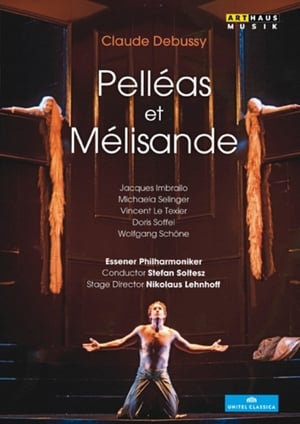
Drama lyrique in five acts, after the play by Maruice Maeterlink
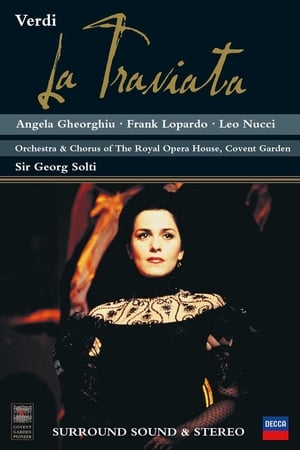
La traviata (Italian: [la traˈviaːta], "The Fallen Woman"[1][2]) is an opera in three acts by Giuseppe Verdi set to an Italian libretto by Francesco Maria Piave. It is based on La dame aux Camélias (1852), a play adapted from the novel by Alexandre Dumas, fils. The opera was originally entitled Violetta, after the main character. It was first performed on 6 March 1853 at the La Fenice opera house in Venice. Piave and Verdi wanted to follow Dumas in giving the opera a contemporary setting, but the authorities at La Fenice insisted that it be set in the past, "c. 1700". It was not until the 1880s that the composer and librettist's original wishes were carried out and "realistic" productions were staged.[3]
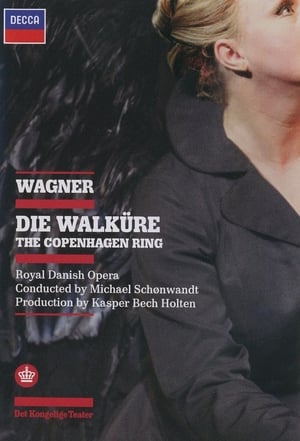
Die Walküre (The Valkyrie), WWV 86B, is an opera in three acts by Richard Wagner with a German libretto by the composer. It is the second of the four operas that form Wagner's cycle Der Ring des Nibelungen (The Ring of the Nibelung). The story of the opera is based on the Norse mythology told in the Volsunga Saga and the Poetic Edda.[1][2] In Norse mythology, a valkyrie is one in a group of female figures who decide which soldiers die in battle and which live. Die Walküre's best-known excerpt is the "Ride of the Valkyries". DVD release June 2009.
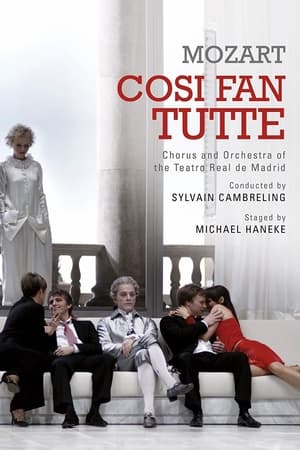
Who loves whom in Così fan tutte, Mozart’s and Da Ponte’s cruelly comic reflection on desire, fidelity and betrayal? Or have the confusions to which the main characters subject one another ensured that in spite of the heartfelt love duets and superficially fleetfooted comedy nothing will work any longer and that a sense of emotional erosion has replaced true feelings? Così fan tutte is a timeless work full of questions that affect us all. The Academy Award-winning director Michael Haneke once said that he was merely being precise and did not want to distort reality. In only his second opera production after Don Giovanni in 2006, he presents what ARTE described as a “disillusioned vision of love in an ice-cold, realistic interpretation”.
Running through Bartók’s disenchanted tale, whose haunting music was initially condemned as unplayable, and the expression of despair in Poulenc’s monologue, the director Krzysztof Warlikowski perceives a shared dramatic thread, a shared feminine consciousness and a shared sense of imprisonment and suffocation: for the woman who penetrates the confines of Bluebeard’s castle and Elle, the woman who clings to a telephone conversation with a man as the only thing worth living for, are condemned to share the same fate. And this man she speaks to, does he really exist? Unless the director has interpreted Cocteau’s words to the letter and the telephone has become a “terrifying weapon that leaves no trace, makes no noise”…
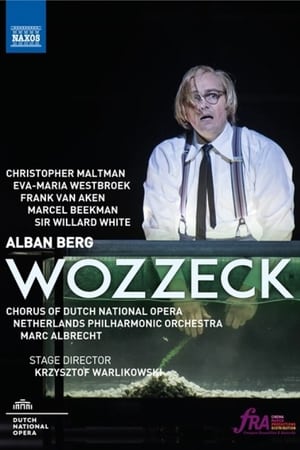
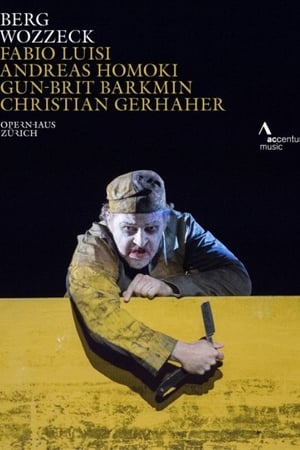
Based on real events and drawing on Georg Büchner's revolutionary play, Alban Berg's Wozzeck turns a grimly tragic narrative of violence and murder into one of the most powerful and original operas of the 20th century. Berg's uncompromising portrayal of brutality and madness generated much controversy, but the significance of Wozzeck was soon recognised; its compelling lyrical expansiveness, large-scale dramatic gestures and remarkable musical structures producing music of overwhelming emotional intensity. The Financial Times declared this to be 'a beautiful, moving, engrossing production… this is a consummate Wozzeck, blending clarity, lyricism, compassion and crushing force.'
The soldier Wozzeck (Christian Gerhaher) flits through a world that he is unable to decipher. The doctor torments him with absurd medical experiments; the captain humiliates and ridicules him. And Wozzeck’s lover, Marie (Gun-Brit Barkmin), with whom he has a child, cuckolds him with the drum major. Wozzeck becomes a murderer, stabbing Marie to death. Georg Büchner’s drama fragment, on which Alban Berg based his first opera, is an unflinching case study of social injustice and human suffering. But it is also a grotesque piece that thrives on exaggeration – and in which only a fine line separates the unfathomable from the ridiculous. Accordingly, director Andreas Homoki forgoes all realism.
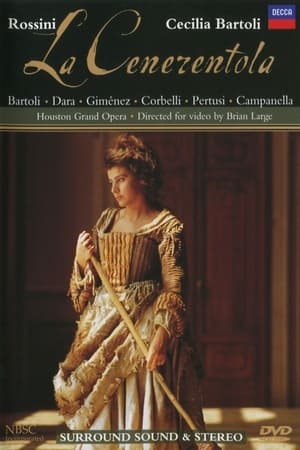
La Cenerentola, ossia La bontà in trionfo (Cinderella, or Goodness Triumphant) is an operatic dramma giocoso in two acts by Gioachino Rossini. The libretto was written by Jacopo Ferretti, based on the fairy tale Cendrillon by Charles Perrault. The opera was first performed in Rome's Teatro Valle on 25 January 1817.---- IMDB id refers to Great Performances: Season 24, Episode 12 La Cenerentola (3 Apr. 1996) from Houston Grand Opera so release date is misleading.
Opera in three acts by Christoph Willibald Gluck, Hector Berlioz's version (1859)
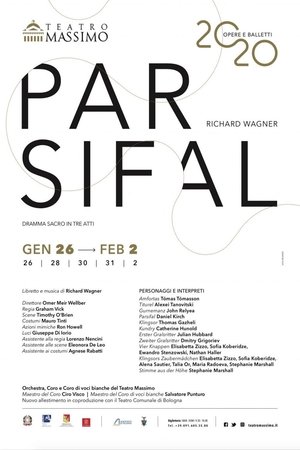
Richard Wagner's Parsifal, staged at the Teatro Massimo in Palermo in 2020, opened the opera season on January 26. The production, directed by Graham Vick and conducted by Omer Meir Wellber, featured staging with references to the imagery of war.
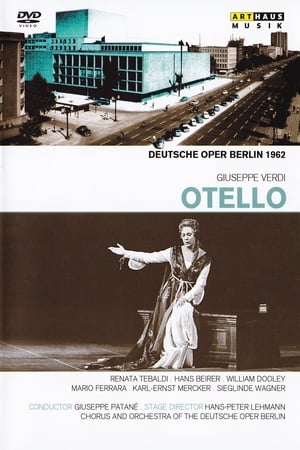
Desdemona in Verdi's Otello was a career role for soprano Renata Tebaldi, from her first operatic performance outside of Italy to her final appearance on the opera stage. Between those landmarks she performed the role nearly 100 times all over the world and made studio audio recordings that became reference recordings for the role. This 1962 production with the Deutsche Oper Berlin and Giuseppe Patane was planned as a media event from the outset and blessedly captures a consummate artist in a signature role at the peak of her gifts.