André Le Notre is certainly the most famous French gardener. He was also a designer, architect, engineer, landscaper and urban planner. He worked for Louis XIV from 1645 to 1700 and designed the gardens of Versailles, Vaux le Vicomte, Chantilly and Fontainebleau, as well as the Tuileries in Paris.
Following fateful scientific reports, protestors pose the argument for a better future against the vested interest of industry. Small to large, individual to collective, where do I fit into this?
Five times, Earth has faced apocalyptic events that swept nearly all life from the face of the planet. What did these prehistoric creatures look like? What catastrophes caused their disappearance? And how did our distant ancestors survive and give rise to the world we know today?
Thanks to new excavations in Mauritius and Madagascar, as well as archival and museum research in France, Spain, England and Canada, a group of international scholars paint a new portrait of the world of piracy in the Indian Ocean.
A fictional documentary on Notre Dame de Paris, produced in 2019.
BENE! Vita di Carmelo, la macchina attoriale
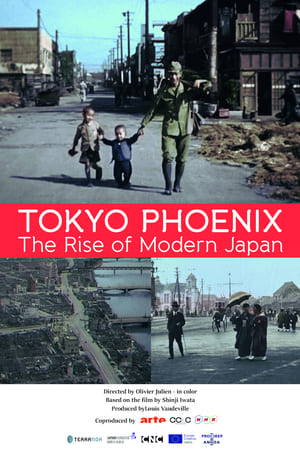
In 150 years, twice marked by total destruction —a terrible earthquake in 1923 and incendiary bombings in 1945— followed by a spectacular rebirth, Tokyo, the old city of Edo, has become the largest and most futuristic capital in the world in a transformation process fueled by the exceptional resilience of its inhabitants, and nourished by a unique phenomenon of cultural hybridization.
Billions of years ago, Venus may have harbored life-giving habitats similar to those on the early Earth. Today, Earth's twin is a planet knocked upside down and turned inside out. Its burned-out surface is a global fossil of volcanic destruction, shrouded in a dense, toxic atmosphere. Scientists are now unveiling daring new strategies to search for clues from a time when the planet was alive.
Unfolding in a series of eight vignettes, Sound Spring explores the history ofYellow Springs, Ohio over hundreds of years, as narrated by its residents incomical scenes: one interviewee rollerblades and reads the village's water meters, another stands on his head in a breakdancing freeze. The villagers describe American history-their ancestors' settlements after slavery, a friendship with Coretta Scott King, and Ohio's Trail of Tears- among other more personal details of village life. The wording of their recollections is imperfect, unsure-in fact they are all re-stagings of their previous audio interviews. Through performing their own previously recorded media, villagers uncover layers of time and storytelling.
On January 6, 2021, Americans witnessed an attack on the U.S. Capitol without precedent in our history. Armed militiamen and QAnon followers made headlines, but among them were a sea of crosses and Christian flags, rosaries and "Jesus Saves" signs. What motivated so many Christians to participate in this violent assault?
Cao Bang, les soldats sacrifiés d'Indochine
Entretempos, Entremeios
The story of Russian writer and Soviet dissident Aleksandr Solzhenitsyn (1918-2008) and his masterpiece, The Gulag Archipelago, published in Paris in 1973, which forever shook the very foundations of communist ideology.
A French documentary or, one might say more accurately, a mockumentary, by director William Karel which originally aired on Arte in 2002 with the title Opération Lune. The basic premise for the film is the theory that the television footage from the Apollo 11 Moon landing was faked and actually recorded in a studio by the CIA with help from director Stanley Kubrick.
In May 1980, more than 800 people lived for 33 days near Gorleben in the protest camp ‚Free Republic of Wendland‘ and thus prevented for a short time drilling for the planned nuclear waste repository in the nearby salt dome.
The documentary of the Nuremberg War Trials of 21 Nazi dignitaries held after World War II.
Departing from peripheral details of some paintings of the Bilbao Fine Arts Museum, a female narrator unravels several stories related to the economic, social and psychological conditions of past and current artists.
A montage of newscasts tracing the events of the "damned war" and the German invasion of 1940.
This documentary delves into the mysteries surrounding the Neanderthals and what their fossil record tells us about their lives and disappearance.
The Victorian era is often cited for its lack of sexuality, but as this documentary reveals, the period's artists created a strong tradition surrounding the classical nude figure, which spread from the fine arts to more common forms of expression. The film explains how 19th-century artists were inspired by ancient Greek and Roman works to highlight the naked form, and how that was reflected in the evolving cultural attitudes toward sex.